LAB NOTES & SAFETY NOTICE
These are personal experiments for educational use only—not for commercial or consumer use. By proceeding, you assume all risks related to safety, testing, and regulatory compliance.
[Full Legal Disclaimer & Safety Requirements]
Hello everyone! 😀
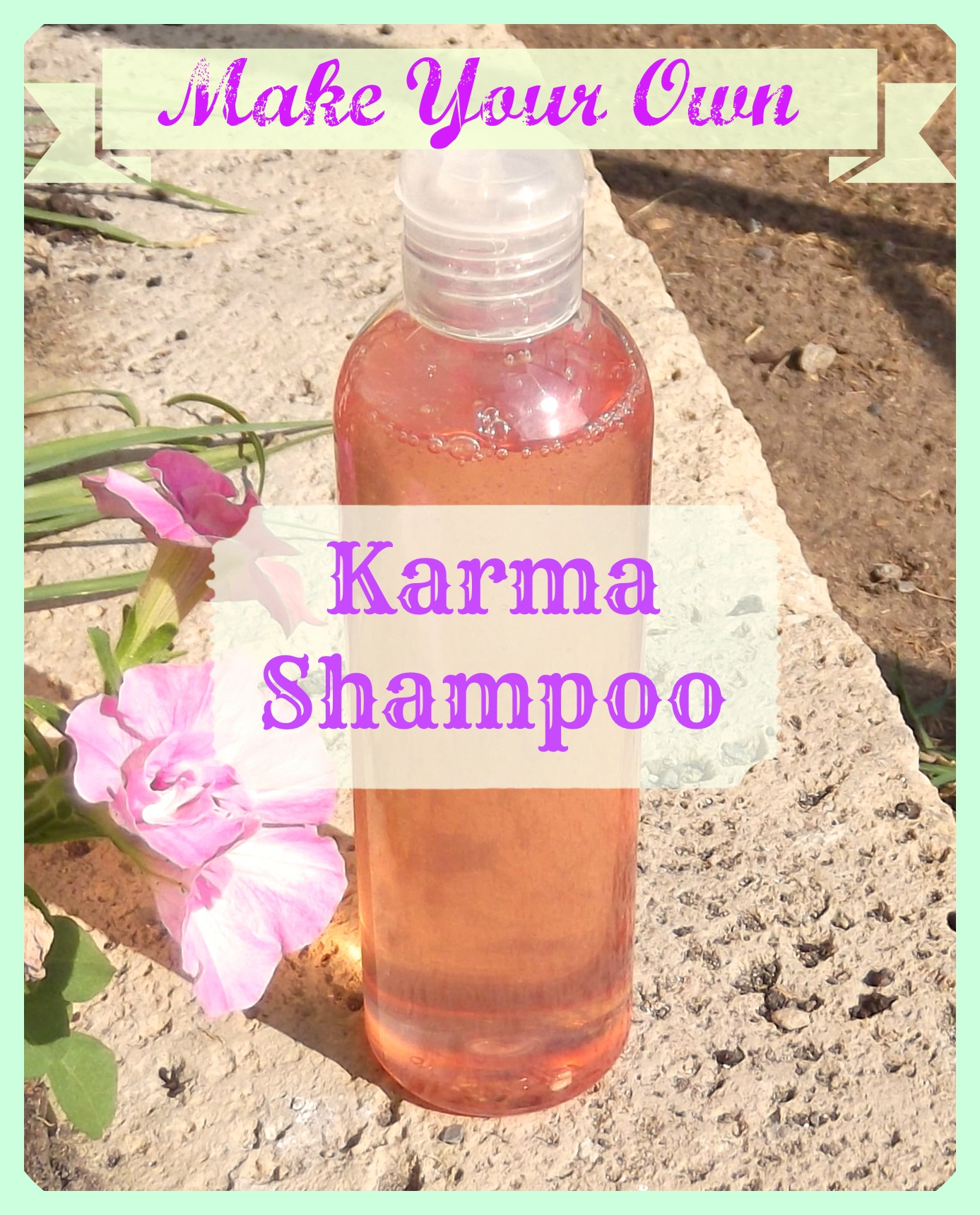
Hello Hello! 😀 Today I’m sharing my experiment with a formula that is all about finding the perfect “Karma” for my hair. I know I’ve been experimenting with a lot of sulfate-free stuff lately, but sometimes you just want that really deep, satisfying clean that only SLES can give—especially if you’ve been using a lot of hairspray or if your hair just feels “heavy.”
The challenge I set for myself was: Can I use SLES but make it feel like a high-end, expensive boutique shampoo instead of something harsh?
The secret is all in the TMG (Trimethylglycine). (Trimethylglycine). I didn’t just want bubbles; I wanted protection. TMG is an anhydrous betaine that is a total powerhouse for hydration. Adding it to a SLES base is a game-changer because it helps protect the scalp and hair from the drying effects of the surfactants. It’s like giving your hair a big drink of water while you clean it!
The Formula
Phase A:
-
Water: to 100
-
Glycerin: 3
-
Guar Hydroxypropyltrimonium Chloride: 0.2
Phase B:
-
Sodium Laureth Sulfate (SLES): 25
-
Cocamidopropyl Betaine: 10
-
Coco-Glucoside: 5
-
TMG (Trimethylglycine): 3
Phase C:
-
Hydrolyzed Wheat Protein: 1
-
Panthenol: 0.5
-
Preservative: (According to my usual lab choice)
-
Fragrance Oil: (Karma type scent)
-
Citric Acid: (To reach pH 5.5)
-
Salt (Sodium Chloride): (A pinch to thicken)
My notes from the experiment:
The best part was watching the texture change. When I started adding the Citric Acid to bring the pH down to 5.5, and then just a tiny pinch of salt at the very end, the shampoo turned into this gorgeous, thick “honey” consistency. It’s so satisfying to pour!
The result is exactly what I wanted. You get those huge, fluffy bubbles that everyone loves, but when you rinse it off, your hair doesn’t feel like “straw.” It feels clean, bouncy, and smells like a L**h dupe 😀 . It just goes to show that with the right balance, even the “strong” ingredients can have great Karma! ENJOY! 😀


I am new to soap making due to my husband has MCS. I have made some soap by recipes I am having a hard time understanding yours. I know this because I don’t understand the calculation put of soap making. I can’t find anyone around me no classes to go to.
LikeLike
Hello Teri,
you talk about soap making, but you are commenting under a post of a shampoo.
A shampoo is not made in the same way as a soap is made, that is why the recipes are very different and the making process is very different as well.
I suggest you to go to the Site Index and read all the posts about formulating and making soaps, creams, detergents, shampoos… 🙂
LikeLike
Betaine is drastically reducing the pH of my formulations. To confirm I place a dab of Betaine in Distilled water. Before adding the betaine the destilled water had a pH of 9.3. After adding the pH the water tested at lower than 2 pH.
LikeLike
It is not betaine then.
LikeLike
Hi Eric,
Coco betaine should have a pH of 5 to 6. It is basically gentle to the skin. Typically if you were to adjust the pH to 5.5, it will be favorable to your skin. Also take note that pH of distilled water should be 7.0, not 9.3. It seems that your distilled water is contaminated. Thanks
Dr Kelvin Chua
SINGAPORE
LikeLike
Hi! I love your website and am toying with the idea of making a shampoo. I was wondering, when you write in your recipes “SLES 25%, Cocamidopropyl 10%” etc – do you mean that amount of the liquid product you have bought as is, already diluted in water?
Or do you mean that you calculate it so it will be 25% of the *active substance* in your final product?
I’m thinking the former, because it seems like 25% SLES would make a very very strong shampoo… But if so, how diluted are the products you use for this recipe?
Is it approx. 26% SLES, 30% CAPB, 50% decyl glucoside as seems to be most available in Europe? I thought you would need higher concentrations than that even in a shampoo, interesting if not!
Thanks for all your lovely posts 🙂
LikeLike
Hello Suzanne.
Indeed it is the amount of my pre-diluted surfactants!
If you want to know more, I have written few posts about this matter where I explain how to calculate the right amount of surfactants in a formula depending if you want to make a shampoo, a face wash and so on 🙂
LikeLike
Thank you for replying, I forgot to check earlier 🙂 I see, i’ll check out the other posts but now I have a good basic idea of how much you use!
LikeLiked by 1 person
Hello, i’d like to ask if your formulation cited here is weight based. Thank you very much! 🙂
LikeLike
Hello John,
Yes it is in grams.
You can also look at it in % as it is all to 100 (grams or percent). 🙂
LikeLike
Hello,
I do not have Decyl Glucoside
Coco Glucoside & Glyceryl Oleate
But I have SLES and CAPB , Polyquat7 on hand. Can I still go ahead and try this recipe with the remaining ingredients.
Also, can you pls share how and at what stage EDTA is to be added to water. I have EDTA powder. Many thanks !
LikeLike
Add it at the very beginning.
And yes you can do without glucosides 😉
LikeLike
Hello! I like your website very much and thanks for sharing your formulas. I’ve been thinking about making my own shampoo and I want to start by a simple but good formula like your karma shampoo formula. But it seems that I can’t find a retailer who sells hydrolized wheat protein in my country so if I substitute the hydrolized wheat protein with hydrolized silk protein or keratin protein will it affect the shampoo performance? And can I use inulin food grade? Thank you… 🙂
LikeLike
Sure you can!
LikeLike
Thank you… I can’t wait to start making my own shampoo… 🙂
LikeLiked by 1 person
Hello! I like your website very much and thanks for sharing your formulas. I’ve been thinking about making my own shampoo and I want to start by a simple but good formula like your karma shampoo formula. But it seems that I can’t find a retailer who sells hydrolized wheat protein in my country so if I substitute the hydrolized wheat protein with hydrolized silk protein or keratin protein will it affect the shampoo performance? And can I use inulin food grade? Thank you… 🙂
LikeLiked by 1 person
Hello, I do not have Trimethylglycine / betaine powder .. What can be a close substitute .. Will this Shampoo be good for oily hair as well ..
LikeLike
Hi Niki, just omit it 🙂 if you really want to make it milder, just lower a bit the surfactants (and add water)
LikeLike
Food grade Inulin be fine ?
LikeLike
Sure.
Cosmetic grade is lower 😉
LikeLike
HEY, OVE YOUR FORMULATIONS. Can you share a clay based formulation. Also Instead of Inulin…can we add Guar Hydroxypropultrimonium Chloride in Phase A.
If yes, will it have to be heated.
LikeLike
Hi, yes GuarHC needs to be worked with heat. Not sure if I have posted any formula using it.
I never posted clay based formulations because clay is TERRIBLY DIFFICULT to preserve. It carries a huge amount of bacteria which spoil the formula in no time.
Commercial formulations with clay are possible because they treat clay in ways we cannot.
You can use clay in instant face masks… that’s the only use I would suggest.
LikeLike
Hi,
I noticed you’ve added cocamidopropyl betaine at the end. I write my method of making here, could you please let me know if my method is wrong please, thanks.
A- I melt and mix my surfactants (Sodium cocoyl isothionate, glyceryl stearate at 0.2g for conditioning, Sodium laurolamphoacetate , caprylic capric glucoside cocamidopropyl betaine and and then essential oil) in some water in the order I’ve written.
B- Then I mix the rest of the ingredients like glycerin and protein separately with some water , except acid, salt and preservative.
– Then I add part A over B and mixing well, then I fix the PH to 6 and then I add preservative and finally I add the salt water to the mix and fix the weight of the mixture to 100g.
Is there anything I can do to get thicker formula?
Thank you for your help in advance.
LikeLike
Try adding CAPB at the end as well as proteins (what kind are they?).
Do you HAVE to use SC
LikeLike
i?
LikeLike
Hi,
I am using Hydrolysed oat protein. I’ve never had luck with gums, they sink to to bottom of the bottle after one or 2 weeks, whatever method I’ve used.
I’m using SCI because I’ve read good things about it and because of having high active the surfactant load would be less in the formula.
LikeLike
Proteins can thin out the formula as well.
I would try changing the order you add your ingredients (CAPB at the end, protein at the end and preservative at the end, one at a time) and see if anytuing changes.
If gums are not working with your formula, you should simply change surfactants as there is such a huge variety and sticking to these 4 for the last 1.5 years seems enough trial and error to say that this combination isn’t simply working as well as you wished 🙂
LikeLike
Thank you.
I think I didn’t explain properly . I bought quiet a few surfactants (at least 10 surfactants in total) which finally I chose these 4. The shampoo performs well. It is gentle and washes very nicely and my scalp and hair is well conditioned but it lacks a bit of glide.
What do you suggest if you don’t mind me asking please. As I said I live in Australia and some of popular surfactants are not available here or you have to buy in bulk and also another hurdle for me is that I need to keep the shampoo clear as much as possible, so my options get less.:)
LikeLike
Well as I said, your best bet is to change surfactants if the glide isn’t satisfacory and the polyquat 10 doesn’t work and you don’t want to use the polyquat 7. There are other conditioning agents that might help (like quat 80 if I recall well) but it is yet another “not ecocert” solution.
So the final point is: you need to change something in the formula and if you are not ready to change the blend of surfactants, then you might have to consider adding a conditioning agent that isn’t cosmos or ecocert approved. It really depends what you value more, here. I don’t know which surfactants are or aren’t available in Australia but I love, for example Sodium methyl cocoyl taurate (less than 5% and it makes great lather, great glide and thickens as well).
Surfactants are a WORLD in themselves (there are so many and every year there are new ones on the market) and getting to know a few more than 10 might be a good idea 🙂 you don’t HAVE TO, but that’s my advice!
LikeLike
Hi again,
Thank you for your suggestions. The surfactant ( Sodium methyl cocoyl taurate ) you’ve suggested is the one that I can’t buy it here unless I buy 200 kilos. I will buy it when it is available, but I’ve bought some new ingredients to experiment on.
I have some questions about inulin. Does inulin thickens surfactants because when I added 1g of inulin to my formula, the mixture got thicker. Can I add more and reduce the salt? What it does to hair other than detangling? Does this work for any types of hair ? I mean doesn’t make fine hair miserable. 🙂
Thank you.
LikeLike
I am not aware of inulin thickening or being used as a thickener, it has some conditioning properties mostly
LikeLike