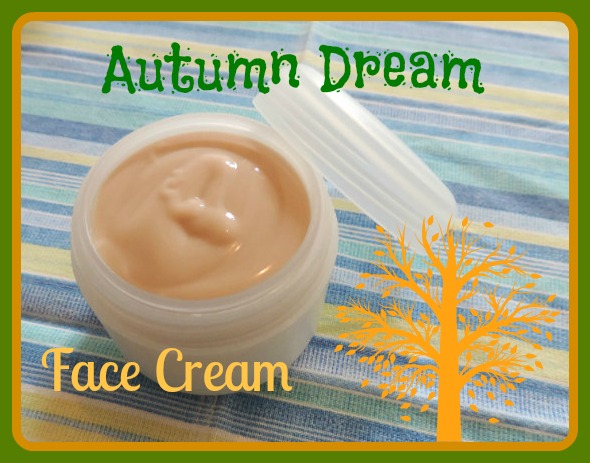
Autumn Dream – Face Cream

LAB NOTES & SAFETY NOTICE
For educational purposes only. Content reflects personal, non-professional formulation experiments and is not instructional.
No formula or information on this site is intended for commercial use, consumer application, or third-party use.
Accessing this content means you accept all risks and full responsibility for safety, testing, legal compliance, and outcomes.
[Full Legal Disclaimer & Safety Requirements]

Autumn Cream 13

Lab Note: My “Autumn Dream” Face Cream

Hello Hello! 😀 I finally have the recipe and pictures for the autumn cream I’m using right now. I call it my “Poetry” cream because I was feeling a bit artistic when I made it—but also because my sensitive skin needs something truly soothing as soon as the first cold weather hits.

This cream has a higher percentage of fats than my summer formulas, plus a “bouquet” of active ingredients specifically chosen to protect capillaries and calm redness. yeheee!

The Formula: 

Phase A (The Gel):

  • Water: to 100

  • Glycerin: 3.0

  • Xanthan Gum: 0.2 (I usually prefer a mix with Carbomer, but mine expired! Xanthan alone still works, though the finish is slightly different.)

Phase B (The Emulsion):

  • Murumuru Butter: 0.5 (Dry skin: 2.5)

  • Safflower Oil: 0.5 (Dry skin: 2.5)

  • Methyl Glucose Sesquistearate: 3.0 (Emulsifier)

  • Cetyl Palmitate: 1.0 (For a soft cream feel)

  • Tocopherol (Vitamin E): 0.5

  • Propylheptyl Caprylate: 1.5 (For a super light skin feel)

Phase C (The Soothing Actives):

  • Oily Part: Bisabolol (0.5), Black Currant Oil (1.0), Dry Flo (0.5)

  • Water Part: Hydrolyzed Silk Proteins (2.0), Allantoin (0.4), Water (5.0)

  • Botanical Extracts: Vitis Vinifera (0.2), Raspberry (0.1), Licorice/Glycyrrhizic Acid (0.2)

  • Hydration: Hyaluronic Acid Gel (5.0)

  • Preservative: Cosgard (1.0)


Notes from my Beaker:

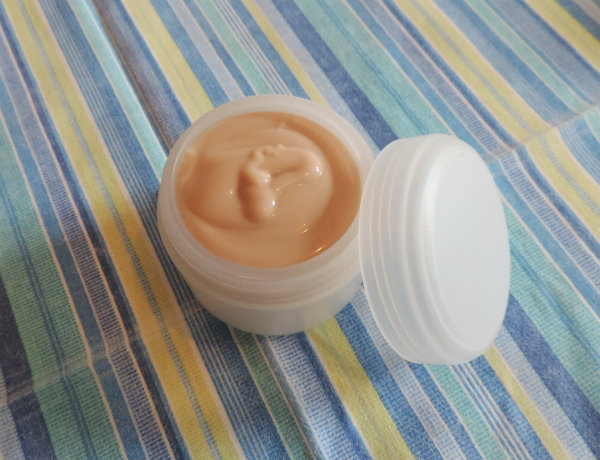
  1. Extract Colors: Just a warning—plant extracts like Licorice and Vitis Vinifera are NOT white! They will change the color of your cream to a more “earthy” tone, but the soothing benefits are worth it!

  2. The Allantoin Trick: As always, I mix the Allantoin into the Silk Proteins first. It disperses so much better this way—no crystals!

  3. The Process: I heated Phase A and B to 70°C. I poured B into A slowly while stirring by hand, then hit it with the immersion mixer. It turns bright white immediately!

  4. The Cooling Phase: This part is very important. I kept stirring with a spatula until it reached room temperature. While it’s hot, it looks very liquid—don’t panic! The Cetyl Palmitate only thickens as it cools (and continues for a few days).

  5. The Final Touch: Once cool, I added the two Phase C parts, checked the pH (it hit 5.5 perfectly), and gave it one last quick pulse with the mixer to make it perfectly smooth.

Final Verdict: This is a lifesaver for winter. The Black Currant oil and Licorice extract really help my capillaries survive the cold stress. It might not stay pure white because of the extracts, but it feels like a dream on the skin. ENJOY! 😀 😀 😀

Autumn Cream 11


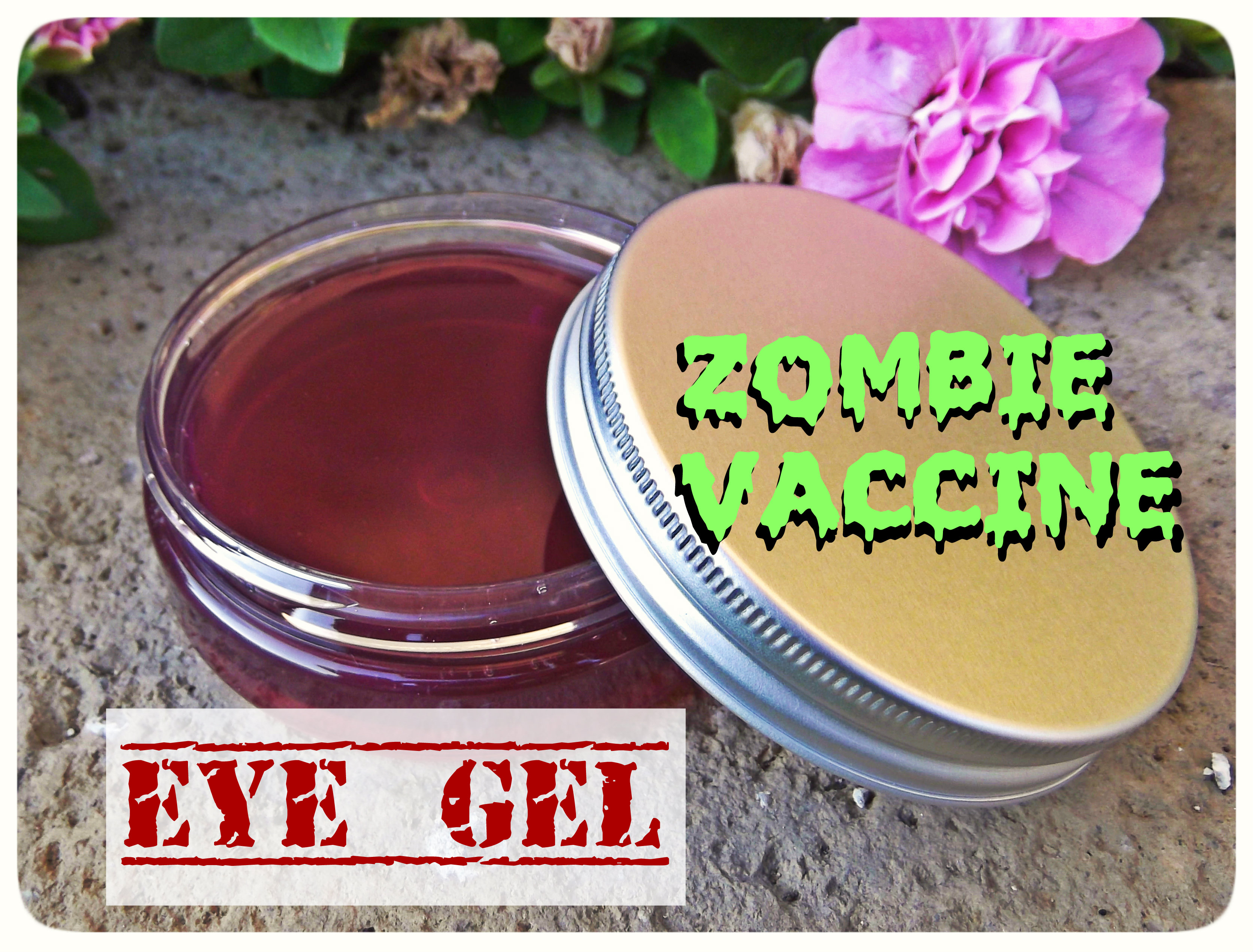
Zombie Vaccine – Lifting Eye Gel ;)

LAB NOTES & SAFETY NOTICE
These are personal experiments for educational use only— not instructions and not for commercial or consumer use. By proceeding, you assume all risks related to safety, testing, and regulatory compliance.
[Full Legal Disclaimer & Safety Requirements]

ZOMBIE VACCINE 2

ZOMBIE VACCINE 3

Lab Note: The “Zombie Vaccine” Eye Serum-Gel

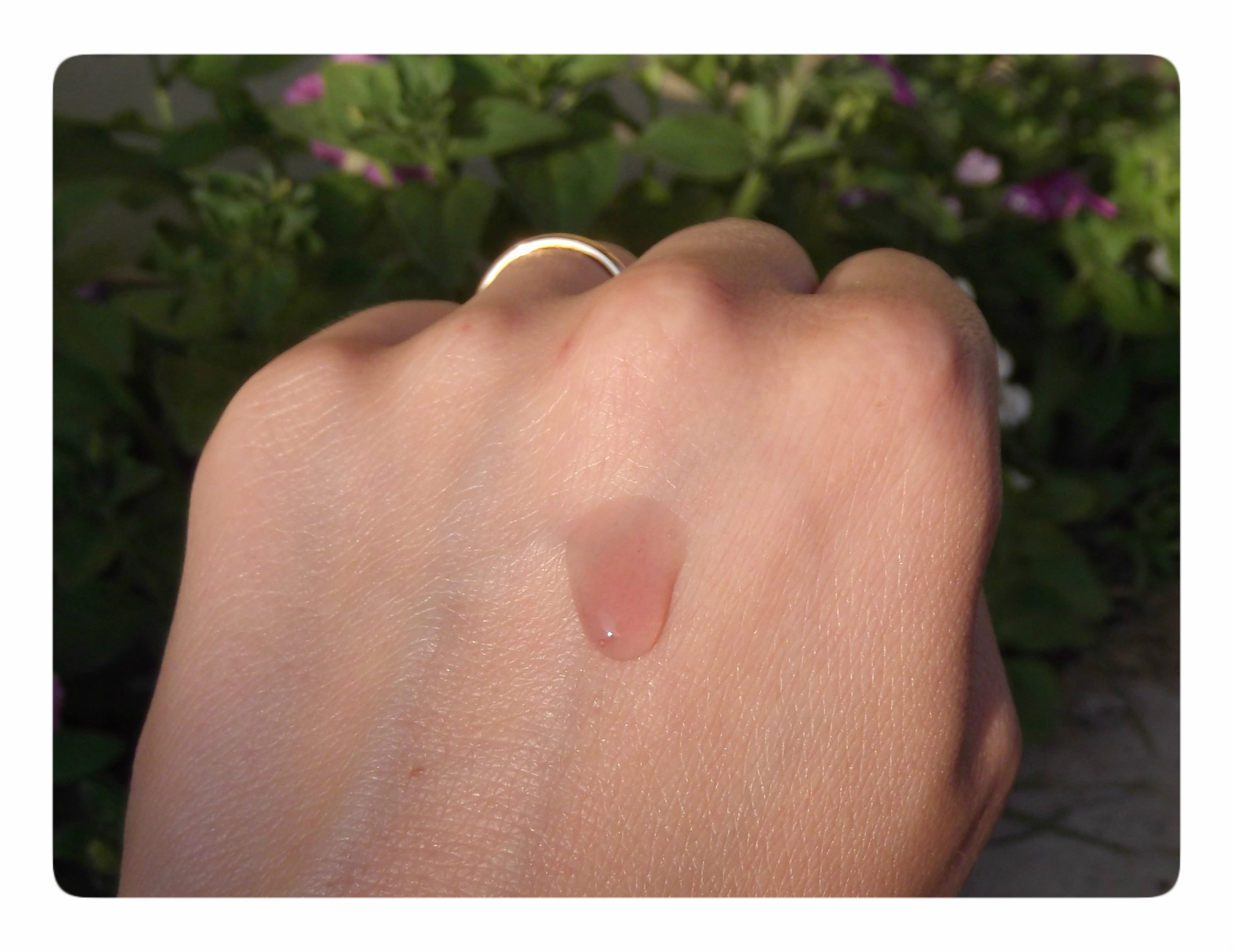
Hello Hello! 😀 Who doesn’t look like a zombie in the morning? (Okay, maybe you don’t… but I definitely do!). I saw the name “Zombie Vaccine” on a coffee cup once and I knew I had to steal it for this lifting eye serum.

I’m calling this a serum because it’s made of 100% active ingredients! There are no fillers here—just pure hydration and “wake-up” magic for that delicate eye area. yeheee!

The Active Duo:

  • Caffeine: The ultimate “double espresso” for your face. It helps stimulate microcirculation to fight puffiness and those dark zombie circles.
  • Sodium Hyaluronate: This is the salt form of Hyaluronic Acid. Just 1 gram is enough to turn this liquid into a beautiful, thick gel. It gives a slight “lifting” effect as it dries, while pulling hydration deep into the skin.

The Formula: Zombie Vaccine

  • Water: to 100
  • Rose Water: 30.0 (Soothing and smells like a dream)
  • Glycerin: 3.0
  • Sodium Hyaluronate: 1.0 (The gelling agent)
  • Blueberry Powder Extract: 0.3 (Antioxidant power!)
  • Caffeine: 2.0 (The anti-puffiness hero)
  • Preservative (Cosgard): 1.0

Notes from my Beaker:

  1. The Caffeine Challenge: Caffeine can be a bit of a diva. I mixed the water, rose water, glycerin, and caffeine together and heated it very slowly, stirring constantly. You have to make sure it’s fully dissolved—and then I prayed it wouldn’t crystallize into needles as it cooled down! 😀 (Luckily, it stayed smooth).
  2. The “No-Stir” Gelling: Once the liquid was completely cool, I added the preservative and the blueberry extract. Then came the Sodium Hyaluronate. I just poured it on top and did not stir.
  3. The Waiting Game: I covered the beaker with plastic wrap and walked away. I gave it a tiny mix after a few hours, but mostly I just let it sit. It takes about a day and a half for the Hyaluronate to fully hydrate into a clear, thick gel.
  4. pH Check: I checked the pH and it was a neutral 7.0. Since it’s for the eyes, I left it right there!

Final Verdict: This serum is so refreshing in the morning! It’s light, it’s cold, and it really helps “tighten” things up so I look a bit more human and a bit less zombie. ENJOY! 😀 😀 😀

Soap soap soap… decoration!

Violet Soap 2

LAB NOTES & SAFETY NOTICE
These are personal experiments for educational use only—not for commercial or consumer use. By proceeding, you assume all risks related to safety, testing, and regulatory compliance.
[Full Legal Disclaimer & Safety Requirements]

300 gr Coconut oil
400 gr Olive oil
150 gr Shea butter
50 gr Castor oil
50 gr Cocoa butter
50 gr Almond oil 

147 gr lye
330 water

but what I love of this soap is actually the decoration! 😀

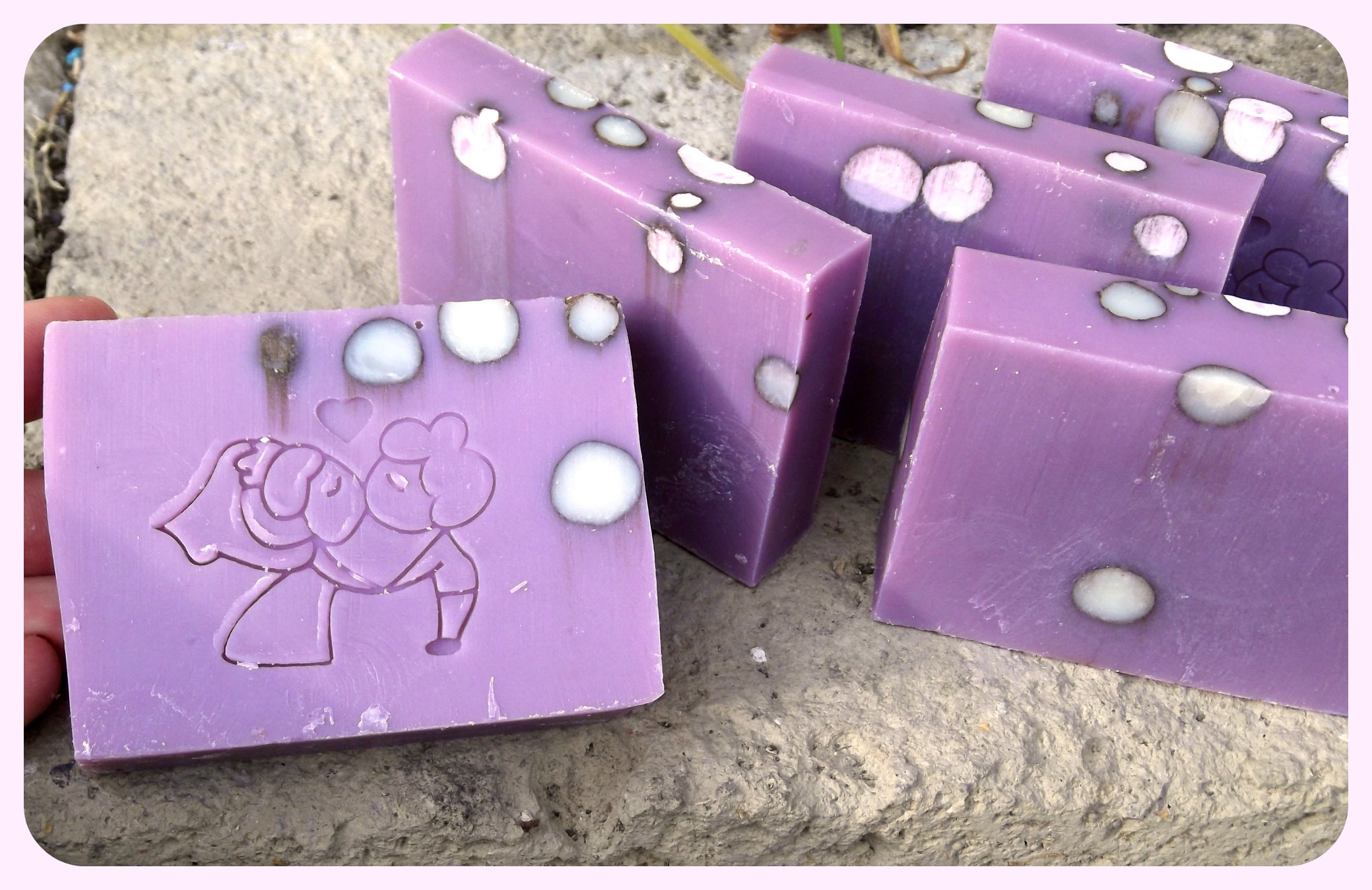
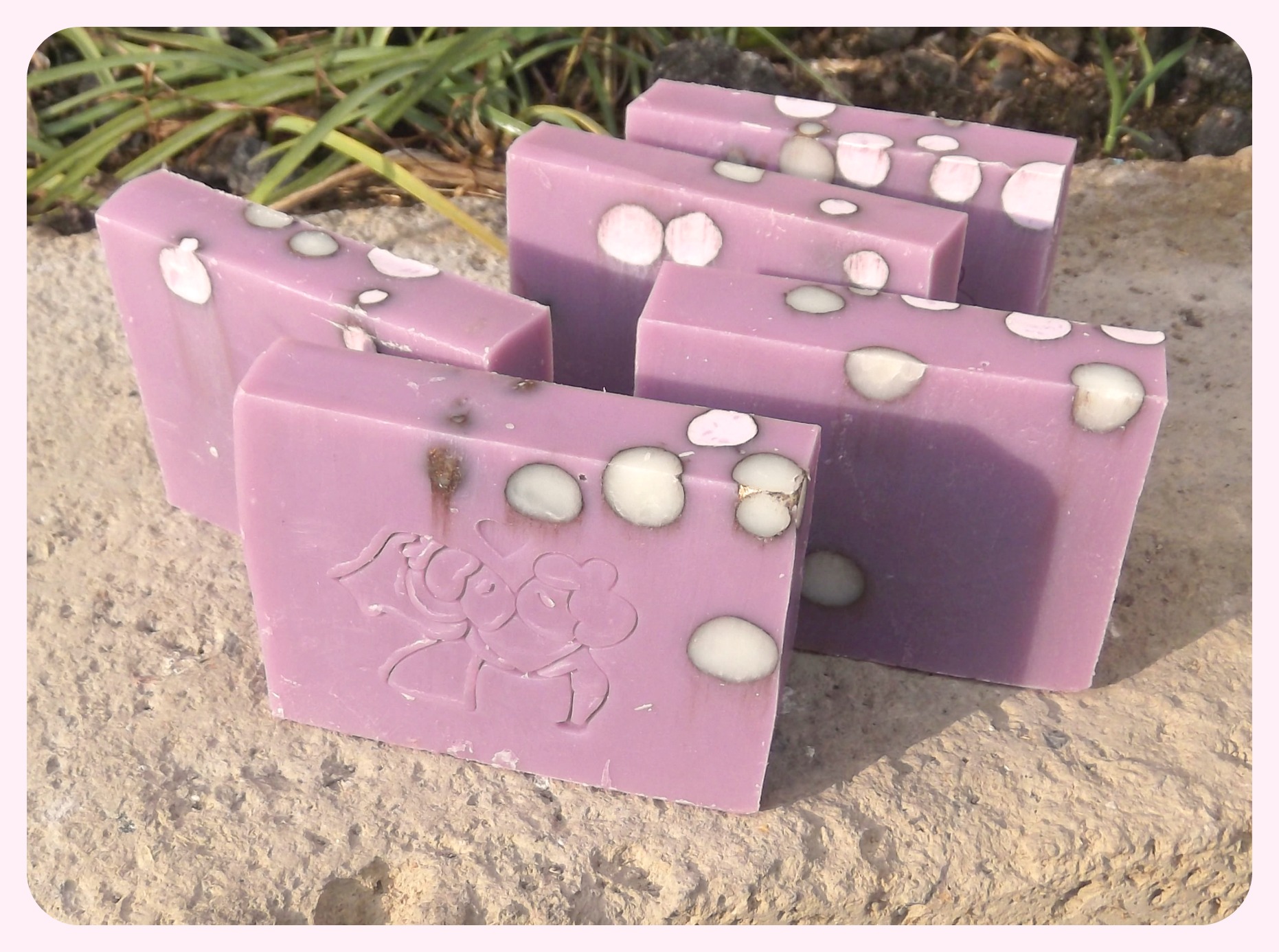
I colored all the paste of violet, using a specific colorant for cold process soaps (but if you have micas you might want to try with that! BUT some micas do not keep their color in saponification: what you can do is drop some mica inside a small amount of water and lye just to see if the color changes in a strong alcaline environment – like soap is going to be – if the color stays same… you can use it to color your soaps! Yay! 😀 ).

Then I had some fresh leftovers of another soap which was white in color: I cut very small cubes and, using gloves, I rolled each cube in my hands to make it become a small ball! 😀
I also colored some paste with another drop of violet and that’s why some balls look more pinkish!

Eventually I collected all the little soap balls and poured on them a dark copper Mica! I mixed lightly until all were covered and simply dropped them in my soap (which was at a quite thick trace!). As you can see the result is a little dark mark around each ball! 😀

Hope you like this!
I loved the result! 😀

Have a great day!

[ps. as you can see I still haven’t got the hang on stamping soaps… but I will 😀 sooner or later 😀 ahahah]

Violet Soap

For more recipes click HERE 
To learn how to formulate cosmetics click HERE
For a list of online cosmetic ingredients suppliers click HERE 

Creative Commons License
This work is licensed under a Creative Commons Attribution-NonCommercial-NoDerivatives 4.0 International License.

DIY Karma Shampoo (extra delicate!) & chat on betaine

LAB NOTES & SAFETY NOTICE
These are personal experiments for educational use only—not for commercial or consumer use. By proceeding, you assume all risks related to safety, testing, and regulatory compliance.
[Full Legal Disclaimer & Safety Requirements]

Hello everyone! 😀

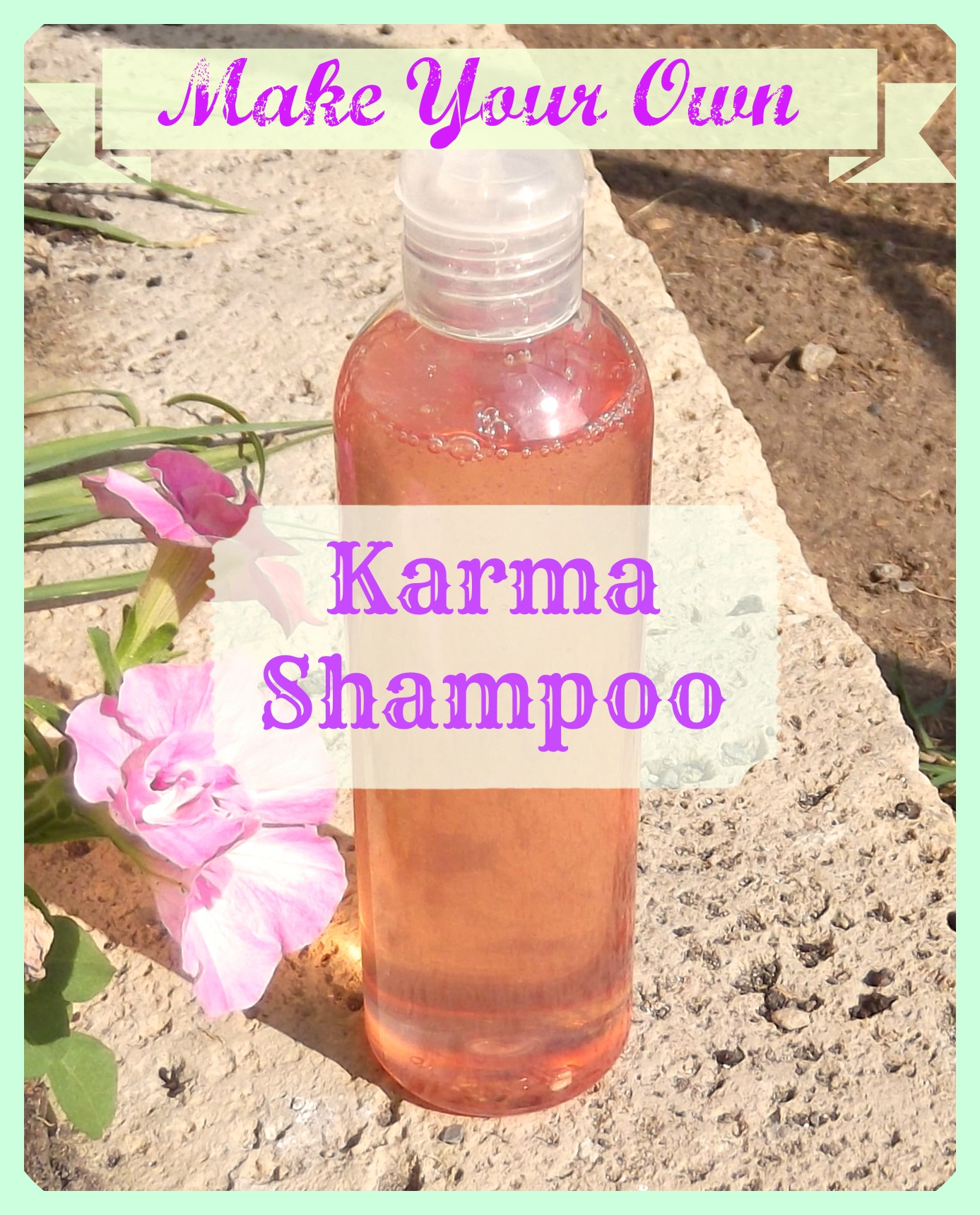
Make your own Karma Shampoo

Hello Hello! 😀 Today I’m sharing my experiment with a formula that is all about finding the perfect “Karma” for my hair. I know I’ve been experimenting with a lot of sulfate-free stuff lately, but sometimes you just want that really deep, satisfying clean that only SLES can give—especially if you’ve been using a lot of hairspray or if your hair just feels “heavy.”

The challenge I set for myself was: Can I use SLES but make it feel like a high-end, expensive boutique shampoo instead of something harsh?

The secret is all in the TMG (Trimethylglycine). (Trimethylglycine). I didn’t just want bubbles; I wanted protection. TMG is an anhydrous betaine that is a total powerhouse for hydration. Adding it to a SLES base is a game-changer because it helps protect the scalp and hair from the drying effects of the surfactants. It’s like giving your hair a big drink of water while you clean it!

The Formula

Phase A:

  • Water: to 100

  • Glycerin: 3

  • Guar Hydroxypropyltrimonium Chloride: 0.2

Phase B:

  • Sodium Laureth Sulfate (SLES): 25

  • Cocamidopropyl Betaine: 10

  • Coco-Glucoside: 5

  • TMG (Trimethylglycine): 3

Phase C:

  • Hydrolyzed Wheat Protein: 1

  • Panthenol: 0.5

  • Preservative: (According to my usual lab choice)

  • Fragrance Oil: (Karma type scent)

  • Citric Acid: (To reach pH 5.5)

  • Salt (Sodium Chloride): (A pinch to thicken)

My notes from the experiment:

The best part was watching the texture change. When I started adding the Citric Acid to bring the pH down to 5.5, and then just a tiny pinch of salt at the very end, the shampoo turned into this gorgeous, thick “honey” consistency. It’s so satisfying to pour!

The result is exactly what I wanted. You get those huge, fluffy bubbles that everyone loves, but when you rinse it off, your hair doesn’t feel like “straw.” It feels clean, bouncy, and smells like a L**h dupe 😀 . It just goes to show that with the right balance, even the “strong” ingredients can have great Karma! ENJOY! 😀

Banana Smoothie – Hair Conditioner (with Cetrimonium Chloride)

Bananasmoothie2

LAB NOTES & SAFETY NOTICE
These are personal experiments for educational use only—not for commercial or consumer use. By proceeding, you assume all risks related to safety, testing, and regulatory compliance.
[Full Legal Disclaimer & Safety Requirements]

Lab Note: My “Banana Smoothie” Hair Conditioner

Hello Hello Everyone! 😀 I know I just posted a hair conditioner recipe recently, but I am way too excited about this one to wait!

In my last experiment, I used an eco-friendly emulsifier that was good, but it needed so many thickeners that I had to put it in a pot. This one is different. This is my Banana Smoothie—it’s creamy, but not too thick, so it actually pours into a bottle!

The star of the show? Mr. Cetrimonium Chloride! 😀 It is an amazing conditioner. It’s a “beast” at detangling (even though the cream itself is soft), and the effect lasts as long as it’s on your hair.

The Formula for my Smoothie:

Phase A:

  • Water to 100
  • Glycerin 2
  • Cetrimonium Chloride 4 (I have long, thin hair that knots if I just look at it, so I used 4% and it works amazingly!)

Phase B:

  • Cetearyl Alcohol 2 (This is the thickener. I only used 2% to keep it pourable. If you wanted a pot-cream, you’d go up to 5%!)
  • Shea Butter 0.5
  • Dicaprylyl Ether 0.5 (A very light synthetic oil)
  • Jojoba Oil 0.5 (Technically a wax—it never goes rancid!)

Phase C:

  • Wheat Proteins Powder 0.5
  • Polyquaternium 7 – 1
  • Quaternium 80 – 0.5 (These are extra conditioners, but Cetrimonium is so strong you could even omit these!)
  • Preservative (According to the type used)
  • Fragrance Oil (I used BANANA—hence the name! :D)
  • Citric Acid (To reach pH 4.5—you MUST add this!)

Notes from the Beaker:

  1. Heat it up: I heated both Phase A and Phase B to 70°C.
  2. The Golden Rule: For conditioners, it’s different! Phase A (Water) MUST be poured into Phase B (Oils). Not the other way around! Very important! 😀
  3. Mixing: I used the immersion mixer until it looked smooth, then stirred slowly by hand until it cooled down.
  4. One by One: I added the Phase C ingredients at the end, but I added them one by one. If you dump them all in, the texture can get cranky.
  5. The Oil Choice: I used Jojoba and a synthetic oil because they don’t go rancid. Since conditioner stays on the hair a bit, you don’t want oils that smell bad after a while!

Final Verdict: I am really satisfied! It smells like bananas, detangles like a dream, and actually fits in my squeeze bottles. I love it! 😀

Pink Sugar Frosting Body Lotion (Recipe)

LAB NOTES & SAFETY NOTICE
These are personal experiments for educational use only— not instructions and not for commercial or consumer use. By proceeding, you assume all risks related to safety, testing, and regulatory compliance.
[Full Legal Disclaimer & Safety Requirements]

DSCF3571

Silk-Touch Body Cream

Hello Hello! 😀 My goal for this one was to make a super emollient cream—the kind that feels really luxurious on the skin. I didn’t want to pack it with a million actives; I just wanted it to do good for the body! We spend so much time on our faces, but our body skin deserves some love too, right? 😉

The “Grease-Fall” (My Oil Selection):

Since this is for the body, I wasn’t worried about oils being comedogenic. I used 5% Shea Butter (which is comedogenic, whatever you read online! :P) because it is absolute heaven for body skin.

For the rest, I created a “Grease-Fall” using light and extra light oils. Most of these are synthetic or waxes (like Jojoba) because they make the cream feel so much better on the skin. If you want only natural oils, it won’t feel quite as silky, but Jojoba gets you pretty close!

The Formula:

Phase A:

  • Water to 100

  • Glycerin 5

  • Carbopol Ultrez 21 – 0.1 (A little gelling agent to keep it bouncy!)

Phase B (The “No-Heat” Emulsifier):

  • Abil Care 85 – 2 (This is a silicone-based emulsifier. I don’t use it on my face because it gives me tiny pimples, but for the body? I totally enjoy it! It makes the cream velvety and it’s almost impossible to fail with it! :D)

  • Tinovis ADE – 1.5 (This is the thickener/gel maker that works at room temperature—no heating needed, yeheee!)

  • Shea Butter – 5

  • Safflower Oil – 3

  • Borage Oil – 3

  • Jojoba Oil – 5

  • Dicaprylyl Ether – 5 (Extra light synthetic oil)

  • Cetiol Sensoft – 5 (The lightest oil ever—it feels like silicone but it isn’t!)

  • Tocopherol – 1 (Vitamin E)

Phase C (The Actives):

  • Allantoin – 0.35

  • Oat Hydrolyzed Proteins – 1.65 * Panthenol – 1 (Vitamin B5)

  • Preservative (The amount needed for yours!)

  • Fragrance Oil (I used “Pink Sugar” from Gracefruit… mmm! :D)


Notes from the Beaker:

  1. The Allantoin Hack: Allantoin can be a pain to dissolve—it gets gritty! But I found a trick: if you mix it with the hydrolyzed proteins first, it melts in so fast! That does the trick every time! 😀

  2. No Double Boiler: Since I used Abil Care 85 and Tinovis ADE, I didn’t have to heat anything up! It’s a fast way to get a professional texture.

  3. Mixing: I just poured Phase A into Phase B and mixed. It gets thick and silky almost instantly.

  4. Substitution Note: If you swap the emulsifier for one that does need heat, you have to move the Tinovis to Phase C because it hates heat!

Final Verdict: I am so satisfied with the “Silk-Touch” on this one. It’s emollient without being a sticky mess. ENJOY!!! 😀

How to formulate a Face Wash – with Recipe

LAB NOTES & SAFETY NOTICE
These are personal experiments for educational use only— not instructions and not for commercial or consumer use. By proceeding, you assume all risks related to safety, testing, and regulatory compliance.
[Full Legal Disclaimer & Safety Requirements]

DIY Face Wash - Recipe

Today I experimented on an “extra-mild” facial cleanser. My goal here was to build a balanced Surfactant Trio (Anionic, Amphoteric, and Non-Ionic) but keep the concentration low enough to respect a compromised skin barrier—especially for my skin, which tends to get acne when it’s irritated.

The ASM Calculation & My Surfactant Logic

To make sure this was as gentle as possible, I targeted a total ASM of 6.5%. Most store-bought face washes are 10–15%, so I knew this would be much softer.

  • Sodium Lauroyl Sarcosinate (Anionic): My primary choice for a creamy lather. It’s so much milder than SLES or SLS.

  • Cocamidopropyl Betaine (Amphoteric): I included this to “buffer” the Sarcosinate. It helps stop the cleanser from being too aggressive on the skin.

  • Lauryl Glucoside (Non-Ionic): This completes the trio. It’s great for removing oily residues without causing irritation.

The Math (Validated against my 6.5% ASM target):

  • Sarcosinate 10g: 10 * 0.29 = 2.9g

  • Betaine 6g: 6 * 0.32 = 1.92g

  • Lauryl Glucoside 3g: 3 * 0.52 = 1.56g

  • Total ASM: 6.38% (Perfect!)


My Formula: Mild Face Wash

Phase Component % / grams Function
A Distilled Water to 100 Solvent
A Glycerin 3.0 Humectant
A Xanthan Gum 0.5 Thickener / Suspension
B Sodium Lauroyl Sarcosinate 10.0 Primary Mild Anionic
B Lauryl Glucoside 3.0 Non-Ionic Detergent
B Lavender & Sage EOs 4 drops Soothing / Antimicrobial
C Cocamidopropyl Betaine 6.0 Amphoteric Buffer
C Preservative & Lactic Acid q.s. Safety / pH Calibration

What I Noticed During the Process

  • Gelling the Water: Sarcosinate is notoriously hard to thicken! I used 0.5% Xanthan Gum to give it enough “body” so it wouldn’t just run off my hands.

  • The “Heat” Trick: My Lauryl Glucoside was a thick paste. I had to give it a quick warm-up in a water bath to liquefy it before mixing, otherwise, I would have ended up with “fish-eyes” (lumps) in my gel.

  • The “Slow-Mix” Rule: Sips water. I stayed away from the high-speed mixers. I just used a manual stirring motion because I didn’t want to turn my beaker into a bubble bath before I even finished!

  • The pH Moment: This is the most sensitive part. I used Lactic Acid to bring the pH down to 5.0.

    • My Observation: At pH 5.5, the Sarcosinate reaches its best density. But I have to be careful—if the pH drops much lower than that, the whole structure can fail and turn back into a liquid mess, plus the betaine should never go below that pH!

Final Thoughts

For me, this face wash is the definition of “Less is More.” By getting rid of harsh alcohols and scrubs and using this low-ASM blend instead, I finally gave my skin some space to breathe.

Personal Observation: This formula was a real turning point for my skin. It really confirms my theory: cleaning the skin shouldn’t mean stripping the skin.

DIY face wash