LAB NOTES & SAFETY NOTICE
For educational purposes only. Content reflects personal, non-professional formulation experiments and is not instructional.
No formula or information on this site is intended for commercial use, consumer application, or third-party use.
Accessing this content means you accept all risks and full responsibility for safety, testing, legal compliance, and outcomes.
[Full Legal Disclaimer & Safety Requirements]
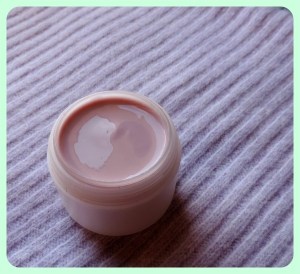
My Lab Notes: The Four Pillars of a Great Emulsion
Hello Hello! 😀
When I first started playing with body butters, I realized pretty quickly that I needed to dig a bit deeper into the science of it all. I didn’t want to just follow “recipes”; I wanted to understand the why.
These are my personal notes on the core structure of every face and body cream I make. While formulation can get incredibly complex, I’ve realized that my most successful experiments always come down to these four essential pillars.
1. The Mechanics of Hydration (Water + Fats)
I used to think water was just a filler, but it’s actually the hydration hero! The problem is that water evaporates too fast on its own. That’s where the Lipids (my oils and butters) come in—they act as a shield to keep that moisture trapped in.
-
My Observation: I’ve noticed that an emulsified cream (where the water and oil are actually “glued” together) works so much better than just shaking up a bottle of oil and water. It feels better, and the skin stays hydrated longer!
2. Preservation: My Non-Negotiable Rule! 😀
PHEW! Let’s talk about preservatives. I know some people want to avoid them, but in my lab, preservation is NOT optional. * The Reality: Any time I add water to a formula, I’m basically inviting bacteria and mold to a party. Unless I want to keep my creams in the fridge and throw them away after three days (no thanks! 😉 ), I need a professional preservation system. I usually choose eco-friendly options around 0.5-1%. Safety first!
3. The Water Phase: Pure vs. “Poetic”
For my experiments, I always use demineralized, pure water to avoid any minerals messing with my emulsifiers.
-
A bit of Poetry: I love using Rose water or Witch Hazel, but I’ve started categorizing these as “poetic” ingredients. They smell amazing and feel luxurious, but I keep my expectations realistic—they are there for the soul of the cream, while the “active ingredients” do the heavy lifting!
4. The Lipid Phase: Balancing the “Fall”
I’ve stopped believing in “miracle oils.” Now, I focus on the Grease-Fall.
-
The Strategy: Instead of just picking one oil, I look at the density ($\rho$) and the viscosity. I want a blend of light, medium, and heavy fats so the cream feels balanced from the moment I put it on until it sinks in.
5. Emulsifiers: The Architecture
The emulsifier is the “bridge” that holds the whole thing together. I choose mine based on:
-
Temperature: Do I want a cozy hot-process session at 70°C, or a quick cold-process fluid?
-
The “Touch”: Some give a dry, powdery finish, while others feel rich and velvety.
These four pillars are the foundation of everything I do. Once I get these right, I can start playing with the fun stuff—the actives!
HAVE A GREAT DAY! 😄

 IT'S ALL IN MY HANDS
Great post, you break it down really simply and I like your writing style. Very informative! I am currently working with a cosmetic formulator on a cream and have been making lots of batches of cream and constantly learning. Thanks for sharing your advice. Keep up the great blogging!
LikeLike
Well… thank you very much! 😀
You are free to share anything interesting you find out!!! 😉
LikeLike
I read your comment here and im also doing experiment’s on making creams, lotions, hair gels, shampoos, and other items can i get help from you in this?
LikeLike
What kind of help do you need? Is it specific to a formula that needs tweaking? Or what do you mean?
LikeLike
Please simplify how to make a pearlized liquid hand soap – I want to use, SLES, Cocamide DEA, CAB, Glycol Distearate, etc. Do I heat the distearate with water to 70 degrees or do I mix it with water and surfactants and then heat it. A little confused.
Thanks
Paul
LikeLike
Hello Paul.
I think the confusion comes from the fact that you are talking about detergents in a post about the making of a lotion 😀
Usually the making of a detergent does not require the heating of anything… however, since you want to use the Glycol Distearate things become different…
You have to separate the formulation in 4 phases and proceed so:
Phase 1) glycol distearate + small amount of cetyl alcohol + a solubilizer
Phase 2) water and glycerin
Phase 3) your surfactants combined
These three phases you will heat up in a double boiler until all is melted. Then you pour and stir the Phase 1 into the Phase 2, and later the Phase 2+1 in the Phase 3.
Eventually you add the Phase 4 which is made of preservative and those ingredients which don’t have to be heated (for example proteins, if you are going to add them).
Hope this was clear.
I had not talked about this before in my blog because I honestly don’t like much the Glycole Distearate (and probably I wouldn’t even use Cocamide DEA, but obviously it is a free choice 🙂 ).
Hope it helped! 😉
LikeLike
hi there! 🙂
Could you recommend a good immersion blender? Do you think its worth it to invest in a good blender or would kitchen aid immersion blender work just as well?
LikeLike
Any immersion blender works pretty much the same. The difference is in the power, but I don’t believe we can appreciate the difference in a homemade lotion 🙂
LikeLike
Gotcha! Thank you for your response 🙂 Won’t go too crazy on the blender.
LikeLiked by 1 person
Just a note on your comment on “hydrolized flower waters”: I believe you may be referring to hydrosols. As the result of the distillation of plant material and water, they contain numerous chemicals such as terpenes, phenols, etc and (though they look like water) are not a 1:1 substitute for water in formulations due to their acidic pH. The common and not so common hydrosols I distill have had pH as low as 4.2 and as high as 6.5.
LikeLike
But since at the end of formulation we always adjust the pH, it doesn’t make such a difference.
LikeLike