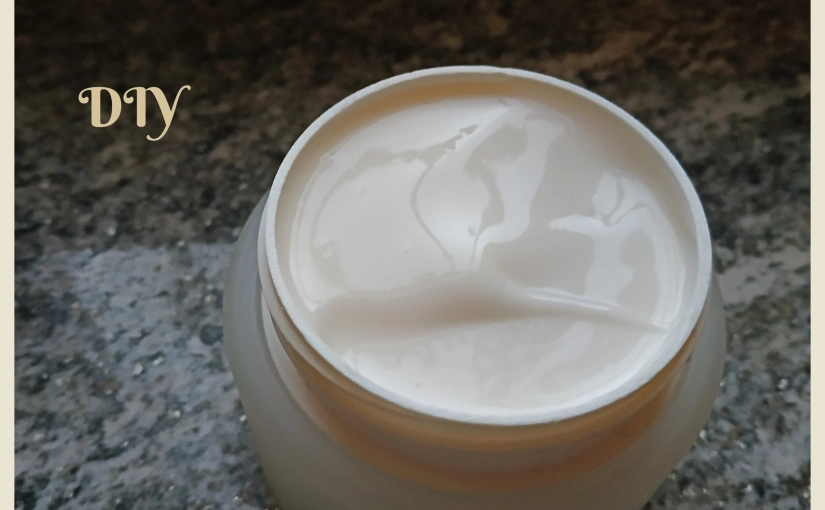
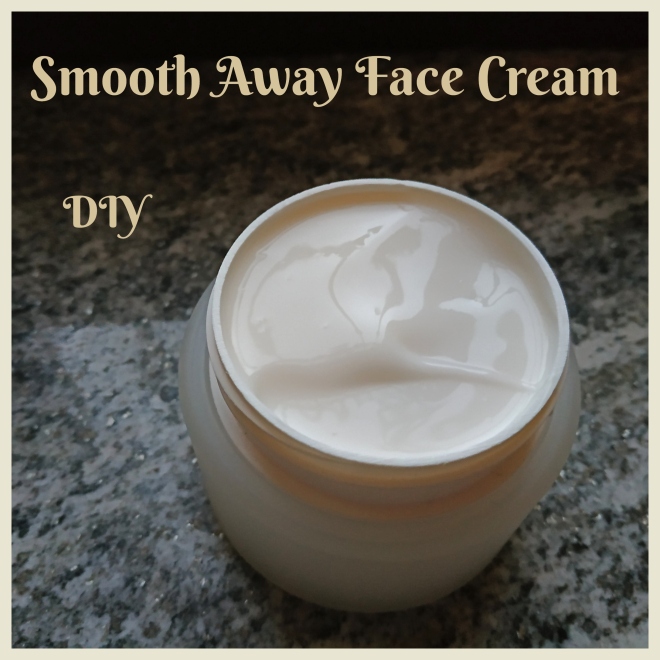
Smooth Away Face Cream

LAB NOTES & SAFETY NOTICE
For educational purposes only. Content reflects personal, non-professional formulation experiments and is not instructional.
No formula or information on this site is intended for commercial use, consumer application, or third-party use.
Accessing this content means you accept all risks and full responsibility for safety, testing, legal compliance, and outcomes.
[Full Legal Disclaimer & Safety Requirements]

Hello everyone!

IMG_20181029_082916 (1)

Continue reading Smooth Away Face Cream

Water in Cosmetic DIYs

LAB NOTES & SAFETY NOTICE
For educational purposes only. Content reflects personal, non-professional formulation experiments and is not instructional.
No formula or information on this site is intended for commercial use, consumer application, or third-party use.
Accessing this content means you accept all risks and full responsibility for safety, testing, legal compliance, and outcomes.
[Full Legal Disclaimer & Safety Requirements]

Water

Aqueous Phase Standards & The “Water to 100” Logic

In my formulation studies, water is the most voluminous and technically volatile component. Because water supports microbial life, its purity and the logic behind its calculation are the primary safeguards for a stable product.

1. The Purity Hierarchy: Beyond the Tap

The choice of water is not negotiable. Standard tap water contains minerals (electrolytes) and metal ions that can destabilize emulsions and deactivate preservatives.

  • Demineralized Water: Free of minerals that interfere with electrolyte-sensitive ingredients (like Carbomers or specific emulsifiers).

  • Microbiologically Pure Water: Required to ensure we aren’t introducing bacteria or fungal spores into the batch.

  • The “Boil and Hold” Protocol: If commercially distilled, sterile water is unavailable, I utilize a high-heat mitigation strategy. I boil demineralized water for at least 20 minutes to reduce the bio-burden. This does not guarantee 100% sterility, but it significantly increases the efficacy of the final preserving system.

2. The “Heat and Hold” Method

When executing heated emulsions, I often utilize the Heat and Hold technique. This involves maintaining both Phase A (Aqueous) and Phase B (Lipid) at 70°C–75°C for 20 minutes.

  • Objective: To ensure all high-melting-point waxes are fully integrated and to provide a secondary thermal “kill step” for potential pathogens in the water phase.


3. The Mathematical Protocol: “Water to 100”

In professional formulation, we work exclusively in Percentages (%). This ensures that the concentration of active ingredients and preservatives remains constant, regardless of the batch size or substitutions.

Why we calculate water last:

By listing water as “Water to 100,” we treat it as a flexible solvent. If I decide to increase an active ingredient from 1% to 2%, I do not reduce my preservative; I simply reduce the water. This maintains the integrity of the chemical ratios.

Example Calculation: If a formula requires:

  • Gelling Agent: 1.5%

  • Preservative: 0.5%

  • Actives: 3.0%

The math follows:

If I substitute a gelling agent that requires 3.5% for the same viscosity, the math updates automatically:

Result: The preservative remains at exactly 0.5% of the total mass, ensuring the product remains safe.


Researcher Summary

“Water to 100” is the language of the cosmetic chemist. It allows for agility in the lab—permitting substitutions and adjustments without compromising the safety or performance of the final cosmetic. Remember: Where there is water, there must be a preservative.
Babassu Body Cream – Recipe

LAB NOTES & SAFETY NOTICE
For educational purposes only. Content reflects personal, non-professional formulation experiments and is not instructional.
No formula or information on this site is intended for commercial use, consumer application, or third-party use.
Accessing this content means you accept all risks and full responsibility for safety, testing, legal compliance, and outcomes.
[Full Legal Disclaimer & Safety Requirements]

Hello there! 😀

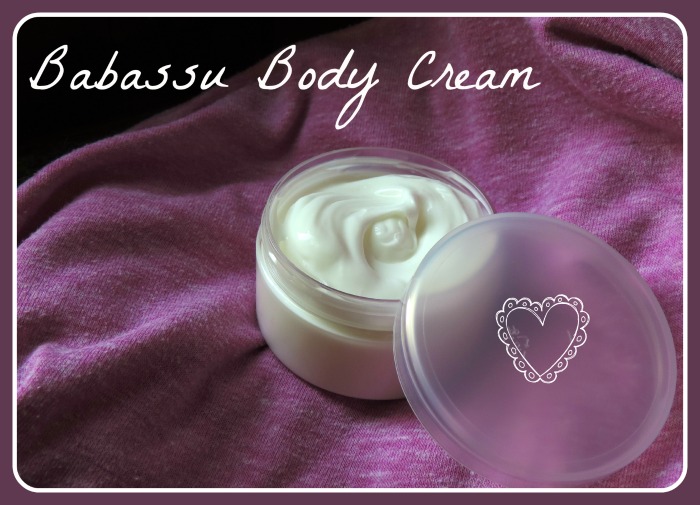
Babassu Body Cream

Lab Note: My “Smooth as Silk” Babassu & Shea Body Cream

Today I’m sharing a recipe for a rich body cream using a new emulsifier: Methyl Glucose Distearate. I’ve found the skin feel is even lighter than the “Sesquistearate” version, so I might start testing this for face creams too! yeheee!

For this body cream, I wanted it to feel luxurious but not greasy, so I chose Babassu Oil and Shea Butter, but balanced them with Dicaprylyl Ether to give it a nice “dry” finish.

The “Secret” Allantoin Trick:

I add Allantoin to almost everything because it’s so soothing and affordable. But it can be tricky to disperse! My secret? I found that it “melts” perfectly into Hydrolyzed Proteins. Now, I always pair them together in my Phase C—no more grainy creams! 😉

The Formula I Used:

Phase A (The Gel Base):

  • Water: to 100

  • Glycerin: 5.0

  • Xanthan Gum: 0.2

  • Carbopol Ultrez 21: 0.4 (The “No-Stir” superstar!)

Phase B (The Precious Fats):

  • Methyl Glucose Distearate: 3.5 (The new emulsifier)

  • Cetyl Alcohol / Cetyl Palmitate: 0.8 / 0.7 (My thickening duo)

  • Shea Butter: 6.0

  • Babassu Oil: 8.0

  • Rose Hip Oil: 3.0

  • Dicaprylyl Ether: 3.0 (For that “dry” touch)

Phase C (The Active Finish):

  • Hydrolyzed Oat Proteins: 3.0

  • Allantoin: 0.4 (Pre-mixed into the proteins!)

  • Preservative (Cosgard): 1.0

  • Fragrance Oil: A few drops


Notes from my Beaker:

  1. The Carbopol Ritual: I measured the Carbopol Ultrez 21 and just poured it on top of the water. Do not mix it! Just let it sit and hydrate slowly while it sits on the surface. After a few minutes, it looks like water with little whitish pieces—that’s perfect! It only becomes a gel once the pH hits 5.

  2. The Emulsion: I heated Phase A and B to 70°C. I added the Xanthan-glycerin slurry to the water just before mixing. Then, I slowly poured Phase B into Phase A while stirring with a spatula.

  3. The Mixer: Once they are combined, it’s time for the immersion mixer! It turns white and liquid, but the mixer is what makes the “magic” emulsification happen.

  4. The Ice Bath: You cannot skip the cooling process or it might separate! I used an ice bath to speed things up, stirring for about 30 minutes until it reached room temperature.

  5. The Finish: I added my Phase C (with my Allantoin-Protein mix!), checked the pH, and adjusted it to 5.5.

  6. The Waiting Game: Because of the Cetyl Alcohol and Palmitate, the cream keeps thickening for 24-48 hours. I left it in the beaker covered with plastic wrap for two days, stirring it every now and then, before finally putting it into jars.

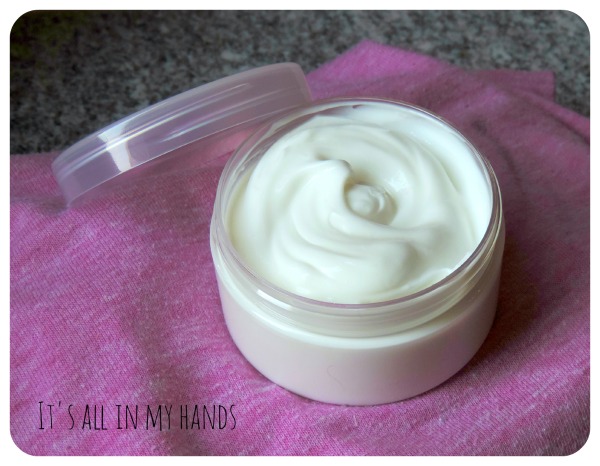
Final Verdict: The texture is lovely! It’s rich because of the Shea and Babassu, but the new emulsifier and the Dicaprylyl Ether keep it from feeling “heavy.” And thanks to the protein trick, the Allantoin is perfectly smooth. ENJOY! 😀 😀 😀

Body cream itsallinmyhands