The pH talk

LAB NOTES & SAFETY NOTICE
For educational purposes only. Content reflects personal, non-professional formulation experiments and is not instructional.
No formula or information on this site is intended for commercial use, consumer application, or third-party use.
Accessing this content means you accept all risks and full responsibility for safety, testing, legal compliance, and outcomes.
[Full Legal Disclaimer & Safety Requirements]

Hello everyone! 🙂

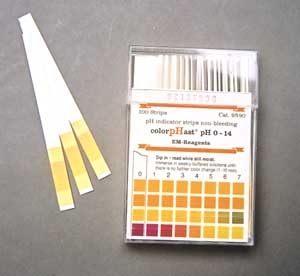
I have received many questions about pH and therefore I have decided to make a brief post about it. In fact, to learn how to formulate and be able to make safe cosmetics at home, it is really essential that you understand what pH is and that you have a way to measure it.

strips
Well then! Let’s dive in:
“pH” stands for “power of hydrogen”, the capital “H” is because the symbol of the element hydrogen in the periodic table is “H” (always capital! Now it should be easier to remember how it is properly written 🙂 ).

“pH is a logarithmic measure of hydrogen ion concentration in an acqueous solution” (don’t you dare stop reading!!! 😀 )

pH = -log[H+]

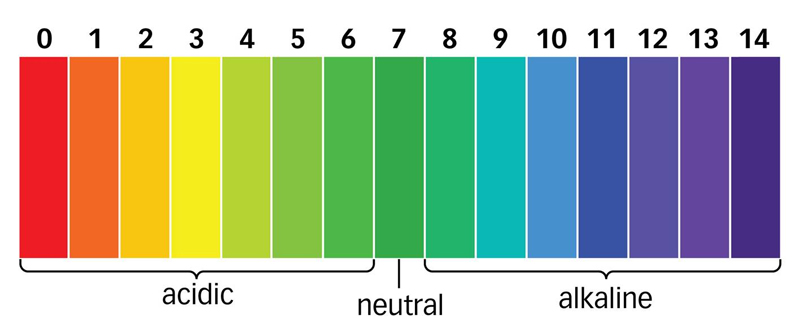
Try to think of it this way: by measuring the concentration of something (the hydrogen ion: H+) in an acqueous solution (water, for instance) we get to know how acidic or alkaline the solution is. 🙂

KEEP ON READING

Water in Cosmetic DIYs

LAB NOTES & SAFETY NOTICE
For educational purposes only. Content reflects personal, non-professional formulation experiments and is not instructional.
No formula or information on this site is intended for commercial use, consumer application, or third-party use.
Accessing this content means you accept all risks and full responsibility for safety, testing, legal compliance, and outcomes.
[Full Legal Disclaimer & Safety Requirements]

Hello Everybody! 🙂

Today I will briefly talk about the water I use in my Formulations and how I calculate its amount (I have received many questions of explanation 🙂 I thought it was clear but apparently it was not so).

Water

Whenever I use water in my formulas, I need to add preservative because where there is water, there is life and therefore bacteria and mold of any sort might be enjoying the swimming pool 😀
To be really thourough, bacteria or mold can actually be even in powder form cosmetics but this doesn’t change the fact that if there is water, there needs to be a preserving system in place because for sure there will be possible bacterial and mold growth.

But the real question is: is ANY WATER the same for use in cosmetic ingredients?
And well, the answer is: ABSOLUTELY NOT.

KEEP ON READING

Silicones in cosmetics – the truth

LAB NOTES & SAFETY NOTICE
For educational purposes only. Content reflects personal, non-professional formulation experiments and is not instructional.
No formula or information on this site is intended for commercial use, consumer application, or third-party use.
Accessing this content means you accept all risks and full responsibility for safety, testing, legal compliance, and outcomes.
[Full Legal Disclaimer & Safety Requirements]

Hello there! 🙂

Today I want to talk about SILICONES because I found there is so much mis-knowledge about them online and I felt I need to clear their reputation a little. 🙂
Obviously everybody is entitled to have their own opinion… BUT, to have a real opinion, one is supposed to have a real notion of what they are talking about 😉 so here I try to sum up some facts that might have created confusion.

Silicones
KEEP ON READING

Caffeine & Escin Eye Cream DIY

LAB NOTES & SAFETY NOTICE
For educational purposes only. Content reflects personal, non-professional formulation experiments and is not instructional.
No formula or information on this site is intended for commercial use, consumer application, or third-party use.
Accessing this content means you accept all risks and full responsibility for safety, testing, legal compliance, and outcomes.
[Full Legal Disclaimer & Safety Requirements]

Hello there! 🙂

This new recipe for an Eye-Cream for my blue circles and puffiness. I felt it did help a little (even though cosmetics are never magic potions).
I am really satisfied!

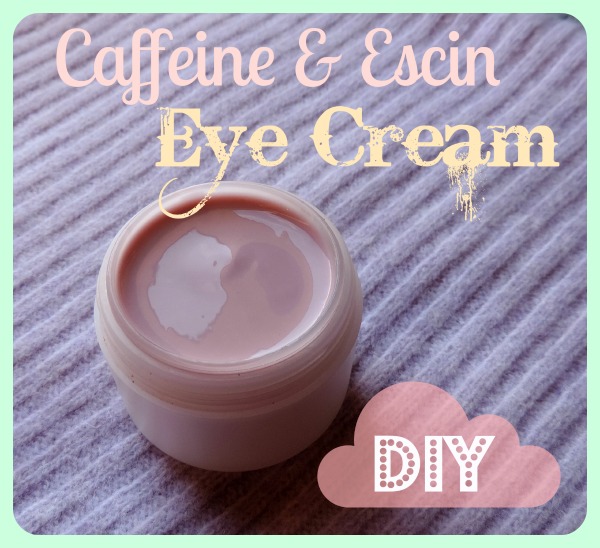
Escin and Caffeine Eye Cream

I wrote “blue circles” and not the more generic “dark circles” because there are two different kinds of dark circles:
KEEP ON READING

Can you recognize a good Shampoo pt.4

LAB NOTES & SAFETY NOTICE
For educational purposes only. Content reflects personal, non-professional formulation experiments and is not instructional.
No formula or information on this site is intended for commercial use, consumer application, or third-party use.
Accessing this content means you accept all risks and full responsibility for safety, testing, legal compliance, and outcomes.
[Full Legal Disclaimer & Safety Requirements]

Hello there! 😀

This is finally the last chapter of our “Recognizing a good Shampoo” topic.
We have learnt the basics of shampoo surfactants in the part 1 and part 2 and in the last post (which you can find here) we talked about the most common “extra ingredients”.
I know I haven’t covered all the possible things but I did what I could 😀

Can you recognize a good Shampoo pt 4

Today I just want to briefly talk about those “useful” ingredients which we find in our shampoos, meaning those ingredients which should (at least theoretically) make a difference! 😉

Panthenol – It derives from Vitamin B5. A famous shampoo brand made a huge campaign on their shampoos because they contain this vitamin. Yes, it is supposed to have good effect on hair and scalp, it is an humectant and it helps retain the water. It also creates a light “film” on the hair protecting them from damage. 
However, in a product like a shampoo, which we wash off after few seconds from having applied it, it might not be that effective and therefore if you find it in a shampoo it is very probably in minimal amount, just to look good in the ingredient’s list. 😉

KEEP ON READING

Can you recognize a good Shampoo? pt.3

LAB NOTES & SAFETY NOTICE
For educational purposes only. Content reflects personal, non-professional formulation experiments and is not instructional.
No formula or information on this site is intended for commercial use, consumer application, or third-party use.
Accessing this content means you accept all risks and full responsibility for safety, testing, legal compliance, and outcomes.
[Full Legal Disclaimer & Safety Requirements]

So here we are, with the third part of our “Can you recognize a good Shampoo” posts! (you can check pt.1 and pt.2).

We have discussed the most commonly used surfactants; we know that usually anionic surfactants are the ones which perform the best on the hair because of their negative charge which makes them feel more “conditioning” (it actually increases their “wetting ability”) and at the same time, for the same reason, they tend to be more aggressive on our skin/scalp; we have also talked about the most commonly used eco-friendly and delicate surfactants (the glucosides); I know I am very far from having covered all the possible combination of surfactants, but that was not my intent from the beginning, as it would be an impossible task: surfactant combinations can be infinite! 😉

GoodShampoopt3.jpg

KEEP ON READING

Can you recognize a good shampoo? pt.2

LAB NOTES & SAFETY NOTICE
For educational purposes only. Content reflects personal, non-professional formulation experiments and is not instructional.
No formula or information on this site is intended for commercial use, consumer application, or third-party use.
Accessing this content means you accept all risks and full responsibility for safety, testing, legal compliance, and outcomes.
[Full Legal Disclaimer & Safety Requirements]

Hello there!
Here we are at the second part of the “Can you recognize a good shampoo?
We have learnt the basics of understanding a shampoo based on ANIONIC surfactants and, in the specific, based on the combination SLES and Cocamidopropyl Betaine, but there is so much more we need to learn! 😀

Canyourecognizeagoodshampoo.jpg

So today we learn about another surfactant-combination we easily find in shampoos: combination of glucosides!

The glucosides are a wide variety of NON-IONIC (this means they don’t have “electric charge”) surfactants which are usually easily biodegradable; therefore many bio-shampoos contain this combination of surfactants.
The most common glucosides which you will find in an INCI are: Lauryl Glucoside, Decyl Glucoside, Coco Glucoside, and Caprylyl/Capric Glucoside.

KEEP ON READING