LAB NOTES & SAFETY NOTICE
For educational purposes only. Content reflects personal, non-professional formulation experiments and is not instructional.
No formula or information on this site is intended for commercial use, consumer application, or third-party use.
Accessing this content means you accept all risks and full responsibility for safety, testing, legal compliance, and outcomes.
[Full Legal Disclaimer & Safety Requirements]
The Critical Role of pH in Formulation Stability
In my formulation studies, measuring and adjusting the potential of Hydrogen (pH) is the most vital step in ensuring both the safety of the user and the chemical integrity of the ingredients. pH is a logarithmic measure of the concentration of hydrogen ions ($H^+$) in an aqueous solution, defined by the formula:
The Two Perspectives of pH Management
1. The Biological Perspective: The Acid Mantle
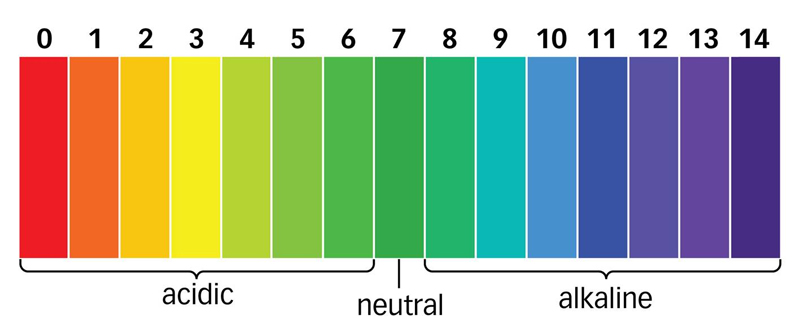
Human skin physiologically maintains a pH between 4.5 and 5.5. This acidic environment supports the “Acid Mantle”—a protective film composed of lipids and beneficial microorganisms (the skin microbiome).
-
The Risk of Imbalance: Using leave-on products with an alkaline pH (above 7) can disrupt this microbiome, leaving the skin vulnerable to pathogens and irritation. My records prioritize matching the product pH to the skin’s natural range whenever possible.
2. The Chemical Perspective: Ingredient Compatibility
Every cosmetic ingredient has a “Stability Window.” Stepping outside of this range doesn’t just reduce efficacy; it can lead to hazardous chemical transformations.
-
Performance Loss: High-molecular-weight Sodium Hyaluronate is sensitive to low pH environments (like those created by L-Ascorbic Acid). In acidic conditions, the polymer chains can degrade, essentially wasting the ingredient’s hydrating potential.
-
Chemical Transformation: Niacinamide requires a pH between 6.0 and 7.5. If formulated in an environment that is too acidic or too alkaline, it can hydrolyze into Nicotinic Acid. This can cause severe skin flushing and irritation.
Practical Measurement Protocols
Regardless of how many times I have executed a specific formula, my lab protocol requires a final pH verification. Changes in raw material suppliers or minor measurement variances can shift the final result.
Tools of the Trade
-
Digital pH Meters: These provide the highest precision (down to 0.01) but require regular calibration and maintenance.
-
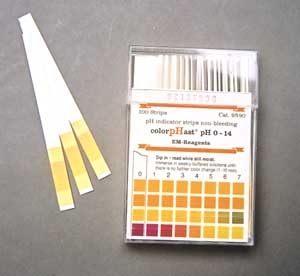
Universal Indicator Strips: For most studio applications, multi-pad plastic strips are preferred over simple paper rolls, as they provide a more stable and readable color comparison.
Adjusting the Batch
If the final reading falls outside the target range, I adjust the batch using standardized solutions:
-
To Lower pH: A 20% Citric Acid or Lactic Acid solution.
-
To Raise pH: A 10% – 18% Sodium Hydroxide (NaOH) solution or a Triethanolamine (TEA) solution.
Researcher Summary
Respecting the pH is not optional in cosmetic science. It is a fundamental pillar of Good Manufacturing Practices (GMP). Before utilizing any new active ingredient, I cross-reference its preferred pH range against all other components in the formula to ensure total compatibility.


(Source: here)
(Source: here)



Do you know how to measure pH of shampoo?
LikeLike
Shampoos are mostly made of water so using a pH meter or strip is enough 😉
LikeLike
your postings are superb. I want to subscribe.
LikeLike
well thanks 🙂
LikeLike
where can we find a good pH meter?
LikeLike
Hello Selin. On websites that sell chemistry material 🙂
LikeLike
You can find good ones cheap on
http://WWW.ALIEXPRESS.COM
Search for pH meter.
LikeLike
Hello…
Maybe a stupid question, but how do you measure the pH of a cream with a pH meter in the right way, please? What type of pH meter do we have to use? Thank you so much for your answer in advance! 🙂
LikeLike
I don’t have one yet!! I have been using pH strips so far.
However you dip the rods in the cream.
I am sorry I cannot be of more help here!!
LikeLike
for that you have to make 10% solution of cream and directly put pH electrode in it.
LikeLike
Hi! I am wondering how you measure the pH of soaps the right way. How much soap to add in the distilled water and check the pH?
LikeLike
Technically I think I remember it should be 10% BUT real soap has high pH (should be 10% at least).
LikeLike
10pH, not 10%.
LikeLike
pH7 my serum neutral,good or not for face?tq 😊
LikeLike
The skin is around pH 5.5 but also water is usually pH 7… So I would say that it is ok. If you have citric acid you can try to lower it to pH 6 but it isn’t too bad anyway 🙂
LikeLike
this site is a true gift. Thank you. I have been making cosmetics by myself for one year now, but I want to understand things better and now I am truely amazed at what I find here. THANK YOU!
LikeLiked by 1 person
Thanks for the nice words Rosa 🙂
LikeLike
Hello there,
I absolutely love your articles! I have only jus started being interested in natural products (about 1 month ago).
I am very excited as I’ve managed to make my first shower gel 🙂 However 😦
It’s ph 7 😦
As far as I know this is too high but how do I lower the ph level?
Also, may I ask where do you get so much useful (technical, biochemical, chemical) information from? I would love to learn more about this subject but can’t seem to find much info e.g. difference between de-ionised and distilled water ( I bought de-ionised water from the car garage as couldn’t get distilled water anywhere else and ended up boiling it in the microwave in the glass container!).
Grease fall article makes soooo much sense except it doesn’t include every single fat and oil available on the market so how can I find out how ‘heavy’ or ‘greasy’, ‘ight’ individual fat is? e.g. almond oil or mango, or any other?
Thank you in advance!!!!!
P.S. You are great!
LikeLike
Hello Emilia!
Thank you for your kind words!
Deionized and distilled water are the same thing. I find distilled water in supermarkets to use in ironing. Then I boil it too.
The best water would be PURIFIED distilled/deionized water, you wouldn’t need to boil that one.
I started learning from an Italian website and later I read a few books on the subject 🙂
I cannot put all the fats in the world but usually you can check the density of an oil to understand how heavy or light it is.
Compare its density to the others in the list and you are done.
You can also do little trials on your own to figure it out 🙂
Hope this helped 🙂
LikeLike
Ah sorry! About lowering the pH: add a small small amount of citric acid or lactic acid!
LikeLike
Hi there,
Thank you so much for your informative sharing!
I am a fresh graduate and just stepped in cosmetic field as a r&d personnel and thanks for guiding me so much on formulation.
I have few questions,
1. I have been taught by colleagues that i should maintain the pH at around 5.5-6.5, slightly different from yours. Is this range acceptable?
2. It is ok to measure pH for o/w system but what about w/o system? because theoretically the pH could not be measured for this system and indeed it could not be done practically (i’ve tried it).
3. are there different acceptable pH range for different products? for example, lip product and eye products. are their pH different from skin pH?
Thank you so much!
LikeLike
Hello Pei!
Yes that pH range is fine too! Skin is usually pH 5.5. Eye products usually have a little higher pH. Lips I am not sure as most of the products are anhydrous. Intimate detergents for fertile women can be around 4-5 pH and for children or women in menopause the pH of the detergent should be around 6.
Usually they measure the pH of creams by diluting them in water first, so that might be the case for water in oil but, as I have never tried, I could ve wrong! 🙂
LikeLike
Thank you very much four your clear explanation!
LikeLike
your great and nice god bless u
LikeLiked by 1 person