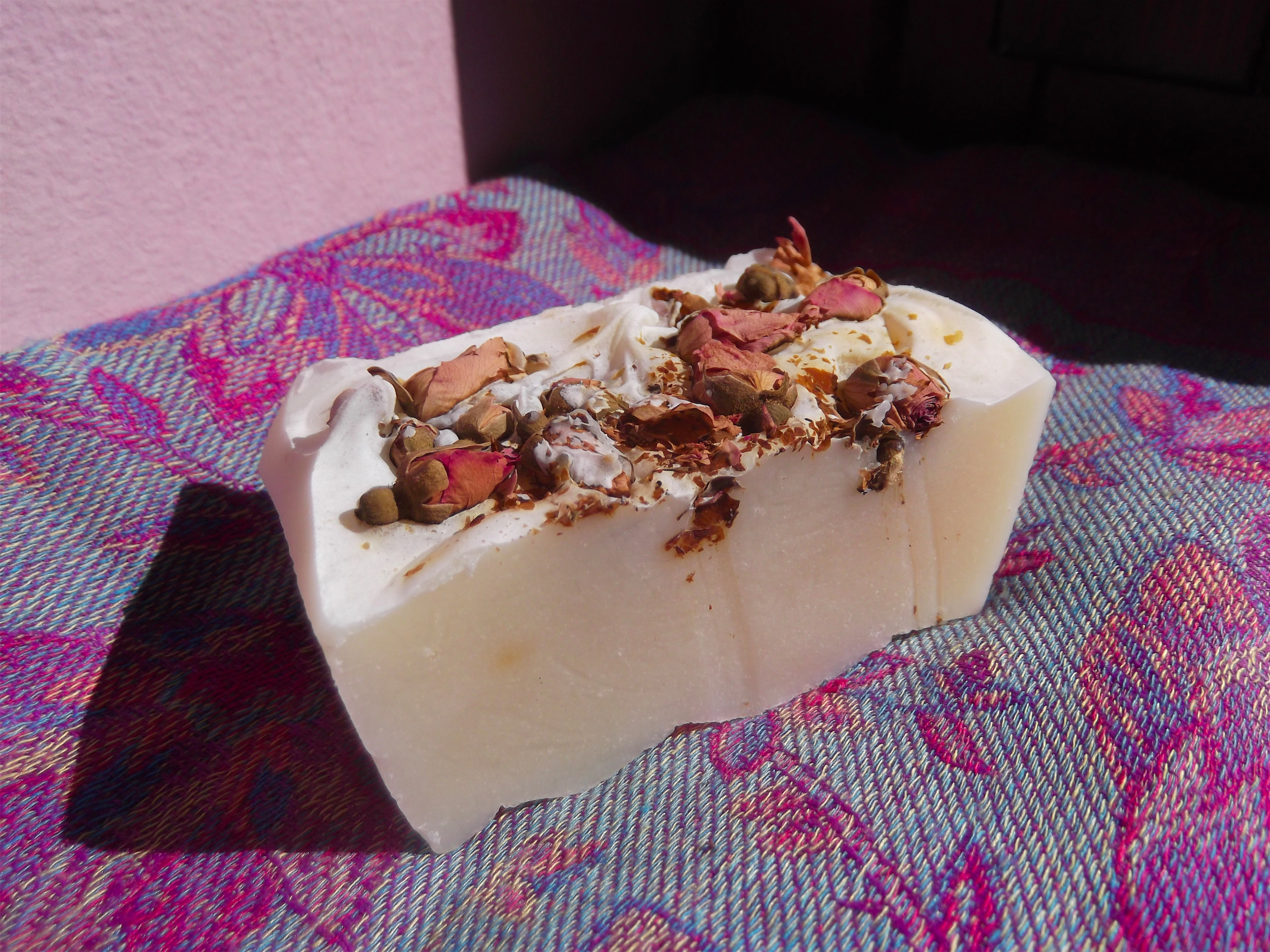
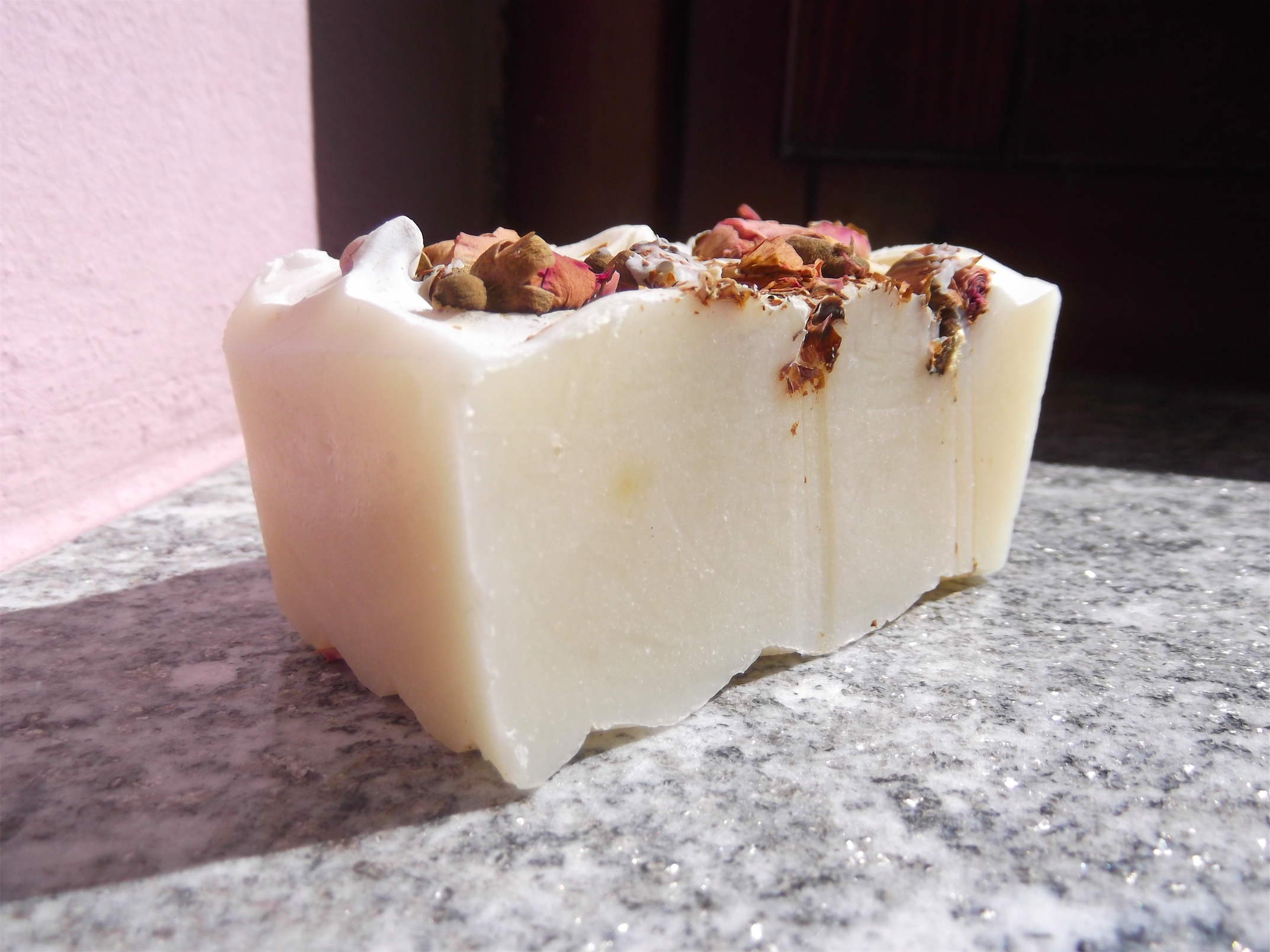
Formulating a lotion: Phase B – THEORY pt.4

The Phase B is the “oily phase” or the “heated oily phase”.
It contains the emulsifier or the emulsifiers if they are two, the thickeners (if needed) and all the oils and fats which do not get negatively affected by heat (this because 90% of the times the Phase B is heated up to 70°C).

– EMULSIFIERS:
There are many kinds of emulsifiers. I will create a dedicated post about them. The main difference regard to the formulation of a lotion/cream is that some need to be heated up to 70°C and others don’t need it. The highest number, however, need to be heated to create a stable emulsion; this is why the Phase B is called also the “heated oily phase”: because most of the time it is heated.

THICKENERS:
Thickeners are those ingredients which give consistency to the cream and also help keeping the emulsion stable; the most common are cetyl alcohol, stearic acid, cetylstearic acid). Some are even slight emulsifiers themselves (for example cetyl alcohol which is a lipophilic emulsifier: it means that it is “fat-loving” emulsifier which can emulsify a small small quantity of water into a large quantity of fat).
Thickeners are solid (usually they are in pearls) and need to be heated in order to melt with the other ingredients.
In a formula you should add around 1% of thickeners and you can choose to add only one kind or two kinds. I personally like the combination of 0.5% cetyl alcohol and 0.5% cetearyl palmitate. You should do experiments to find out which consistency each thickener gives to a cream, in order to be able to choose what you like the most. 🙂
Pay attention, however, that while most of the emulsifiers do not contain thickeners in their formula, some do. It is the case, for example, of Montanov 68 (this is one of its commercial names) which is: “cetearyl alcohol, cetearyl glucoside”, where the cetearyl alcohol is our co-emulsifier and thickener, the cetearyl glucoside is the emulsifier. In this case you should not add any extra thickener to your cream-formula or it would result in a very lumpy cream difficult to spread.

THE FAT (finally) 🙂 :
Before you start formulating a lotion you obviously need to know what is going to be its purpose: is it a cream for body, face or feet/hands? And, if it is for face, is it for normal skin, dry skin or oily skin?
Once you know what kind of cream you are planning to do, then you can start formulating.
Here is a short guideline on the percentage of fats you should add to your cream according to its purpose.
Keeping in mind that in any cream the fats should never go over the 25% fats (I am talking about O/W creams, about W/O it’s a different story but that will require another post) these are the values:
0-2% – it is obviously not a lotion but it is a gel: good for oily skin in summer days.
2-4.5% – this could be considered a oil-free lotion because the percentage of fats is so low. Good for oily skin.
4.5-7.5% – good for a cream for oily skin in winter days or normal skin in summer.
8-12% – good for normal skin
12-15% – good for dry skin
15% – light body cream
20% – medium weight body cream
25% – good for a rather thick body cream, hand cream and foot cream!
All these values can be changed a bit, according to what is your purpose: they are not fixed values but they give the idea 🙂

How to decide which oils and butters should go in your lotion?
On the market there are tons and tons of oils and buttes, some are natural, nowadays it is fashionable to use exotic oils 🙂 and some are synthetic.
Probably the first thing you would do is to add any kind of oil which sounds good to you: “Oh I read somewhere that the oil of khtululu (I invented this plant 🙂 I am just trying to make a point) is very good against skin-aging, it has miraculous antioxidant properties and, if used everyday, it will also prepare the breakfast for you in the morning!!! I will make a cream with 7% fats using 5% this oil and 2% turururu oil, which is a very rare, I will just sell my kidney to have it but you see it is found only on the Everest peak in 100 ml jars and it is said to be marvelous for firming the skin…”
Let me say NO NO NO NO NO and NOOO 😀
There is one thing that you will happily or sadly learn while learning to make lotion-creams: nothing is miraculous and it is not true that the more one thing costs, the more it is effective. That is just what market wants us to believe. 🙂 And, if you study well enough (even on your own, doing some research), you will realize that most of the times we are just being fooled 🙂 .

There are some rules which need your attention when deciding which fats to add in your formula and these rules concern the density, viscosity, spreading ability of your oil more than the so-called miraculous properties. I will never repeat this too many times.

So the new post will be only about the oils and how to formulate a group of oils in the cream, how to choose them, what to look for and so on 😀

(Sources)

Formulating a lotion: Phase A – THEORY pt.3

Here I will be more specific about formulating a lotion.

As I already said the PHASE Aalso called “water phase” or “heated water phase”, is the first step to the making of our lotion/cream.
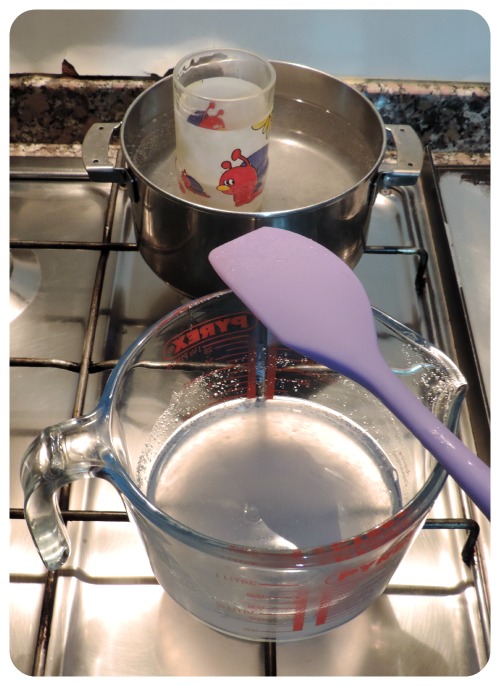
It is mostly heated even if actually it all depends on the other ingredients we are using: the point is that most emulsifiers need to be heated to 70°C and to emulsify it is needed that waters and fats, read “phase A and phase B”, are also both heated up to this temperature. So usually phase A is heated in a double boiler up to 70°C at the same time of phase B.

What does the phase A contain? 

– WATER.
Any lotion should contain at least 70% water (there is a post on water HERE).
You could also use herbal hydrosols (which doesn’t mean “herbal infusion”) but anyway bear in mind that these waters are mostly expensive and do not have so great properties (IMO better you save your money to buy active ingredients 😉 ).

GLYCERIN
Glycerin is highly hygroscopic, which means that has the ability to attract and hold water molecules very very tight 🙂
This will be the “magic ingredient” which won’t let your lotions become dry after few days you opened them but will actually keep them moisturized.
As you can imagine, the fact that it is so highly hygroscopic is not only a “plus”: if, for example, you add too much glycerin to your face cream you can be sure that after a couple of hours your face will look bit shiny/oily.
So, the percentage of use is 1.5-5% (1.5% should be the minimum, used for example in creams for oily skin; 2-3.5% is for normal to dry skin; 4-5% is for body lotions).

GELLING AGENTS
Gelling agents help the lotion to be slightly more firm but mostly they are used to keep the emulsion more stable (only with a small small number of emulsifiers you should avoid using them).
There are many gelling agents, I am going to speak of those I have used:
xanthan gum, there is of two kinds: normal and transparent grade (which gives a transparent gel): it gives a very slimy gel which doesn’t have the best consistency but it is a great gelling agent which does not “melt down” even if you add a high percentage of “salts” (just keep reading 🙂 ). If you use too much it creates a “film” in your skin and it makes you sweat.
If it is the only gelling agent you have, you could use it at 0.2-0.35%; the best, however, would be to use it as a stabilizer of another gelling agent (the next one for example).
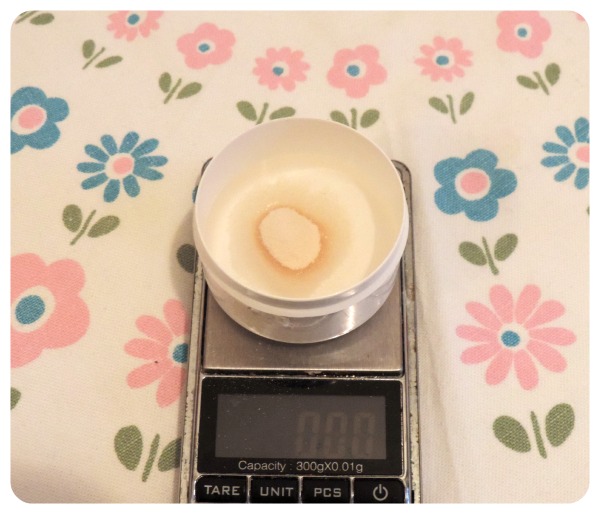
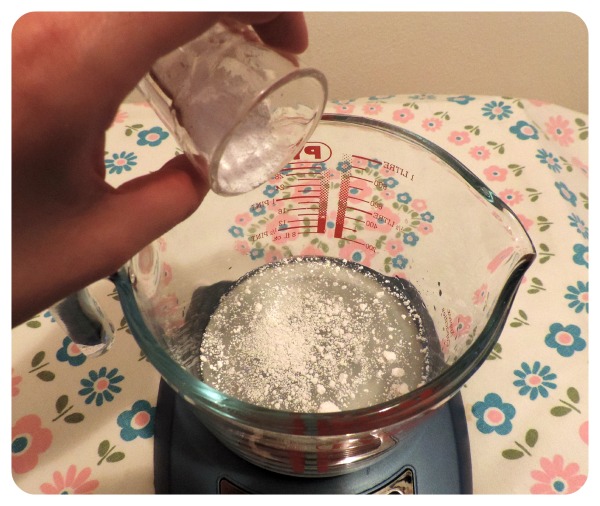
How to use it: I usually take the phase A becher and add the glycerin, then add the xanthan gum and mix with a spatula. When it looks dispersed I add the water little at a time. If you incorporate air while mixing just let the gel rest and the bubbles will go.
Here is a picture of glycerin with xanthan gum just poured on top:
Xanthan Gum Glycerin
carbopol ultrez 21, there are tons of “carbopol…” but I am going to speak of what I know better: I haven’t tried the others well enough to make up my mind about them; what I have read is that carbomers create gels which are slightly difficult to keep stable. This “carbopol ultrez 21” is not too difficult to use and, if you follow some rules, it will give great results.
The bad part is that it is stable only at pH 6: if you rise the pH too much everything will be spoiled and there is nothing you can do to save it. Another bad part is that if you add salts to the lotion, the gel melts down and everything is ruined. When I say “salts” I am not referring to cooking salts (only 🙂 ) but I am chemically speaking, so for example you shouldn’t add too much sodium hyaluronate (hyaluronic acid? 😉 ).
But so why should we use something which could give problems in the formula? Simple: it makes a good gel, it doesn’t give other problems like the white “trail” (? not sure… if somebody can help me with my English I will be glad 🙂 )… I am talking about one thing which happens with certain creams: when you spread it, it doesn’t absorb easily and it actually creates a white “trail”, nothing terrible but still we want to avoid it 🙂 . Anyway, I was saying: this ultrez 21 makes a good gel, good consistency in the cream, good finish… so what to do? Simple! We try to help it to be stable by not leaving it alone!
If you want to leave it alone you can use it from 0.5 to 1%, if you use it with xanthan gum (which is a good stabilizer) then I usually do: 0.2% xanthan gum and 0.3-0.5% ultrez 21.
How to make the gel: if you use it alone just measure the glycerin, add the water, measure separately the ultrez 21 and pour it on top of the water without mixing with a spoon.
Here is a picture:
Water and Carbopol Utrez 21
After a short time it will hydrate and it will “enter” the water: notice that it won’t become a gel immediately but it will rather float inside the water (therefore not making it transparent, like in this picture):
Water and Carbomer after 5 min
At this point you can use an immersion mixer paying attention to not incorporate air, just to make it hydrate more. The water will still be liquid at this time because this carbomer lowers the pH and therefore, not being pH6 yet, it will still be liquid. Don’t worry: add one by one drops of a solution 1:9 of sodium hydroxide and water (one part sodium and 9 parts water) and you will see the water become a gel just in front of you 🙂 . If, instead, you are going to use it together with the xanthan gum then you need to separate the two gels in the beginning: use the xanthan gum as I wrote above but do not add all the water there; in another becher pour the remaining water, add the ultrez 21, wait, mix with the immersion mixer and, before adjusting the pH to 6, mix the “xanthan gel” and the “ultrez 21 water” together. Only now adjust the pH :).
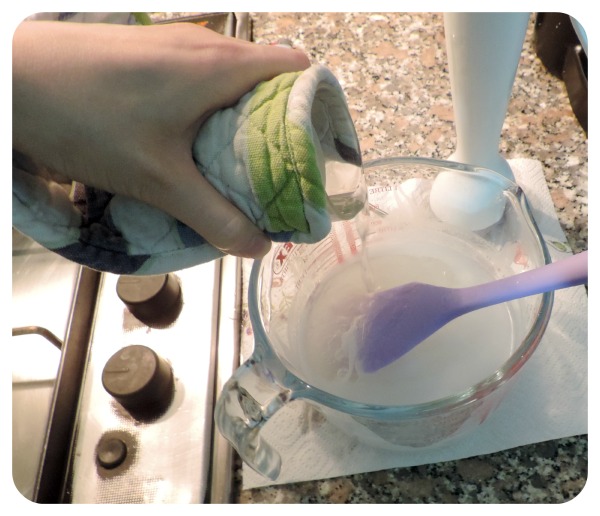
hydroxiethyl cellulose, there are different kinds of this gelling agent, so read the technical card to know at which percentage it should be used. Anyway, according to its density, it can be used from 1% up to 5% (if you are unsure which kind you bought, you can ask your supplier or you can use a middle %: from 1.5 to 2.5% but bear in mind that if you use too much it really becomes too thick). The good thing of this hydroxyethyl cellulose is that it doesn’t have any problem with other ingredients and the gel is not of bad quality either (I don’t love it, but that’s my taste 🙂 also with making lotions you should always try and make up your mind on what you like and what you don’t 🙂 ). The big difference from the other two gelling agents, however, is that it works at 70°C only, so it must be heated. I read different ways of using it, I personally use it this way: I warm up the water in a double boiler, I wait that it reaches 70°C and then pour it while stirring with a spoon (the best would be to have a very small mixer that keeps the water moving while you pour… well, I don’t have it 🙂 ). It becomes a little lumpy (I hope this is the correct word 🙂 ) so after a while I use my immersion mixer paying attention that I don’t incorporate (too much) air. That’s it.

I hope I didn’t forget too much 🙂 Have a good day! 🙂

If you want to add something or explain something better, please share your knowledge 😀

(Sources)

How to make a lotion – THEORY pt.2

HOW TO ACTUALLY MAKE A LOTION/CREAM?

As explained in the “Theory pt.1” post a cream is made of water and oils kept together by emulsifiers (one or more in the same formulation).
So, when you attempt to actually make a cream, you have to start preparing the ingredients separately. There will be at least:

PHASE A: the water based ingredients
PHASE B: the oily ingredients (or oil soluble ingredients)

I think it is better to actually show a very basic recipe of a cream so you can understand what I am talking about.
Every recipe is made for 100 grams of product and every number written after the ingredient indicates the grams (“water to 100” means that the water will be enough to make the recipe reach the 100 gr value)

BASIC BODY CREAM:
Phase A: 
water (demineralized) to 100
glycerin 4
xanthan gum 0.3
Phase B:
fats 15
emulsifier 3 (imagine I have chosen one which need to be heated)
thickener 2

Phase C:
Active ingredients 5
Preservative 0.6
2 drops fragrance oil or essential oil

So what does it mean to “make a phase A and a phase B”?
Once you have the recipe you start weighting the ingredients and you cannot put them all together like an unknown mixture: there are rules to be followed and the most important rule is to keep the two phases separated in the beginning.
So you will need at least two bechers and in one you will add the phase A, in the other you will add the phase B.

The PHASE A usually contains water, glycerin, one or more jelling agents (mainly: xanthan gum, different kinds of carbomer or hydroxyethyl cellulose) which help the emulsion to keep stable and they give consistency to the cream. There are different kinds of jelling agents and each gives a final texture to the cream.

The PHASE B instead contains the oily ingredients and the emulsifier, the thickeners if needed and so on. I have not been specific in this recipe neither for the fats nor for the emulsifiers; this because too much must be said about these two subjects and I will make other posts about this.
What we will consider, however, is that the emulsifier in this cream is one of those which have to be heated at 70°C to actually emulsify water and fats.

So, in this case, now that we have the phase A and the phase B we need to heat them up to 70°C (measuring the temperature is important).
Phase A and Phase B
Once they have both reached the same temperature, you need to add the Phase B to the Phase A (never otherwise) and you have to start mixing them possibly with an immersion mixer (pay attention at this point: avoid incorporating air or it will result in bubbles inside your cream). Notice that when you pour the Phase B into the Phase A you should actually pour it little by little, mix, add some more, mix, add some more… this will give better results! 😀
Phase B in Phase A
Once the liquid (it should still be quite liquid at this point) looks emulsified you have to keep stirring with a spoon until it cools down completely.
When it is cooled down (you will notice that now it looks more like a real cream because it has become thick and creamy 🙂 )
Keep Stirring
this is the time you can add your PHASE C: the preservative, the active ingredients (the ingredients which are extremely good for your skin) and, if you wish to, two drops of your favourite fragrance oils or essential oils (bear in mind that if you want to add fragrance oils they need to be of cosmetic grade: not any fragrance oil will do).
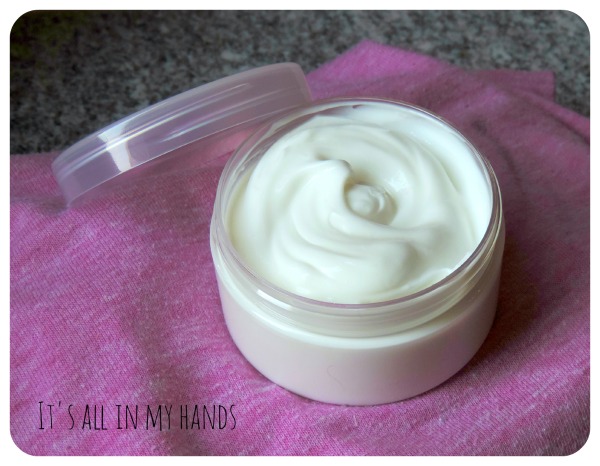
Body cream itsallinmyhands

If it sounded very easy… well it is not really 🙂
I’m not trying to take the motivation away from you, but it is not easy to get a stable emulsified cream; sometimes it gets bubbles inside, sometimes it separates after few days (usually if there are many bubbles it means it is not really emulsified… but I will teach you a trick to get to know if it is emulsified or not). Sometimes things go wrong and you don’t even manage to know why.
So I would suggest that you start reading more and more about how to make creams, also from other websites (I am just summing it up, here… but there are many websites which helped me in learning this wonderful thing so I am sure you can find them interesting also!).
There are so many things to be said about this wonderful subject! 🙂
I feel I forgot to say so much, but I will try to add everything I can to this blog.
Anyway if you decide to study about making creams… ALL THE BEST! 😉 You won’t be left unsatisfied 😀

For various recipes click HERE 
To learn how to formulate cosmetics click HERE
For a list of online cosmetic ingredients suppliers click HERE 

How to make a lotion – THEORY pt.1

Hello! 🙂

Escin and Caffeine Eye Cream14

Right after posting the body-butter recipe I realized it was not good enough and so I started studying and studying how face and body creams are really made.

I have decided to make short posts to explain also to anybody who would like to learn, how they are done in real.

The subject is not the easiest thing, it needs a lot of studying and understanding but I will try to make things as simple as they can be 🙂

A very basic lotion is made of:
– water,

– oils/butters,

– emulsifier,

– preservative.

[Of course there are much more ingredients that  can be added (like active ingredients or thickeners, for example), but I am starting from the basics so learn step by step and everything will be clear! 🙂 ]

Water and oils together give hydration (the water obviously is hydrating, but the oils or butters help the water to not evaporate… plus they give nutriments to the skin; but I will talk about this further on), the emulsifier keeps the water and the oils together 🙂 otherwise they would separate and that wouldn’t be anymore a cream (plus studies says that a cream, read “emulsified water and fats”, hydrate more than separated water and oils; which means that if you shake water and fats together and use them as a cream it will not hydrate you as much as if you made an actual cream with the same ingredients 😉 ).
At last the preservative saves the cream from the proliferation of dangerous bacteria (anytime you use water in something you produce by yourself, you need to use a preservative or you need to save your product in the fridge and use it in a few days only). I don’t know why but people dislike “preservatives” as if they were a terrible thing. They are not: there are many kinds of preservatives, some are eco-friendly (which doesn’t mean that they are like “fresh water”) some are not at all… you can choose accordingly to this, but bear in mind that using a preservative in your products is not an option (if this can make you feel better usually the % of preservative, which changes according to which one you are using, is only around 0.5%).

But now back to the ingredients:

WATER
It must be “demineralized” microbiologically pure water, you should be able to find demineralized water in supermarkets as the water used for ironing. There is a post which explain better on this HERE.
You could also use different kinds of hydrolized flower waters (like rose water, witch hazel…), choosing according to their properties (but keep in mind that many times they are expensive and they don’t have really strong properties… they can be considered more “poetic” than effective, which means that they almost only “sound good” 🙂 ).

BUTTERS and OILS
I am going to make a separate post about the choice of oils and butters because there are definitely too many things to say.
In a cream you should not use just one kind of fat: oils and butters should be balanced and chosen accordingly to the kind of cream you want to make, the purpose it has, the touch you want it to have… it’s not a matter of  so called “miraculous” properties (actually the more you will study “how to make a cream” the more you will realize that NOTHING IS MIRACULOUS… but maybe I should make another post about this also 🙂 ), it is a matter of viscosity, density, feeling at the touch, spreading ability.
To make it very short: there are some rules you have to follow in order to make a balanced “fall” of fats in your cream.

EMULSIFIERS
Also the emulsifiers will have their own post.
Emulsifiers can be very different from one another: some must be heated until 70°C to work, some cannot be heated at all or they don’t work (so according to this difference you will have to change how you make the cream… you will see how in a second!); some are for W/O (read “water in oils”) and some are O/W (read “oil in water”) [everything will be explained, don’t worry 🙂 ]; some give a dry feeling to the cream, some a rich, or a light, or a very smooth touch.
Nothing is left to “chance” and as you start experimenting you will be able to experience the difference from one another.

But now… HOW TO ACTUALLY MAKE A LOTION/CREAM

Christmas Soaps Recipes

My Karma Soap 

DSCF3234

450 gr olive oil

165 gr coconut oil

50 gr castor oil

150 gr macadamia nut oil

185 gr organic palm oil refined

135.7 gr lye

350 gr water

1 tsp Titanium bioxide

My Karma FO

strawberry mica for the swirl

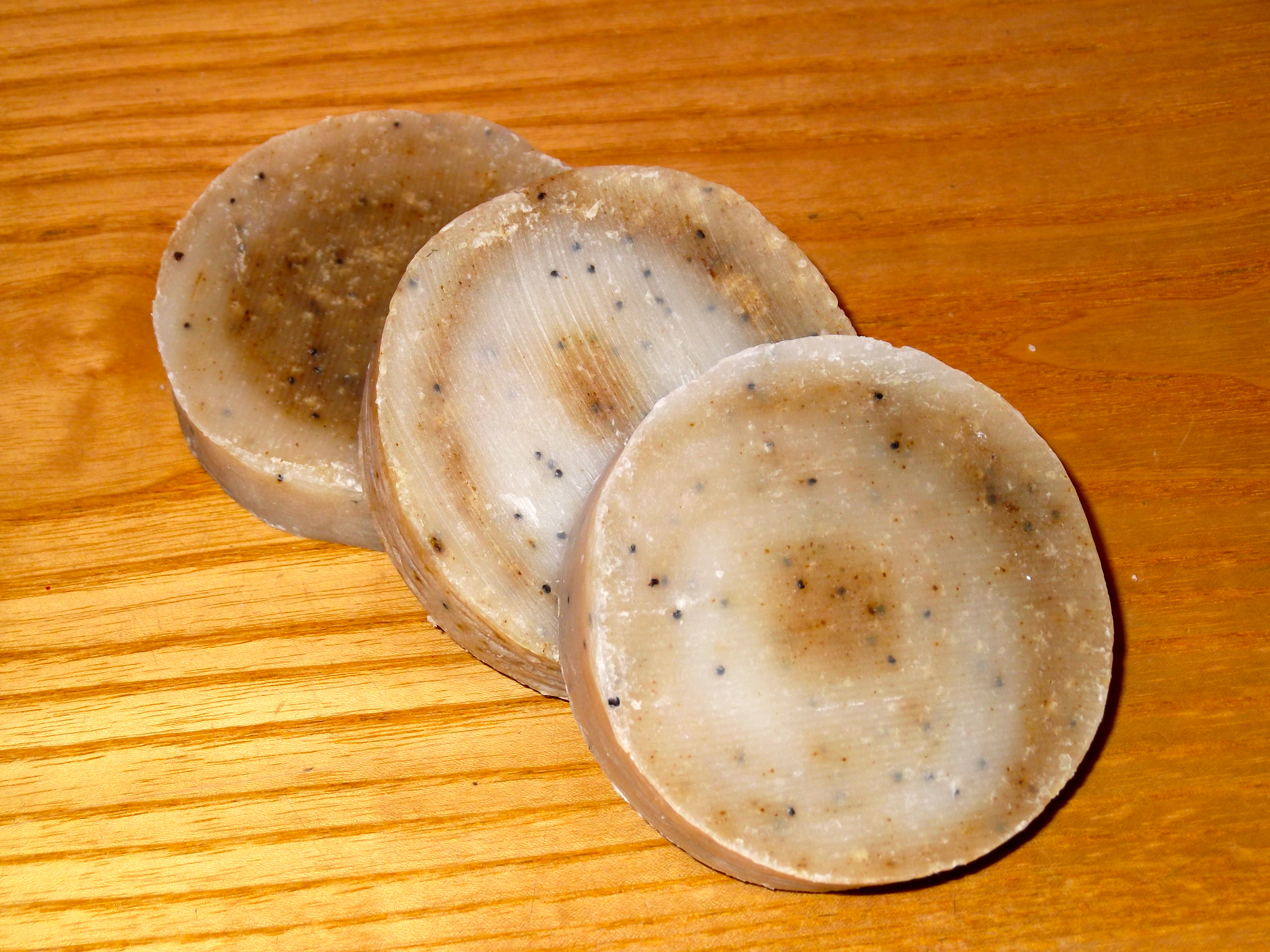
Northern Lights Soap 

DSCF3239

150 gr grape oil

180 gr coconut oil

120 organic palm oil refined

60 gr shea butter

30 gr castor oil

lye 5%

225 water

1 tbsp amla powder

1 tsp poppy seeds

Blend of essential oils of my taste

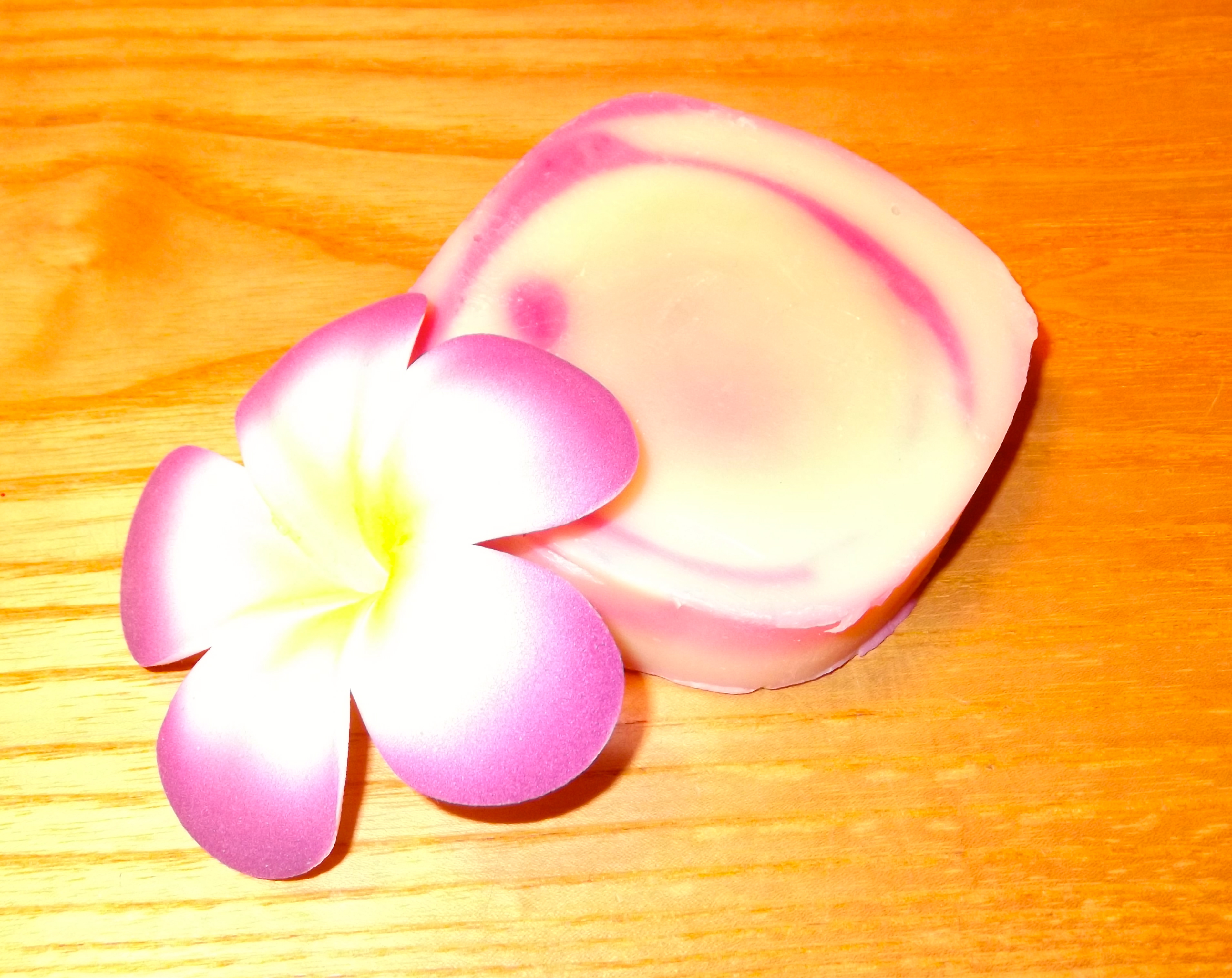
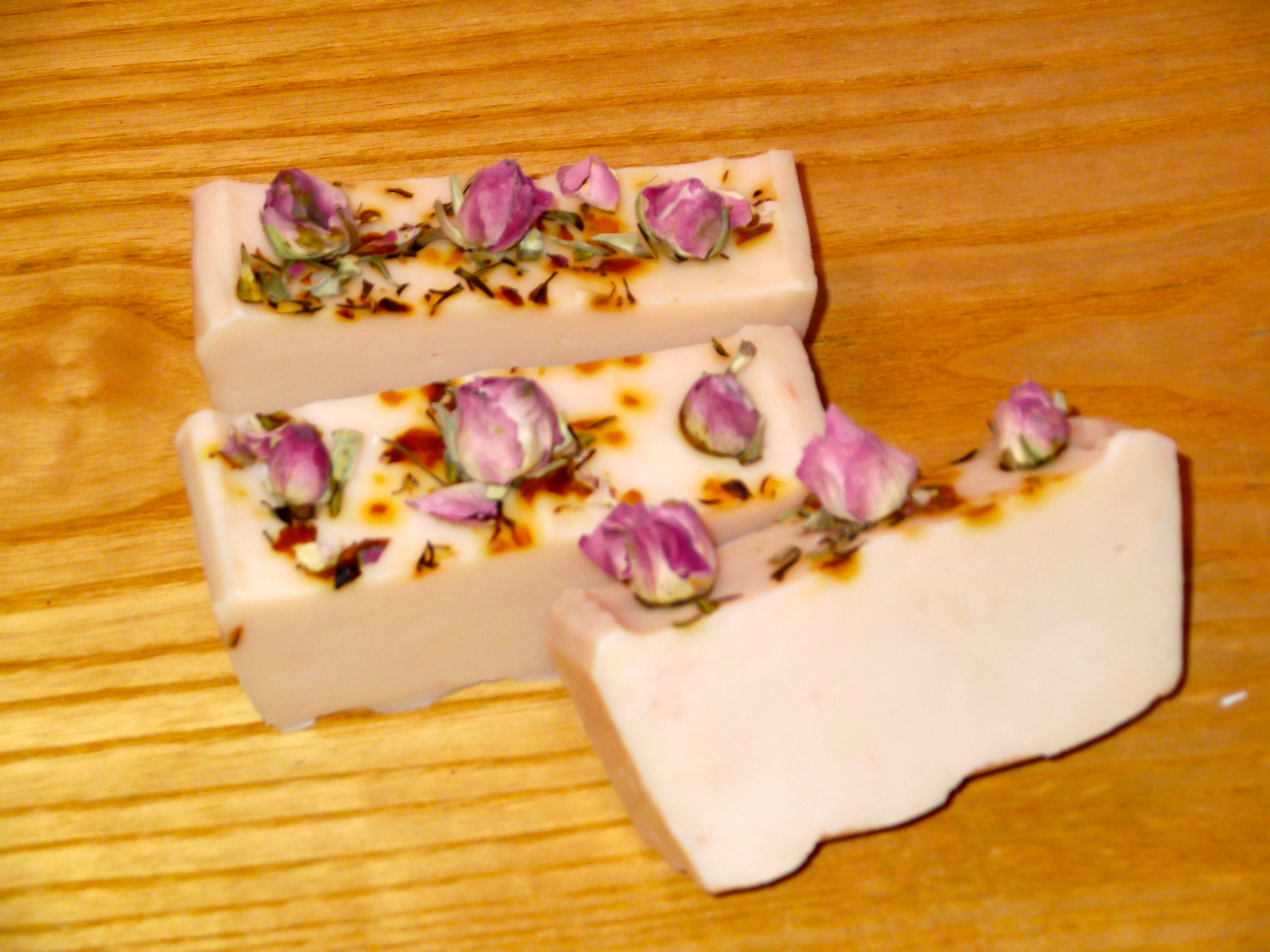
Rose Soap

DSCF3238

225 gr olive oil

150 gr coconut oil

50 gr macadamia nut oil

25 gr castor oil

50 gr avocado butter (added at trace)

70.1 lye (6%)

165 gr water

1 t rice flour

7 ml rose FO

4 ml patchouli EO

6 ml geranium EO

So these are some of the Christmas soaps I made this year 🙂


Creative Commons License
This work is licensed under a Creative Commons Attribution-NonCommercial-NoDerivatives 4.0 International License.

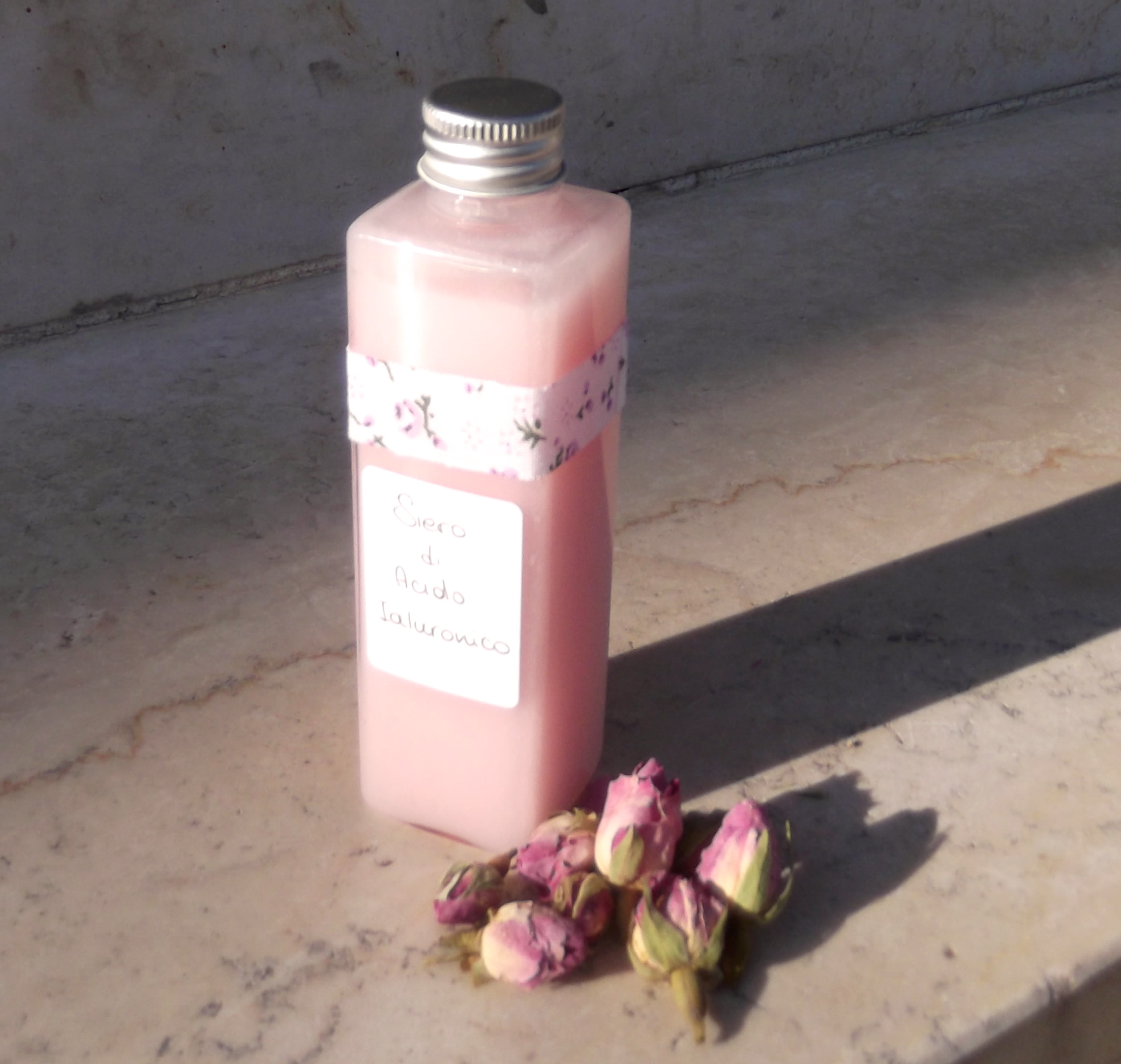
Rose & Hyaluronic Acid Serum DIY

RECIPE:
NOTE: every quantity in this recipe is in grams and it is a recipe for 100 gr of product. The meaning of “to 100” means that the quantity of the water (in this case “rose water”) is counted until reaching 100 gr for the entire recipe. 

Rose water to 100
Sodium Hyaluronate 1
Sk-influx (this is the commercial name of a complex of different kinds of ceramides. You can use what you find with the same function) 2.5
Ceramide liposomes 2.5
D-panthenol 2
Sodium lactate (60% solution) 5
Bisabolol 0.5
Umectol (this is the commercial name of a hydrating complex. Once again: you can freely use a different complex with the same function) 2.5
Hydrolized silk proteins 2
Cosgard 0.6 (this is the preservative)

In the very end I also added one drop of water soluble red food coloring. This is why it is pink (needless to say this is totally up to you).

I made the Hyaluronic acid using rose water the evening before. Of course I used 1 gram of sodium hyaluronate and around 80 grams of rose water… not 100.
The morning after the gel was ready so I just mixed it a bit and added these ingredients in the recipe. I added the preservative in the end.
As you can see there are few oily components like Bisabolol, D-panthenol… quite in a high % (usually a gel is fine up to 1% of oils). The reason is that I used a commercial Rose water 😀
I did not have any substance to solubilize the oils inside of the gel (at the time that i created this serum) so I decided to give good use to those who are usually inside commercial Rose water! 😀 Ok let me explain: inside of commercial Rose water they solubilize stuff like perfume/essential oils and preservative (at least usually). To make the water still clear and transparent they use a bit more solubilizer than needed… you can be sure about this by shaking the bottle of the rose water: if a few bubbles form (kind like in a light bubble bath) then you can be sure there is some free surfactant substance (the solubilizer…) inside of the rose water. I say “free” because part of it reacted to solubilize the oils inside of the water… and part of it is still free and making therefore the water clear once again.
So!
Making a gel with this kind of water and adding oils to it, I used the “free surfactant” and this is why this gel is holding on together! 😀
And this is also why it is not transparent (apart for the fact that Sk-influx are not transparent at all)!

So there it is all the “tips and tricks” 😀
I like this serum very much and I have been using it for the last month on my face 🙂
It is very light (cause it is practically oil free) and needless to say: super nourshing! 🙂
Hope you like it!

Let me know if you have any questions! 😀

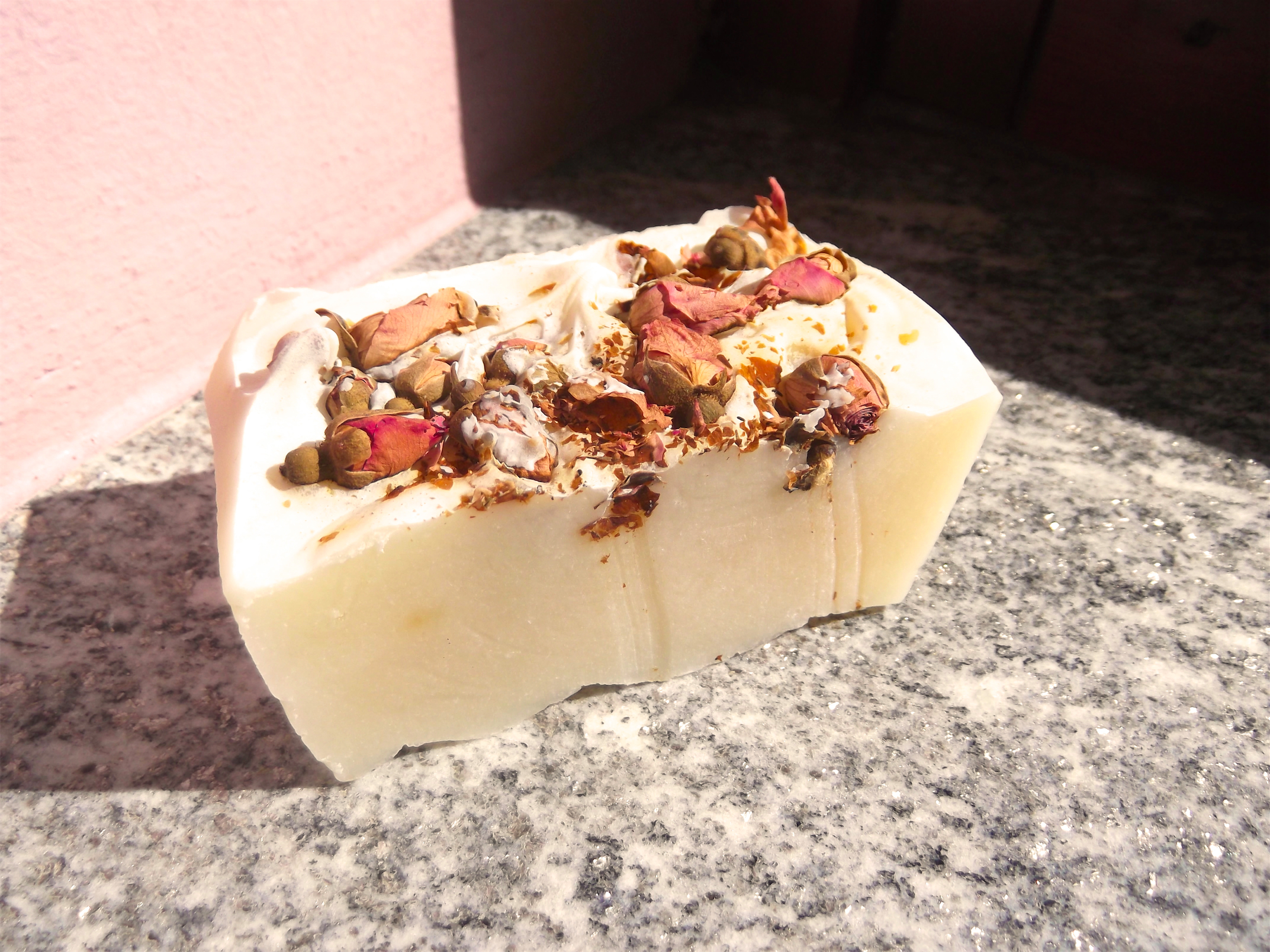
Rose and Patchouli – Soap Bar

This is one of the first soaps I made, a long time ago… but I opened this blog late and I realized I never posted anything about it.

It was the first GREAT and luxurious soap I made.

Recipe:
225 gr Olive oil
150 gr Coconut oil
50   gr Macadamia nut oil
50   gr Avocado butter (melted and added at trace)
25   gr Castor oil

70.17 gr lye (6% discount)
135     gr distilled water
30       gr rose water

1 tsp rice flour
7 ml Rose essential oil
4 ml Patchouli essential oil
10 ml Geranium essential oil

3 tbsp Rose buds to decorate in the end

Hope you liked it 🙂


Creative Commons License
This work is licensed under a Creative Commons Attribution-NonCommercial-NoDerivatives 4.0 International License.