LAB NOTES & SAFETY NOTICE
For educational purposes only. Content reflects personal, non-professional formulation experiments and is not instructional.
No formula or information on this site is intended for commercial use, consumer application, or third-party use.
Accessing this content means you accept all risks and full responsibility for safety, testing, legal compliance, and outcomes.
[Full Legal Disclaimer & Safety Requirements]
The Critical Role of pH in Formulation Stability
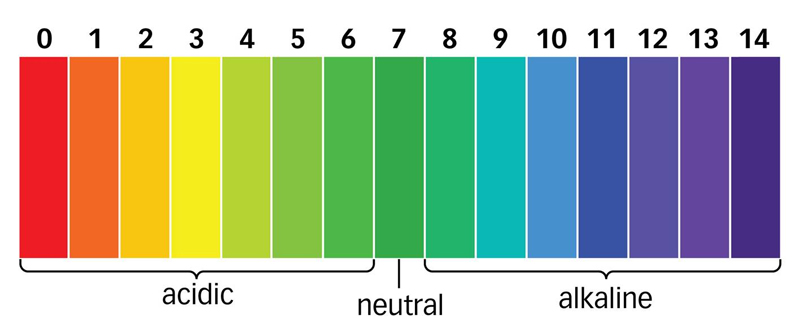
In my formulation studies, measuring and adjusting the potential of Hydrogen (pH) is the most vital step in ensuring both the safety of the user and the chemical integrity of the ingredients. pH is a logarithmic measure of the concentration of hydrogen ions ($H^+$) in an aqueous solution, defined by the formula:
The Two Perspectives of pH Management
1. The Biological Perspective: The Acid Mantle
Human skin physiologically maintains a pH between 4.5 and 5.5. This acidic environment supports the “Acid Mantle”—a protective film composed of lipids and beneficial microorganisms (the skin microbiome).
-
The Risk of Imbalance: Using leave-on products with an alkaline pH (above 7) can disrupt this microbiome, leaving the skin vulnerable to pathogens and irritation. My records prioritize matching the product pH to the skin’s natural range whenever possible.
2. The Chemical Perspective: Ingredient Compatibility
Every cosmetic ingredient has a “Stability Window.” Stepping outside of this range doesn’t just reduce efficacy; it can lead to hazardous chemical transformations.
-
Performance Loss: High-molecular-weight Sodium Hyaluronate is sensitive to low pH environments (like those created by L-Ascorbic Acid). In acidic conditions, the polymer chains can degrade, essentially wasting the ingredient’s hydrating potential.
-
Chemical Transformation: Niacinamide requires a pH between 6.0 and 7.5. If formulated in an environment that is too acidic or too alkaline, it can hydrolyze into Nicotinic Acid. This can cause severe skin flushing and irritation.
Practical Measurement Protocols
Regardless of how many times I have executed a specific formula, my lab protocol requires a final pH verification. Changes in raw material suppliers or minor measurement variances can shift the final result.
Tools of the Trade
-
Digital pH Meters: These provide the highest precision (down to 0.01) but require regular calibration and maintenance.
-
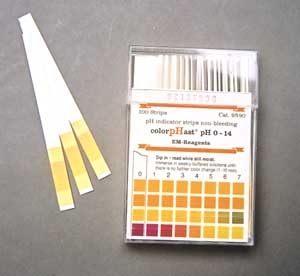
Universal Indicator Strips: For most studio applications, multi-pad plastic strips are preferred over simple paper rolls, as they provide a more stable and readable color comparison.
Adjusting the Batch
If the final reading falls outside the target range, I adjust the batch using standardized solutions:
-
To Lower pH: A 20% Citric Acid or Lactic Acid solution.
-
To Raise pH: A 10% – 18% Sodium Hydroxide (NaOH) solution or a Triethanolamine (TEA) solution.
Researcher Summary
Respecting the pH is not optional in cosmetic science. It is a fundamental pillar of Good Manufacturing Practices (GMP). Before utilizing any new active ingredient, I cross-reference its preferred pH range against all other components in the formula to ensure total compatibility.


(Source: here)
(Source: here)

 IT'S ALL IN MY HANDS