Aloe Vera Face Cream DIY

LAB NOTES & SAFETY NOTICE
For educational purposes only. Content reflects personal, non-professional formulation experiments and is not instructional.
No formula or information on this site is intended for commercial use, consumer application, or third-party use.
Accessing this content means you accept all risks and full responsibility for safety, testing, legal compliance, and outcomes.
[Full Legal Disclaimer & Safety Requirements]
Hello there! 🙂

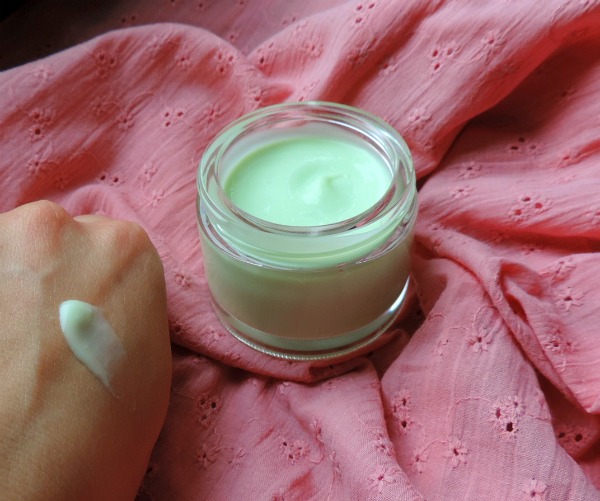
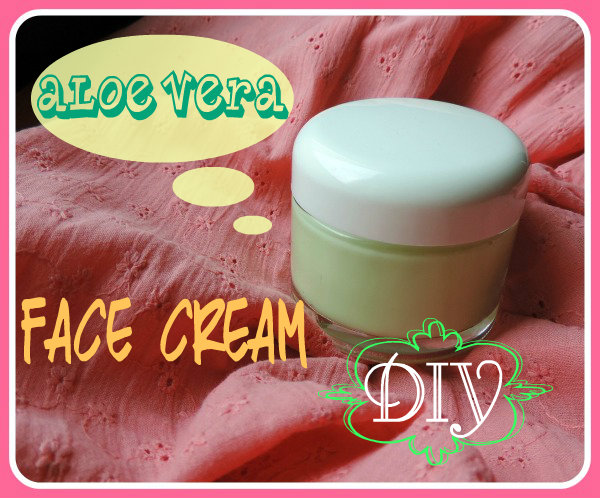
I am back with a new recipe for a summer cream light in texture, very hydrating and nourishing. 🙂

Aloe Vera Cream Cover

I have been using it for a couple of weeks and I really like it.
Obviously my “grease fall” composition is intended for what my skin likes (nowadays my acne days are only a distant memory but I am always scared it might come back: so I still formulate in order to give my skin fatty acids that won’t give any advantage to acne 🙂 – you can read more HERE).

The texture is light and quite fluid, it absorbs very easily and it has a quite “matte” finish thanks to the butters.
The active ingredients make for a soothing, hydrating and quite nourishing cream 🙂

KEEP ON READING

Sulfur Mask – for acne and oily skin

LAB NOTES & SAFETY NOTICE
For educational purposes only. Content reflects personal, non-professional formulation experiments and is not instructional.
No formula or information on this site is intended for commercial use, consumer application, or third-party use.
Accessing this content means you accept all risks and full responsibility for safety, testing, legal compliance, and outcomes.
[Full Legal Disclaimer & Safety Requirements]

Hello there! 😀

The recipe of today is for an acneic skin or very oily skin, it is, in fact, a recipe for a mask that will really help control the oiliness and will help dry up the pimples much faster! 🙂

Sulfur Mask DIY

I loved the idea of combining zinc oxide (which has great soothing properties – but leaves the face quite “white” and therefore it is great in a mask that can be washed off) and sulfur (you already know that it is good against acne and oily skin! 😀 ). It could be a good idea to add some salicylic acid (0.5% should be enough) but since I was going to use this mask in spring/summer I preferred not to add any (acids are never a good combination with possible sun exposure).
KEEP ON READING

Hyaluronic Acid Serum for Problem Skin

LAB NOTES & SAFETY NOTICE
For educational purposes only. Content reflects personal, non-professional formulation experiments and is not instructional.
No formula or information on this site is intended for commercial use, consumer application, or third-party use.
Accessing this content means you accept all risks and full responsibility for safety, testing, legal compliance, and outcomes.
[Full Legal Disclaimer & Safety Requirements]

Hello there! 😀

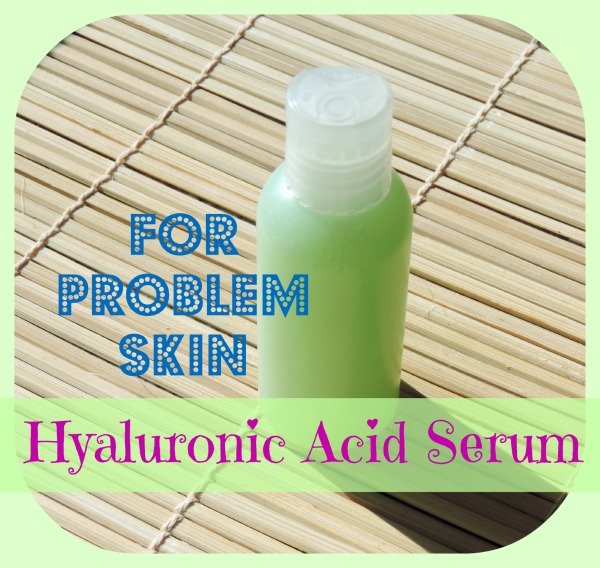
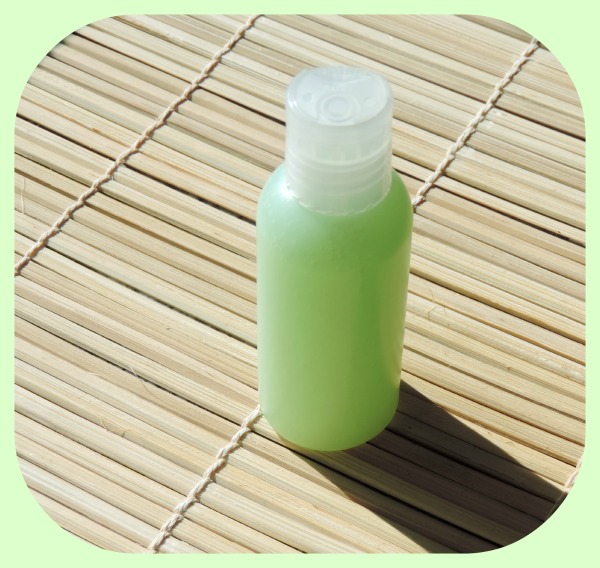
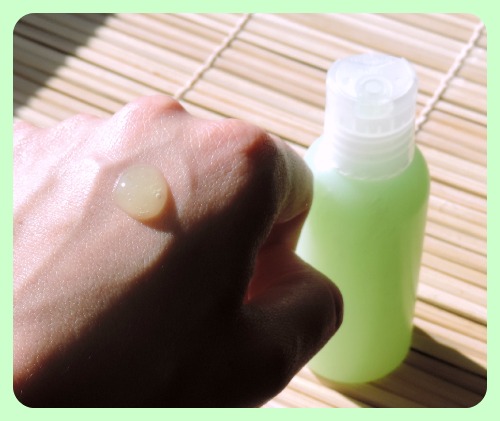
Hyaluronic Acid Serum for Problem Skin

Today I am back with a recipe for an extremely simple yet effective serum… however there are a couple of things I need to say first!
1) This serum is formulated to help a problematic skin. With this I intend a skin which suffers of mild blemishes every now and then, maybe a little irritated and with a few red marks left by previous spots, add an oily T-zone… and that should be it 😀 . The ingredients of this serum will HELP the skin keep hydrated, will help keeping the oiliness under control and will help to soothe the skin (it might also have some effect against the red marks). Obviously, this serum is NOT A CURE for acne or for serious conditions: it is just a help. I want to underline this because too often, online, we read about “the final cure for blablablaaa” but this is not the case 😀

So here is the Serum FORMULA:

KEEP ON READING

DIY Vitamin C Serum

LAB NOTES & SAFETY NOTICE
These are personal experiments for educational use only— not instructions and not for commercial or consumer use. By proceeding, you assume all risks related to safety, testing, and regulatory compliance.
[Full Legal Disclaimer & Safety Requirements]

Vitamin C is a very powerful substance and it is found in many commercial products for the skin because it is a strong antioxidant, it has lightening properties and, last but not least, it helps the production of collagen (therefore you are left with a firmer skin).

Vitamin C is “ascorbic acid” (you could also find “L-ascorbic acid”) but in the creams you buy, if you read the ingredients, you will never find “ascorbic acid”, probably you will find “sodium ascorbyl phosphate” or “magnesium ascorbyl phosphate” (there are also other forms of Vitamin C, this is a mere example). What is this?
Well, Vitamin C has great properties but it doesn’t keep stable: it oxidizes even in contact with air, with light… (this is why if you make fresh orange juice you should drink it immediately after), so in order to be able to add this vitamin in our face creams, cosmetologists use a stabilized form of Vit C: if in the ingredients of your cream you read an ingredient which contains the word “ascorbyl”, to make it very simple, that is the stabilized form of Vitamin C.

These stabilized forms are many and they are growing in number all the time. They are not something negative (and even I use them in the making of Vitamin C creams… maybe I will post a recipe soon about it 🙂 ), however their properties are not 100% the same of the pure Vitamin C.

Today I am going to show you how I make my own, and in my opinion most effective, VITAMIN C SERUM.

The only way to use pure Vitamin C (therefore “L-ascorbic acid”) effectively is to use it right away and make a new serum all the time.
This is why the recipe of today, unlike all the cream recipes I have shown before, is not in 100 gr but it is in very small amounts.

“FORMULA” (it is so simple I am not sure I can call it that 😀 ) 
(first part)
1 teaspoon demineralized purified water 
1/8 teaspoon L-ascorbic acid 
Glycerin (a single drop)
I mix these two ingredients in a bowl and measure the pH
WARNING! Measuring the pH is important!
The reason why I measure the pH at this stage is because Ascorbic acid is obviously an acid (and it is also very strong) so you don’t want to apply on your skin something of pH 2… however Vitamin C is well absorbed (and used) in your skin only at a pH range of 3.5 or lower. Therefore I check the pH of the solution and if I see it lower than pH 3.5 I adjust the pH by adding a little bit more water. I keep checking the pH until it reaches 3.5 pH.

At this point I apply it to my face using a brush or even my fingers, and I keep applying even in multiple layers until the water is finished.
WARNING! I do not apply it to the eye area nor do I keep it on my skin too long. If it tingles I wash it off immediately.

The second part of the FORMULA is this:
2 drops of Vitamin E (Tocopheryl acetate or Tocopherol).
I put these two drops on my figers and tap my face, I let it it sit on my skin for 20 minutes and wash it off

This is my personal easiest, most effective Vitamin C serum. I use it once or twice a week, but only if I don’t go in the sun those days.

Vitamin C serum


Formulating lotion: Phase C & ACTIVE INGREDIENTS- THEORY pt.6

LAB NOTES & SAFETY NOTICE
These are personal experiments for educational use only— not instructions and not for commercial or consumer use. By proceeding, you assume all risks related to safety, testing, and regulatory compliance.
[Full Legal Disclaimer & Safety Requirements]

Finally the final step of making creams!

Phase A

In my formulation experiments, Phase A typically contains the heat-stable, water-soluble ingredients, while Phase B is comprised of fats, emulsifiers, and oil-soluble components that can withstand heat. However, the most delicate part of the process is Phase C.

What is Phase C? Phase C is often referred to as the “Cool Down” phase. In my lab notes, this phase typically includes:

  • Preservatives: Usually ranging between 0.5% and 1%, depending on the manufacturer’s technical data sheet.

  • Fragrance/Essential Oils: In my experiments, I find 2 drops per 100g is often sufficient for facial applications.

  • Active Ingredients: These are the components added for their specific properties, which can be heat-sensitive and are typically added at temperatures below 40°C. In my research, I aim to keep the total active load under 10% to maintain stability.

The Role of Active Ingredients Active ingredients are those which add specific value to a formula. Every active ingredient has a recommended usage rate provided by the supplier.

For example, Coenzyme Q10 (Ubiquinone) is theoretically used at around 0.1%. While this sounds low, my observations show that even at 0.1%, Q10 imparts a distinct yellowish tint to the cream. If a commercial Q10 cream is pure white, it may suggest a much lower concentration was used in its production.

Note on Sourcing: It is vital for a formulator to review the Safety Data Sheet (SDS) of every ingredient. For instance, “Liquid Q10” may be a pre-diluted blend, meaning the actual concentration of pure Q10 is much lower than expected.

Categories of Active Ingredients in Cosmetic Theory

  • Acids and Exfoliants: In formulation theory, these ingredients (like Citric or Lactic acid) are used to lower the pH or provide chemical exfoliation.

    • Safety Note: Formulations containing chemical exfoliants (like Glycolic or Salicylic acid) are traditionally intended for nighttime use. In my experiments, these are kept far from the eyes and lips. Research indicates that chemical exfoliants can increase photosensitivity; therefore, their use is typically avoided during periods of high sun exposure to prevent skin damage or staining.

  • Antioxidants: Ingredients like Vitamin E (Tocopherol) or Resveratrol work best in synergy. Theory suggests that combining multiple antioxidants can provide a more robust defense against oxidation than using a single one alone.

  • Oily Skin Targets: Niacinamide is a popular choice (theoretically used between 1-4%). It is important to note that Niacinamide requires a stable pH of 5-5.5 to prevent it from converting into Nicotinic acid, which can cause skin flushing.

  • Hydrating & Humectants: Beyond the standard hydration of an emulsion, ingredients like Allantoin (soluble at 0.4%) or Hyaluronic Acid are used for an extra moisture boost. In my lab notes, I find Allantoin requires careful handling to avoid precipitation.

  • Soothing Ingredients: My preferred choices for experimental batches are Bisabolol (derived from Chamomile) and Panthenol (Pro-Vitamin B5).

  • Addressing Puffiness: In my Eye Cream experiments, I favor Caffeine (up to 2%) and Escin, which are traditionally studied for their vasoprotective and draining properties.

In future posts, I will share more specific examples of how I apply this theory in my lab experiments.

Formulating a lotion: Fatty Acids and ACNE

LAB NOTES & SAFETY NOTICE
These are personal experiments for educational use only— not instructions and not for commercial or consumer use. By proceeding, you assume all risks related to safety, testing, and regulatory compliance.
[Full Legal Disclaimer & Safety Requirements]

In the last post I talked about about the GREASE-FALL, which is “how to distribute the fats in order to obtain a specific kind of cream”.

In this post, I am exploring a more technical aspect of the “Grease Fall”: the specific fatty acid profiles within natural fats (oils and butters). In my research, understanding these profiles is essential for tailoring a formula’s behavior, particularly when exploring theory related to blemish-prone skin.

The Common Fatty Acids in Cosmetics

The fatty acids found in cosmetic raw materials are generally categorized by their chemical structure:

  1. Saturated Fatty Acids: (e.g., Palmitic, Stearic, Lauric acid).

  2. Monounsaturated Fatty Acids: (e.g., Palmitoleic, Oleic acid).

  3. Polyunsaturated Fatty Acids (PUFAs): (e.g., Linoleic/Omega-6, Alpha-linolenic/Omega-3).

Saturated fatty acids are predominantly found in butters. Chemically, these molecules sit very closely together, which explains why these fats remain solid at room temperature. In my experiments, I’ve noted that a high concentration of Stearic Acid can contribute to the “white-trail” effect (soaping) during application. While this doesn’t impact the quality of the emulsion, it is a sensory detail I track in my lab notes.

Unsaturated fatty acids have a molecular shape that prevents them from packing tightly, keeping them liquid at room temperature.

The “Marketing vs. Chemistry” Reality

One of the most important lessons in my formulation journey is that many oils marketed as “exotic” often share nearly identical fatty acid profiles with much cheaper alternatives. For example, my research shows that Almond, Macadamia, and Hazelnut oils have very similar compositions despite their different price points. Before sourcing an expensive oil, I now cross-reference its fatty acid content to ensure I am not paying for a “magic” story that the chemistry doesn’t support.

Theoretical Correlation: Fats and Acne-Prone Skin

In my study of dermatological literature, I have found research suggesting a correlation between sebum composition and acne. These studies indicate that sebum in acne-prone individuals often shows a higher percentage of monounsaturated fatty acids (specifically Oleic acid) relative to polyunsaturated fatty acids.

Theoretical Risks of Oleic Acid:

High levels of Oleic acid are theorized to increase calcium ions ($Ca^{2+}$) on the skin’s surface, which may lead to higher keratinization (clogged pores). For this reason, when I am designing a formula for my experiments, I consider this disparity carefully.

Applying the Theory: My “Grease Fall” Strategy

When formulating for “theory batches” targeting blemish-prone skin, my goal is to balance the “grease fall” with a focus on Polyunsaturated Fatty Acids (PUFAs).

My Experimental Approach:

  • Butters: I keep these at a low percentage (0.5–1%)—just enough for the cream’s consistency and density.

  • Oil Selection: I choose oils with low Oleic and Palmitoleic content, prioritizing those rich in Linoleic and Alpha-Linolenic acids.

Based on my lab records, here are some oils that theoretically provide higher PUFA content:

  • Hemp, Borage, and Evening Primrose oils

  • Grape seed, Raspberry, and Safflower oils

  • Sunflower and Soy oils (the most accessible options)

Regarding butters, while they are naturally high in saturates, some options like Murumuru, Coconut, and Tucuma theoretically contain lower levels of oleic acid compared to others.