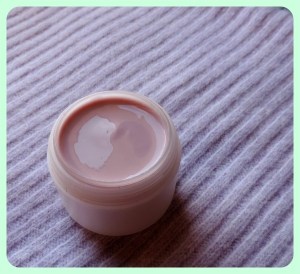
How to make a lotion – THEORY pt.2

LAB NOTES & SAFETY NOTICE
For educational purposes only. Content reflects personal, non-professional formulation experiments and is not instructional.
No formula or information on this site is intended for commercial use, consumer application, or third-party use.
Accessing this content means you accept all risks and full responsibility for safety, testing, legal compliance, and outcomes.
[Full Legal Disclaimer & Safety Requirements]

The Anatomy of an Emulsion (Standard Batch Process)

In previous posts, I’ve explored the chemistry of lipids and the behavior of aqueous polymers. Today, I am documenting the actual physical process of creating an emulsion. In my lab, this is where theory becomes a tangible product.

The “Core Three” Phase System

In my formulation records, I always organize ingredients into three distinct phases to ensure stability and protect heat-sensitive components:

  1. PHASE A (Water Phase): Water-soluble ingredients that require heating.

  2. PHASE B (Oil Phase): Lipids and emulsifiers that require melting.

  3. PHASE C (Cool-Down Phase): Heat-sensitive actives and preservatives.

Baseline Case Study: “The Standard Body Emulsion”

To document this process, I use a baseline “100g batch” formula. In my lab, all measurements are recorded in grams ($g$) to ensure 0.01% accuracy.

Phase Component Quantity (g)
A Distilled Water to 100
A Glycerin 4.0
A Xanthan Gum 0.3
B Selected Lipid Blend (Fats) 15.0
B Heated Emulsifier 3.0
B Lipophilic Thickener 2.0
C Active Ingredients 5.0
C Broad-Spectrum Preservative 0.6
C Fragrance/Essential Oil 2 drops

My Batch Processing Workflow

1. Preparation and Weighing

I begin by weighing Phase A and Phase B into separate heat-resistant beakers. In my experience, keeping these phases isolated is the most important rule of emulsion stability.

2. The Thermal Threshold

In my lab, both beakers are placed in a double boiler. I monitor them until both phases reach 70°C. Reaching this synchronized temperature is vital; if one phase is too cold, the emulsifier may “shock” and solidify prematurely, preventing a stable bond.

3. High-Shear Emulsification

Once the thermal threshold is met, I slowly incorporate Phase B into Phase A.

  • The Method: I use a high-shear immersion mixer.

  • Observation: It is critical to keep the mixer head submerged to avoid incorporating air (macrobubbles). Air entrapment is a primary cause of later separation and oxidation in my batches.

4. The Cooling Cycle

After the initial “flash” of emulsification, the mixture is usually still liquid. I transition to manual stirring with a spatula. Constant, slow movement during the cooling cycle ensures a uniform crystalline structure as the thickeners (like Cetyl Alcohol) begin to set.

5. Phase C Integration

Only when the emulsion has cooled to below 40°C do I introduce Phase C. This protects the Preservatives and Active Ingredients from thermal degradation.


Troubleshooting & Lab Observations

Even with a standardized process, emulsions can be unpredictable. In my records, I’ve noted a few common “failure points”:

  • Microbubbles: Often caused by lifting the mixer too high; these can lead to a “spongy” texture.

  • Phase Separation: Can occur if the temperature was not synchronized or if the HLB (Hydrophilic-Lipophilic Balance) was miscalculated.

  • The “Soap” Effect: If the thickener-to-emulsifier ratio is imbalanced, the cream may leave a white trail during application.

Concluding Thoughts

Mastering the physical act of emulsification is a journey of trial and error. While the steps seem simple, the variables of ambient temperature, mixing speed, and ingredient purity mean that every batch is a new learning opportunity.

For more of my specific research and resource links:

How to make a lotion – THEORY pt.1

LAB NOTES & SAFETY NOTICE
For educational purposes only. Content reflects personal, non-professional formulation experiments and is not instructional.
No formula or information on this site is intended for commercial use, consumer application, or third-party use.
Accessing this content means you accept all risks and full responsibility for safety, testing, legal compliance, and outcomes.
[Full Legal Disclaimer & Safety Requirements]

Escin and Caffeine Eye Cream14

Fundamentals of the Emulsion (The Basics)

After reviewing my initial attempts at body butters, I recognized that a deeper investigation into the chemistry of skin-care systems was necessary. These notes represent my ongoing study into the mechanics of facial and body emulsions. While the science of formulation is complex, I’ve distilled the core structure into four essential pillars.

The Four Pillars of a Basic Emulsion

In my lab, a standard “Phase-Zero” lotion consists of:

  1. Water (The Solvent)

  2. Lipids (Oils and Butters)

  3. The Emulsifier (The Bonding Agent)

  4. The Preservative (The Stabilization Agent)

While additional components like thickeners and actives are eventually integrated, understanding these four is the first step in my documentation process.

1. The Mechanics of Hydration

Water provides the initial hydration. However, my research confirms that water alone is insufficient, as it evaporates rapidly from the skin’s surface. Lipids (fats) act as occlusives, preventing this Trans-Epidermal Water Loss (TEWL) while providing nutrients.

Note on Emulsification: Studies indicate that an emulsified system (where water and fats are chemically bound) hydrates the skin more effectively than a simple “shake-and-apply” mixture of oil and water. The emulsion allows for a more uniform delivery of both phases.

2. Preservation: A Mandatory Standard

In my lab, preservation is not optional. Anytime water is present in a formula, it becomes a potential breeding ground for bacteria and mold.

  • The Reality of “Natural”: While some prefer to avoid preservatives, my lab standards require them for safety. I select preservatives based on their eco-profile and efficacy at low concentrations (typically around 0.5%).

  • Storage: Without a professional preservation system, a water-based product would require refrigeration and would have a shelf life of only a few days.

3. Aqueous Phase: Selecting the Water

In my experiments, I use demineralized, microbiologically pure water. This prevents mineral interference with the emulsifiers.

  • Floral Hydrosols: While I sometimes record the use of rose water or witch hazel, I often categorize these as “poetic” ingredients. They offer sensory value but, in my experience, provide less functional “hero” properties than concentrated actives.

4. Lipid Phase: The “Fall” of Fats

My documentation for the oil phase emphasizes balance over “miraculous” claims. I’ve learned that a professional formulation requires a strategic blend of fats based on:

  • Viscosity and Density ($\rho$)

  • Spreading Ability

  • Skin Feel

I have developed a specific “Grease-Fall” rule to ensure that the lipids are balanced for the intended purpose of the cream.

5. Emulsifiers: The Stabilizing Bridge

Emulsifiers determine the final “architecture” of the cream. My notes categorize them by:

  • Processing Temperature: Some require heating to 70°C, while others are “Cold Process” stable.

  • System Type: O/W (Oil-in-Water) for lighter textures vs. W/O (Water-in-Oil) for heavy barrier creams.

  • Sensory Profile: Determining if the final touch is dry, rich, or velvet-smooth.

How to: Hyaluronic Acid gel

A while ago I posted how to make Aloe Vera gel.
I was planning to post a recipe of an hydrating gel (I have been using it in the morning for the last two months and I love it), but before I start, I thought it would be more important to show you how to make the basic ingredients for this gel.
Of course Hyaluronic Acid gel is one of these ingredients!

So tadaaa 😀

Hyaluronic Acid Gel

I love hyaluronic acid for the property of keeping the skin hydrated, also it is a substance that is naturally found in our skin.
It is used in many anti-aging creams (I don’t believe it is miraculous and it will make wrinkles disappear, but simply because it helps keeping the skin hydrated, the skin appears more plump and fresh).

Recipe:
[WARNING: this recipe, like ALL the recipes in my blog, is of COSMETIC GRADE, therefore this gel cannot be used any differently than by applying it ON your skin]
1 gr         Sodium Hyaluronate 
98,4 gr  Distilled Water (or Rose water 😉 read the end of the post)
0.6 gr    Cosgard (or any other preservative of your choice: of course if you change preservative, use the amount of preservative which is needed for that specific kind of preservative)

1) Measure the Sodium Hyaluronate

2) Measure the water

3) Pour the Sodium Hyaluronate on top of the water

At this point some people like to mix it and some people like to let it be.
I have actually tried both ways and here is my experience: if you try to mix it at this stage, part of the SH will stick to the spoon. This means that a precious part of your gel will get lost (and SH is not exactly cheap, so you’d want to mind this).
IMO it is better to let the SH hydrate by itself on top of the water for a while, and stir later.

4) Cover the glass with plastic film and let it rest in the fridge for few hours.

5) After few hours the SH will be hydrated. Now you can stir it with a spoon so to make the gel more smooth (there will be harder parts and softer parts).

6) Add your preservative, stir again and put in a bottle 🙂

You can use this Gel by itself, for its great hydrating properties!
If you have a very dry skin you could like to use it before applying your cream 🙂
You could also make a more luxurious gel by substituting part of the water (or the entire water) with Rose water!

As you might have noticed in the market we can find creams or serums that say “40% Hyaluronic Acid”.
Well, as you can see I am using 1% of Sodium Hyaluronate and this is the highest concentration I can use.
It is technically impossible to use 40% of SH inside of a gel: it will never hydrate and you will waste a huge amount of money.
I tried once to make a 2% and it took ages to hydrate. In the end it was too thick. I could still use it but it was not a good gel at all.
I don’t know what they could mean by saying “40% Hyaluronic Acid” on a product where there cannot be more than 2% of SH, but it is long time I stopped believing what I read in the commercials for creams. The only thing I can believe now is the INCI and what I KNOW is that in one cream where it was said “40%”, the Sodium Hyaluronate in the INCI was at 6th place (this means that in NO WAY it could be at 40%, it could have been at maybe 1% or even less).

Hyaluronic Acid Gel 3 Hyaluronic Acid Gel 2

The only way to be sure of what’s inside a cream or serum or face-gel is MAKE IT YOURSELF!
Not only this is a great thing to learn, it also makes you feel like IT’S ALL IN YOUR HANDS!  😉


Creative Commons License
This work is licensed under a Creative Commons Attribution-NonCommercial-NoDerivatives 4.0 International License.