Safe Handling of Cosmetic Ingredients

LAB NOTES & SAFETY NOTICE
For educational purposes only. Content reflects personal, non-professional formulation experiments and is not instructional.
No formula or information on this site is intended for commercial use, consumer application, or third-party use.
Accessing this content means you accept all risks and full responsibility for safety, testing, legal compliance, and outcomes.
[Full Legal Disclaimer & Safety Requirements]
Safe Handling of Cosmetic Ingredients.jpg

Safety Protocols and Chemical Handling in the Studio

In recent years, the availability of professional-grade cosmetic raw materials to independent formulators has grown exponentially. However, accessibility does not diminish the inherent risks. Being “at home” does not change the chemistry of the ingredients; many are highly concentrated, reactive, or toxic if mishandled.

In my lab, I treat formulation with the same gravity as industrial chemistry. Below are the safety standards and observations I document to mitigate risk.

1. Professional Storage Standards

Cosmetic ingredients should never be treated like kitchen staples. In my practice, I’ve established a strict storage protocol:

  • Containment: I never store ingredients in the original shipping bags if they are flimsy. I transfer materials to airtight glass or high-density plastic containers.

  • Labeling: Every container is marked with the INCI name, supplier, and expiry date.

  • Hazard Identification: For reactive solutions (like my 18% Sodium Hydroxide solution used for pH adjustment), I use high-visibility “DANGER” labels and safety symbols. These are kept in a locked, dedicated chemical cabinet, completely isolated from any living or food-prep areas.

2. The Microbiology Mandate (Preservation)

A common misconception in DIY circles is that “natural” means “safe without preservatives.” In my lab records, preservation is a mandatory safety requirement.

  • The Invisible Risk: Bacteria and mold (like Pseudomonas) are often invisible and odorless in the early stages of colonization.

  • The Consequences: Contaminated cosmetics are not just “spoiled”—they can lead to severe infections or permanent ocular damage. In my research, if a formula contains water, it must have a validated broad-spectrum preservation system.

3. GMP (Good Manufacturing Practices) in a Small-Scale Setting

While I work on a studio scale, I follow ISO 22716 (GMP) standards as closely as possible to ensure batch integrity:

  • Sanitization: All equipment, beakers, and packaging are wiped with 70% Isopropyl Alcohol and allowed sufficient contact time to sanitize.

  • Safety Gear: Goggles, gloves, and a lab vest are mandatory.

  • Environment: The formulation space is a “Clean Zone”—no pets, distractions, or unauthorized persons are permitted during a batch cycle.

  • Dedicated Equipment: My beakers and high-shear mixers are strictly for cosmetic use and never enter the kitchen.

4. Handling Reactive pH Modifiers

Working with extreme pH levels ($pH < 2$ or $pH > 12$) requires an understanding of chemical interactions.

  • Acids: These can cause protein hydrolysis, creating a necrotic barrier on the skin.

  • Alkalis (Bases): These are particularly dangerous as they saponify skin lipids, allowing the hydroxide ions to penetrate deeper into the tissue.

My Emergency Protocol:

In the event of accidental contact, I follow a 15-minute continuous rinse under running water and immediately seek medical consultation. Prevention through the use of safety goggles is my primary defense.

5. The Precision of Concentration

In formulation, “more” is rarely “better” and is often dangerous. I strictly adhere to the Safety Data Sheet (SDS) recommendations.

  • Efficiency vs. Waste: Using 0.1% Coenzyme Q10 is effective; using 1% is simply a waste of material that results in excessive staining.

  • Irritation Thresholds: Some ingredients, like Alpha-Bisabolol, are soothing at 0.5% but can become irritants if the concentration is doubled.

  • Crystallization: Exceeding the solubility limit of Allantoin (0.5%) causes sharp micro-crystals to form, which can physically abrade the skin upon application.

Final Observations

Cosmetic formulation is a rewarding science, but it carries real-world liabilities. My journey is built on continuous study, the use of professional formulation textbooks, and a profound respect for the chemicals I handle. Safety is the foundation of every successful batch.

How to Formulate a Solid Shampoo

LAB NOTES & SAFETY NOTICE
For educational purposes only. Content reflects personal, non-professional formulation experiments and is not instructional.
No formula or information on this site is intended for commercial use, consumer application, or third-party use.
Accessing this content means you accept all risks and full responsibility for safety, testing, legal compliance, and outcomes.
[Full Legal Disclaimer & Safety Requirements]

Hello everyone! 🙂

Today I talk about how to formulate a Solid Shampoo.

Solid Shampoo (10)

Solid-State Detergent Theory (The Syndet Bar)

In this experimental session, I documented the formulation of a Solid Shampoo Bar. It is crucial to categorize this product as a Syndette, not a soap. While traditional soaps are produced through saponification, a Syndet is engineered using concentrated surfactants. My research objective was to manage the “Active Surfactant Matter” (ASM) to create a product that is both structurally solid and dermatologically mild.

The Formulation Challenge: Aggression vs. Concentration

A solid shampoo typically contains a massive surfactant load (55%–85%). While this makes the bar highly effective and travel-friendly, it presents two major hurdles for the formulator:

  1. Production Cost: The raw material cost of concentrated surfactants is significantly higher than the fats used in soap-making.
  2. Potential Irritancy: With such high active matter, the risk of skin aggression is extreme.

The Technical Strategy: Surfactant “Taming”

To mitigate the aggression of the ionic surfactants, I utilized two sophisticated strategies in my lab:

  • Complexation: Instead of a single surfactant, I created a “cocktail” of SLSA, SCI, and SCS. Mixing different surfactant head-groups creates smaller, milder micelles.
  • Incompatibility Theory: I intentionally introduced a Cationic Surfactant (Behentrimonium Chloride) into an Anionic system. While these are technically “incompatible,” the resulting interaction in a solid state significantly reduces the harshness of the wash.

Experimental Formula: Case Study #SYNDET-BAR-01

PhaseComponent% / gramsFunction
ASLSA / SCI / SCS35.0 / 10.0 / 10.0Primary Powder Surfactants
ACocamidopropyl Betaine20.0Amphoteric “Buffer” (Liquid)
BCocoa Butter / Argan Oil7.0 / 3.0Lipid Refatting Agents
BBehentrimonium Chloride10.0Cationic Conditioning Agent
BCetearyl Alcohol3.0Structural Rheology Modifier
CFragrance Oil / Preservative1.5 / 0.5Aesthetics & Protection

Processing & Thermal Observations

  1. The Melting Challenge: Melting pure powder surfactants is an arduous process. I’ve documented that the water content in the Cocamidopropyl Betaine (Phase A) acts as a necessary solvent to facilitate the transition to a paste.
  2. Phase B Integration: I melted the butters, cationic conditioner, and cetearyl alcohol together. For future batches, I would recommend melting Phase B separately before adding it to the surfactant “cauldron” to ensure a smoother homogenization and a faster workflow.
  3. Thermal Sensitivity: The “soapy paste” was allowed to cool to 35°C before integrating the fragrance and preservative to ensure their efficacy wasn’t compromised by the heat required to melt the SCI.
  4. Setting & Curing: I utilized a Freezer-Set method for quick unmolding. However, I’ve noted that a 48-hour “drying” or curing period is required at room temperature to allow the bar to reach its final structural hardness.

Researcher Summary & Sensory Evaluation

The final bar exhibited excellent “wetting” ability and produced a sophisticated, dense lather of small bubbles.

Critical Refinement: Despite the high surfactant load, the 10% lipid phase (butters/oils) resulted in a slightly “waxy” after-feel on the hair. In my next experimental iteration, I will reduce the total lipid load to 5-7% to increase the “cleansing clarity” of the formula while maintaining enough emollience to keep the bar mild.

Simulgel EG test

LAB NOTES & SAFETY NOTICE
For educational purposes only. Content reflects personal, non-professional formulation experiments and is not instructional.
No formula or information on this site is intended for commercial use, consumer application, or third-party use.
Accessing this content means you accept all risks and full responsibility for safety, testing, legal compliance, and outcomes.
[Full Legal Disclaimer & Safety Requirements]

My Experiments with Polymeric Emulsifiers – Simulgel EG

In this experimental session, I documented the performance and stability of Simulgel EG (INCI: Sodium Acrylate/Sodium Acryloyldimethyl Taurate Copolymer, Isohexadecane, Polysorbate 80). This is a multi-functional liquid polymer that acts as both a thickener and a cold-process emulsifier. My research focused on its ability to stabilize varying lipid loads and its response to electrolyte stress.

Technical Specifications & Capabilities

  • Dual Functionality: It can be used as a stabilizer/thickener (0.5%–2%) post-emulsification or as a sole emulsifier (1%–5%).


  • Cold Process Efficiency: It is designed for room-temperature processing, though it remains stable up to 75°C.
  • Lipid Capacity: Theoretically capable of stabilizing up to 40% oils, including silicones, esters, and natural vegetable oils.
  • pH Stability: Optimal performance occurs between pH 5.5 and pH 11.

The Experimental Design: Lipid Load Variations

I conducted three controlled tests using a fixed concentration of 3% Simulgel EG while varying the lipid phase (sunflower oil):

Test Batch Oil Concentration Texture Observation Skin Feel
A 5% Gel-like / “Plastic” feel Heavy / Non-fresh
B 10% Stable cream-gel Greasy
C 20% Viscous emulsion High occlusivity

Researcher Observation: Despite the “fresh” aesthetic of the gel-creams, the sensory profile was surprisingly heavy. This is likely due to the Isohexadecane and Polysorbate 80 in the polymer blend, coupled with the lack of a balanced “Grease-Fall” (I utilized a single oil for these diagnostic tests).


Processing: The “Phase Inversion” Method

Unlike traditional O/W emulsions where the oil is added to water, I utilized a specific cold-process protocol for these batches:

  1. Phase B Dispersion: The Simulgel EG was added directly to the oil phase. Since the polymer is lipo-dispersible, this facilitates the swelling and “uncoiling” of the polymer chains once they contact water.
  2. Aqueous Introduction: Phase A (Water) was poured into Phase B.
  3. Homogenization: High-shear mixing (immersion mixer) was applied immediately to trigger the inversion and create a stable, glossy cream-gel.

Stress Testing: Electrolyte Sensitivity

Polymeric thickeners like Simulgel EG are notoriously sensitive to electrolytes (salts, proteins, acids). To quantify this, I introduced 1% Sodium Lactate to the 10% oil emulsion.

  • Result: Immediate and total loss of viscosity. The polymer “lattice” collapsed, returning the emulsion to a liquid state.
  • Formulation Solution: In my lab notes, I have recorded that to preserve viscosity in the presence of electrolytes, Simulgel EG must be paired with stabilizing gums (Xanthan or Guar).

Researcher Summary

Simulgel EG is an incredibly efficient tool for rapid, cold-process formulation, especially for batches involving heat-sensitive actives. However, it requires a strategic approach to lipids to avoid a “greasy” finish and a secondary rheology modifier (gums) if electrolytes like Sodium Lactate or Niacinamide are present in the formula.

Simulgel 1

Skin Structure

LAB NOTES & SAFETY NOTICE
For educational purposes only. Content reflects personal, non-professional formulation experiments and is not instructional.
No formula or information on this site is intended for commercial use, consumer application, or third-party use.
Accessing this content means you accept all risks and full responsibility for safety, testing, legal compliance, and outcomes.
[Full Legal Disclaimer & Safety Requirements]

Skin (layers, glands, vessels)

Skin Physiology — The Blueprint for Formulation

In my formulation research, the efficacy of any batch is determined by its interaction with the skin’s biological structure. To formulate effectively, we must understand the “Target Zone.” While most topically applied cosmetics only interact with the Epidermis, their role in supporting the barrier function is critical.

Shutterstock

1. The Epidermis: The Barrier Architecture

The Epidermis is a dynamic system of transformation. Keratinocytes are born in the deepest layer and migrate upward, undergoing a process of keratinization until they reach the surface.

  • Stratum Corneum (SC): The “Shield.” It consists of flattened, dead corneocytes that are constantly shedding.

  • Stratum Lucidum: A specialized, translucent layer found only on the palms and soles (high-friction areas).

  • Stratum Granulosum: The transition zone where cells begin to flatten and lose their nuclei.

  • Stratum Spinosum: The “Spinous” layer where proteins and lipids are synthesized to provide structural integrity.

  • Stratum Basale (Basal Layer): The site of cell birth. This layer also houses Melanocytes (pigment), Langerhans cells (immunity), and Merkel cells (touch).


2. The “Bricks and Mortar” Model

In the Stratum Corneum, cells follow a specific structural theory often referred to as the “Bricks and Mortar” model.

    • The Bricks (Corneocytes): These flat cells are held together by Corneodesmosomes—strong protein “strings.”

    • The Mortar (Lipid Matrix): A pool of ceramides, cholesterol, and fatty acids that makes the skin water-resistant.

    • Natural Moisturizing Factor (NMF): Inside the corneocytes sits a mixture of hygroscopic compounds (Urea, Lactic Acid, Amino Acids). In my lab notes, I prioritize ingredients that mimic the NMF to attract and bind water to the skin.

Shutterstock
Explore

3. The Dermis: The Support Matrix

The Dermis provides the structural “scaffolding” and nutrient supply for the skin.

  • The Extracellular Matrix: A “cushion” containing Collagen (strength), Elastin (elasticity), and Glycosaminoglycans (like Hyaluronic Acid).

  • Fibroblasts: The “builders” that produce these fibers.

  • The Glandular System: Including sebaceous glands (sebum production) and sweat glands.

Researcher Observation: Most cosmetic formulations are designed to support the Epidermis. When we add Hyaluronic Acid or Ceramides, we are essentially reinforcing the “Mortar” or the “NMF” of the Stratum Corneum to prevent Transepidermal Water Loss (TEWL).

The pH talk

LAB NOTES & SAFETY NOTICE
For educational purposes only. Content reflects personal, non-professional formulation experiments and is not instructional.
No formula or information on this site is intended for commercial use, consumer application, or third-party use.
Accessing this content means you accept all risks and full responsibility for safety, testing, legal compliance, and outcomes.
[Full Legal Disclaimer & Safety Requirements]

The Critical Role of pH in Formulation Stability

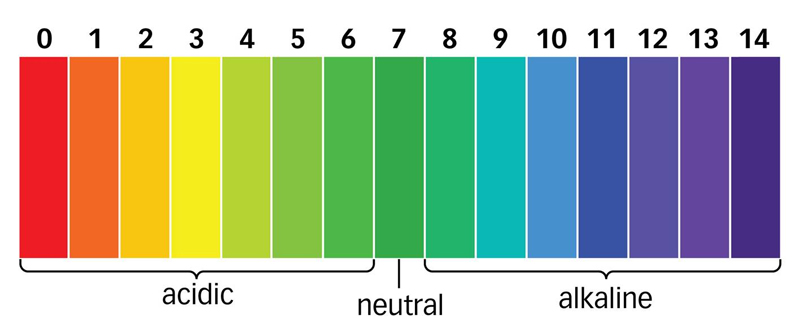
In my formulation studies, measuring and adjusting the potential of Hydrogen (pH) is the most vital step in ensuring both the safety of the user and the chemical integrity of the ingredients. pH is a logarithmic measure of the concentration of hydrogen ions ($H^+$) in an aqueous solution, defined by the formula:

$$pH = -\log[H^+]$$

The Two Perspectives of pH Management

1. The Biological Perspective: The Acid Mantle

Human skin physiologically maintains a pH between 4.5 and 5.5. This acidic environment supports the “Acid Mantle”—a protective film composed of lipids and beneficial microorganisms (the skin microbiome).

  • The Risk of Imbalance: Using leave-on products with an alkaline pH (above 7) can disrupt this microbiome, leaving the skin vulnerable to pathogens and irritation. My records prioritize matching the product pH to the skin’s natural range whenever possible.

2. The Chemical Perspective: Ingredient Compatibility

Every cosmetic ingredient has a “Stability Window.” Stepping outside of this range doesn’t just reduce efficacy; it can lead to hazardous chemical transformations.

  • Performance Loss: High-molecular-weight Sodium Hyaluronate is sensitive to low pH environments (like those created by L-Ascorbic Acid). In acidic conditions, the polymer chains can degrade, essentially wasting the ingredient’s hydrating potential.

  • Chemical Transformation: Niacinamide requires a pH between 6.0 and 7.5. If formulated in an environment that is too acidic or too alkaline, it can hydrolyze into Nicotinic Acid. This can cause severe skin flushing and irritation.


Practical Measurement Protocols

Regardless of how many times I have executed a specific formula, my lab protocol requires a final pH verification. Changes in raw material suppliers or minor measurement variances can shift the final result.

Tools of the Trade

  • Digital pH Meters: These provide the highest precision (down to 0.01) but require regular calibration and maintenance.

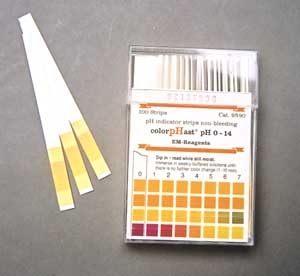
  • Universal Indicator Strips: For most studio applications, multi-pad plastic strips are preferred over simple paper rolls, as they provide a more stable and readable color comparison.

Adjusting the Batch

If the final reading falls outside the target range, I adjust the batch using standardized solutions:

  • To Lower pH: A 20% Citric Acid or Lactic Acid solution.

  • To Raise pH: A 10% – 18% Sodium Hydroxide (NaOH) solution or a Triethanolamine (TEA) solution.


Researcher Summary

Respecting the pH is not optional in cosmetic science. It is a fundamental pillar of Good Manufacturing Practices (GMP). Before utilizing any new active ingredient, I cross-reference its preferred pH range against all other components in the formula to ensure total compatibility.

strips

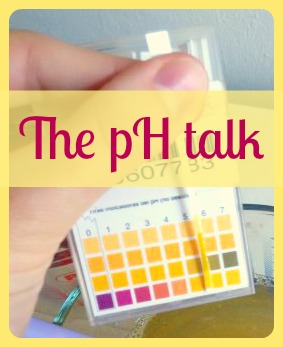
pH Scale

(Source: here)

phstrips

(Source: here)

Can you recognize a good Shampoo pt.4

LAB NOTES & SAFETY NOTICE
For educational purposes only. Content reflects personal, non-professional formulation experiments and is not instructional.
No formula or information on this site is intended for commercial use, consumer application, or third-party use.
Accessing this content means you accept all risks and full responsibility for safety, testing, legal compliance, and outcomes.
[Full Legal Disclaimer & Safety Requirements]

Hello there! 😀

This is finally the last chapter of the “Recognizing a good Shampoo” topic.
After the basics of shampoo surfactants in the part 1 and part 2 and in the last post (which you can find here) I talked about the most common “extra ingredients”.
I know I haven’t covered all the possible things but I did what I could 😀

Can you recognize a good Shampoo pt 4


Theory: Recognizing a Good Shampoo (Part 4 — Useful Actives)

Hello Hello! :D To finish our journey through the shampoo bottle, we are looking at the “useful” ingredients—the actives that theoretically make a difference for your scalp and hair.

However, we must be realistic: a shampoo stays on your head for maybe a minute before it’s rinsed off. While these ingredients are great, they are often used at minimal amounts just to look good on the label. 😉 Here is what to look for!

1. The “Label Stars”: Vitamins & Hydrators

  • Panthenol (Vitamin B5): This is a famous one! It’s a humectant that helps hair retain water and creates a protective film. While it’s a great ingredient, don’t expect miracles from a shampoo alone since it barely has time to sink in.

  • Tocopheryl Acetate (Vitamin E): A good antioxidant, but again, its effect in a wash-off product like shampoo is debatable. It’s often there more for “poetry” than performance! :D

  • Aloe Barbadensis: We hear so much about Aloe! It’s hydrating and soothing. Note: Some people are actually allergic to Aloe, so if you notice an itchy scalp after switching to an “Aloe shampoo,” that might be why!

2. Scalp Specialists: Dandruff & Oil

If you have a problematic scalp, look for these near the end of the INCI (usually used at ~1%):

  • Piroctone Olamine: A very effective ingredient for fighting dandruff.

  • Salicylic Acid: Often combined with Piroctone Olamine to help clear the scalp.

3. The “Energy” Boosters: Hair Growth Extracts

Take these with a pinch of salt! Hair loss is often genetic, and no shampoo is a “miracle cure.” However, these ingredients aim to improve scalp oxygenation and blood circulation:

  • Caffeine: Helps stimulate circulation in the scalp.

  • Arginine & Lysine: Amino acids that help repair hair and are thought to support growth.

  • Plant Extracts: Look for Ginkgo Biloba, Hops, Mallow, or Pumpkin Seed extract. They give the skin a little “energy,” but they aren’t magic!

4. My Favorite: Betaine (Trimethylglycine)

You know I love this one! :D Remember: this is NOT the surfactant (Cocamidopropyl Betaine). This is a humectant that makes detergents much milder.Pro Tip: If you find this ingredient near the beginning of the INCI (around 5%), you are almost certainly looking at a high-quality, mild shampoo.


Final Summary Table: Actives at a Glance

Ingredient Primary Goal Reality Check
Piroctone Olamine Anti-Dandruff Effective at ~1%
Caffeine / Arginine Scalp Stimulation May help, but not a “cure”
Panthenol Hydration / Film Good, but mostly marketing in shampoo
Trimethylglycine Mildness Great sign if high in the list!

That is it for our shampoo series! I hope you now feel like you have all the tools you need to choose the best product for your specific hair and scalp.

Have you spotted any of these “energy” ingredients on your favorite bottle? Let me know below! 😀 

Can you recognize a good Shampoo? pt.3

LAB NOTES & SAFETY NOTICE
For educational purposes only. Content reflects personal, non-professional formulation experiments and is not instructional.
No formula or information on this site is intended for commercial use, consumer application, or third-party use.
Accessing this content means you accept all risks and full responsibility for safety, testing, legal compliance, and outcomes.
[Full Legal Disclaimer & Safety Requirements]

So here we are, with the third part of he “Can you recognize a good Shampoo” posts! (you can check pt.1 and pt.2).

GoodShampoopt3.jpg

KEEP ON READING