How to formulate a detergent – THEORY pt. 1

How to formulate a detergent

In this post I am going to talk about the formulation of detergents like face-wash, shampoo, shower gels, bubble bath and so on…

All these detergents are made starting from a family of ingredients: SURFACTANTS.
Surfactants are compounds that lower the surface tension of a liquid and therefore they emulsify the grease and the dirt on our skin and help us to wash it off with the aid of water.

Surfactants can be divided in four groups according to their ionic nature:
– cationic –ย positive charge when ionized. They are mostly used in conditioners.
– anionic –ย negative charge when ionized. They are largely used in detergents and shampoos and provide good detergency and lather. In this family we ding: SLS (sodium lauryl sulphate), SLES (sodium laureth sulphate), ammonium lauryl/laureth sulphate, sodium lauroyl sarcosinate, disodium laureth sulfoccinate.
– non-ionic – no charge (unionizable). They are lauryl glucoside, decyl glucoside, coco glucoside, caprylyl/capryl glucoside. These are usually not used in shampoos because they don’t leave a comfortable feeling on the hair (it makes them feel dry) unless they are included in the formulation in small amount (and therefore they work more as foam stabilizers).ย 
– amphoteric –
ย both positive and negative (depending on the pH). These are used a lot in shampoo formulation: specially if combined with SLES they help the shampoo to be thick and they also decrease the irritancy (read this in a relative way ๐Ÿ™‚ ). They are for example: cocamidopropyl betaine, lauramidopropyl betaine, coco-betaine, cocamidopropyl oxide.

THE ACTIVE MATTER of a surfactant:
How “strong” do we need our detergent to be? This of course depends to what we aim to make: if we are going to make a bubble bath it will need to have a higher washing ability than a face-wash, which should, on the contrary, be very gentle and delicate. The washing ability of a detergent is determined by its “Active Matter” coefficient: every surfactant has an “active matter coefficient” which is a number in percentage (for example the SLES coefficient is 27%) and this tells us “how much active washing substance there is in our SLES… and in this case it is 27%”. This is because the liquid surfactants which we can easily find sold online are usually made of the real surfactant and water (so the active matter is not 100%). You should find out this number from where you purchase your surfactants (if they are not mentioned on the page, send an e-mail to the supplier).

Generally the active matter of surfactant we want in our detergent depending on its aim is this:
Face wash – lower than 10%
detergent for intimate use – around 5%
shampoo – between 10% and 15%
shower gel – between 18% and 20%ย 
bubble bath – between 20% and 25% (this is because the bubble bath should go directly in the water while the shower gel is supposed to be rubbed directly on the skin)

So now you might be thinking that to make a good shampoo you just need 45% SLES and rest of water and tadaaa… well… NO ๐Ÿ˜€
It is true that the 45% of SLES plus 55% water would give you a solution with 12.15% Active Matter (45*27(which is the active matter coefficient of SLES):100= 12.15) however there is something very important you still need to know:

In a formulation a single surfactant results more harsh than an equal “active matter %” formulation made with different surfactants.
To make it simple: if you mix surfactants together, you will have a milder results than using the surfactants alone.
A particularly happy mix is SLES with a betaine (usually I have cocamidopropyl betaine) because not only the betaine lowers the harshness of the SLES, but it also thickens the solution.

Generally when formulating you should use:
– anionic or non-ionic surfactant; it is the surfactant which we will add in our detergent at higher %.
– anphoteric surfactant; it will make the first surfactant more mild.
– extra surfactants: these are used in very low percentage and are added to improve the lather or the consistency of the detergent.

To be continued… ๐Ÿ˜‰
[Theory of Formulating a Detergent Part 2]

(Sources)
Creative Commons License
This work is licensed under a Creative Commons Attribution-NonCommercial-NoDerivatives 4.0 International License.

Homemade cosmetics trends (and mistakes)

Homemade Cosmetics Mistakes

When I started studying how to make (real) cosmetics at home, it was because I was unsatisfied with all those “extremely easy and miraculous” recipes you find online.
From the “firming soap” (made, obviously, with aloe vera :D), the “detoxifying cream” and the “acne treatment” made with too much tea tree essential oil.
Yes it was inspiring for a start, but often things were not sounding right and I felt the need to know more.

Now, after studying (I am still studying of course, because the more you learn, the more you realize how much you still don’t know) I realize that sometimes things are not just “not right”… sometimes they are terribly wrong!
So this is why I am writing here.

Let’s start from theย so called MIRACULOUS PROPERTIES: no cosmetic has such.
I learnt this with the first creams I was making: I learnt how to formulate, at first I used recipes of more experienced people and then I was tempted to do on my own. I obviously started adding all the active ingredients I had on hand… so to create the miraculous face cream which could help against acne, be full of antioxidants and also pore minimizer.
I had avoided all the silicons (which my skin doesn’t like, but if they work for your skin… why not ๐Ÿ˜‰ ), all the synthetic oils (using instead oils which had good properties for my skin)… still my skin was better but it had not changed into a photoshopped magazine skin: it was still my skin with a small pimple every now and then, a bit oily on the T zone at the end of the day.
This is when I understood that learning to make cosmetics at home is mainly about NOT believing any commercial anymore ๐Ÿ™‚ (and same goes for the tempting miraculous solutions trending online).

Another thing I have noticed is the general (and terribly wrong) belief that if something is “natural” it is therefore also mild.
THAT’S WRONG!
Let’s talk, for example, about essential oils: I have seen people adding essential oils into creams or products for their infants! This is terribly wrong because essential oils are highly allergenic: their content of allergens is so high that it may cause painful reactions on the skin, therefore, if you wish to make a soothing cream for the butt of your baby and you can’t help adding some kind of perfume to it: add an allergen free fragrance oil to it! (they exist and are easy to find on the websites I spoke about HERE).
This is a rule that many mothers don’t seem to understand because they are fascinated by the amount of “lovin’ essential oils” websites they find. Please understand that essential oils can be good in some contexts but they are definitely NOT fresh water and they should never be used on infants.

There is also another bad trend of giving to anything handmade a healing property.
It is AT LEAST deceiving to boost about the healing properties of something you make: firstly, because it is not a pharmacological product, tests haven’t been done on your product proving that it has healing properties; secondly because you are almost cheating the people you speak with.
Let me make an example: exactly yesterday I entered a shop of homemade soap. The soaps were looking good, smells were great but the problem was on the labeling.
The soaps were not called “Aloe Vera Soap” or “Lavender Soap”… they were something like “Stress relief Soap” (which is quite fine), “Firming soap” (??? how on earth is a soap supposed to firm your skin… I don’t know :D), “Flu Aid Soap” and so on.
I felt deceived and I didn’t purchase anything.
It is also true that sometimes your friends, once they know you make creams, will start asking you if you can make them try some homemade cream of yours. Usually they go “Can you make me an eye-lifting cream?” but sometimes they even go “I suffer of Dermatitis, can you make me a cream to cure it?” ย In this last case… say a big NO.
When it happened to me, I suggested my friend to go to a dermatologist and ask the dermatologist which cream to use. I also said that I am not a pharmacist and I cannot make “curing creams”. All I could do was to make an highly hydrating cream and I could try to gather information about what might help in case of Dermatitis but this still wouldn’t make my cream a cure for it.
My friend understood and called the doctor.
I know it is tempting, once you are able to make creams, to boost about your abilities and feel almost like you can do anything in the world… but bear in mind that you are still not a doctor and that you cannot substitute one.

The last thing I don’t like much, is the general belief that anything synthetic is, therefore, bad.
Of course this is not true.
I already made the example of the allergen-free fragrance oil which is better than any essential oil in case of products for babies, but there is a bigger example I can make:
SLS (sodium lauryl sulfate) and SLES (sodium laureth sulfate)
They are surfactants which have gone through any kind of bad publicity lately.
What happened is a big misleading campaign: there are no scientific studies saying that they cause cancer!
To be very honestย soaps are harsher on the skin than most cosmetic-approved synthetic detergents!
Another thing I have read about SLS is that it is used to clean industrial floors or boats and therefore it is dangerous to the skin… well yes and no: anything if used in wrong amount can be dangerous! Even water can be lethal if you drink too much: it all depends on the concentration at which an ingredient is used!
If a detergent is formulated well, you can be sure that it is not dangerous to your skin. If a detergent is badly formulated… it might be aggressive (but still it doesn’t directly depend on the mere presence of SLS or SLES).

And, last but not least, THE PRESERVATIVES! ๐Ÿ˜€
Apparently it is very difficult to understand that any product containing water or water based ingredients (unless in certain, specific cases) NEEDS to be preserved with a real preservative.
I don’t know why but there is this huuuge campaign against preservatives, in general, as if they were “concentrated evil” ๐Ÿ˜€ where, actually, they save our cosmetics from a lot of trouble.
Of course, some preservatives are better than othersย (for example I am not a fan of formaldehyde donors!) but nowadays there are so many “new” combinations of ingredients for preserving a product, even almost eco-friendly (or better to say “not eco-un-friendly” ๐Ÿ˜€ ) that really there is no excuse! Anyone who wants to learn how to make cosmetics at home must understand that PRESERVATIVES ARE NOT AN OPTION, they are a must. ๐Ÿ˜€
So don’t be shy or stubborn and use them properly! ๐Ÿ˜€
Actually cosmetic brands often play with the scare of people and I have already found cosmetics where you read on the label “it doesn’t contain preservatives”, but it simply means that it doesn’t contain the preservatives which you know about ๐Ÿ˜€ maybe they are using a combination of ingredients like salicylic acid, urea or something elseโ€ฆ that might figure as if they were inside of the cream for another reason, but eventually they are behaving as preservatives ๐Ÿ˜€
Ps: NO NO NO: essential oils are NOT preservatives! No matter how many pages you found on the internet chanting the, let’s say, amazing properties of tea tree oil! ๐Ÿ˜€

Have a great day! ๐Ÿ˜€

Sebum Normalizer cream Recipe

DSCF3535

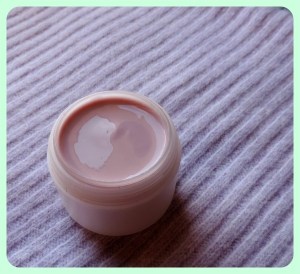
This is a cream made specifically for oily skin and for spring days! ๐Ÿ˜€
There are two important active ingredients in this cream which will perform the function of oil-controllers:
– Azelaic Acidย 
– Tiolisineย 

The Azelaic Acid however is insoluble in water or oil therefore it is very difficult for us to use it in our home production (you can find it in online shops of raw materials but I don’t know how it could be used since it is impossible to melt it or dissolve it properly in any liquid)… this is why in this recipe I have used a derivative of Azelaic Acid called Azeloglicine (it contains approx 30% of Azelaic Acid in a hydrophilic form! Bingo! :D).
Azelaic Acid is mainly used for its oil-control properties but it is also used to treat acne (both comedonal and inflammatory) because it kills the bacteria which cause acne and it also decreases the production of keratin which is a substance that promotes the growth of bacteria.
Tiolisine is a sulfurated aminoacid derivative which also has sebum-normalizing propertiesย and it is usually used between 2-4% (3-5% in detergents like shampoo for dandruff).

The recipe I have made for this cream is as simple as possible.
Now I write the recipe and then I explain some more things:

RECIPE: [in case you are new to the making of creams, HERE you can learn what I am talking about ;)]
PHASE A:
water to 100ย (HERE the explanation)
xanthan gum 0.11 (possibly not the transparent kind: for gels the transparent xanthan gum is good, for creams the other is better)
carbopol ultrez 21 0.3
glycerin 2.5

PHASE B:
Methyl glucose sesquistearate 2 (I use this low percentage because the oils in this cream are very low)
Cetyl Alcohol 0.8
Cetiol sensoft 1.5
Evening Primrose Oil 1
Hemp oil 0.5
Tocopherol 1

PHASE C 1 :ย 
Bisabolol 0.5
Dry Floย (INCI aluminum starch octenyl succinate) 0.7

PHASE C 2 :
Azeloglicine 6
Tiolisine Complex 2.5

Preservative 0.6 (or according to the right percentage of use of your own preservative).

Adjust the pH at 5.5 – 6
The oil percentage is so low it could be considered an oil-free cream.
The consistency of the cream is rather fluid: I always have the feeling that thick creams are more suitable for dry skins (at least this is the feeling I get: if a cream is thick, I unconsciously associate it with the idea of a “too rich” cream for an oily skin), while fluid lotions give me better the idea of something light. So this is all up to you (if you want a thick cream you can rise the cetyl alcohol up to 1.5%… but since this is like a wax on our skin, I don’t recommend it :D).
Cetiol Sensoft is a very light synthetic oil which gives a smooth touch to the cream. If you want to avoid using synthetic oils and you wish to use only natural oils, you could substitute this ingredient with the same amount of jojoba oil (which is a bit more dense but it is the lightest natural “oil”).

Hope this was helpful to those of you who have trouble with oily skin!
Let me know if it worked for you ๐Ÿ˜‰

HAVE A GREAT DAY! ๐Ÿ˜€

DIY Vitamin C Serum

Vitamin C is a very powerful substance and it is found in many commercial products for the skin because it is a strong antioxidant, it has lightening properties and, last but not least, it boosts the production of collagen (therefore you are left with a firmer skin).

Vitamin C is “ascorbic acid” (you could also find “L-ascorbic acid”) but in the creams you buy, if you read the ingredients, you will never find “ascorbic acid”, probably you will find “sodium ascorbyl phosphate” or “magnesium ascorbyl phosphate” (there are also other forms of Vitamin C, this is a mere example). What is this?
Well, Vitamin C has great properties but it doesn’t keep stable: it oxidizes even in contact with air, with light… (this is why if you make fresh orange juice you should drink it immediately after), so in order to be able to add this vitamin in our face creams, cosmetologists use a stabilized form of Vit C: if in the ingredients of your cream you read an ingredient which contains the word “ascorbyl”, to make it very simple, that is the stabilized form of Vitamin C.

These stabilized forms are many and they are growing in number all the time. They are not something negative (and even I use them in the making of Vitamin C creams… maybe I will post a recipe soon about it ๐Ÿ™‚ ), however their properties are not 100% the same of the pure Vitamin C.

Today I am going to show you the easiest and most effective way to make at home a special Vitamin C Serum which is much more powerful than every cream you ever bought ๐Ÿ˜€

The only way to use pure Vitamin C (therefore “L-ascorbic acid”) effectively is to use it right away and make a new serum all the time.
This is why the recipe of today, unlikely all the cream recipes I have shown before, is not in 100 gr but it is in very small amounts: because you will have to make it anew every time you want it ๐Ÿ™‚
But don’t be scared: it is made of three ingredients only and it is divided in two parts ๐Ÿ˜‰

RECIPE:
(first part)
1 teaspoon demineralized waterย 
1/8 teaspoon L-ascorbic acidย (you can easily buy it in pharmacy; ask for the powder of vitamin C or ask for Ascorbic acid, simply ๐Ÿ˜‰ )
(if you wish to, you can add also a drop of glycerin)
You mix these two ingredients in a bowl and measure the pH (you can find pH strips even in pharmacy: buy those from 0 – 14 so you can use them also for the other homemade cosmetics in the future. They should look like THIS in order to show you exactly the correct pH of the solution).
WARNING! Measuring the pH is important!
Ascorbic acid is obviously an acid (and it is also very strong) so you don’t want to apply on your skin something of pH 2… however Vitamin C is well absorbed (and used) in your skin only at a pH range of 3.5 or lower. Therefore check the pH of the solution and if you see it is lower than pH 3.5 adjust the pH by adding a little bit more water. Now check the pH again and keep adjusting until the result is pH 3.5.
This is really important and I am not responsible if you ruin your skin.ย 

At this point you can apply this water on your skin using a brush or even your own fingers, keep applying even in multiple layers until the water is finished.
WARNING! Do NOT apply on the eye area or too close to your lips or nostrils.
It is normal if it stings a little, but it should not be painful and it should not last more than 2 or 3 minutes.
WARNING! If you feel pain wash off immediately! If after 3 minutes the stinging hasn’t stopped yet, wash off immediately! Some people have a very delicate skin and this acid might be too strong for them. If this is your case, rinse off immediately and avoid using acids on your skin. They could damage it!

If instead your skin didn’t react badly to the Vitamin C boost :D, wait for the skin to be dry (wait approximately 10 minutes) and now it’s the part two ๐Ÿ˜‰
(second part of the “recipe”)
2 drops of Vitamin E (Tocopheryl acetate or Tocopherol – you should be able to find it in pharmacy very easily. It is a very dense liquid. The Tocopheryl acetate should be transparent or slightly yellowish. Tocopherol, instead, is dark brown).
Put these two drops on the tips of your fingers and tap it all over your face.
This time it shouldn’t sting anymore.
Let it sit on your skin for 20 minutes and wash off (you will have to wash your face vigorously, because Vitamin E is quite sticky ๐Ÿ˜€ ).

This is the easiest, most effective Vitamin C serum.
After applying the ascorbic acid, you apply Vitamin E because these two Vitamins work in synergy, boosting the antioxidant properties of them both! ๐Ÿ™‚

I wouldn’t suggest to apply this Vitamin C serum everyday because it is quite aggressive. Once a week should be enough.
It is better to make this treatment in the evening before sleeping (so the skin has time to “recover” all the night) and I would suggest to avoid making this treatment in summer or late spring (it is always negative to use acids on the skin in summertime! They weaken the barrier of the skin and they can make more disasters than positive things if your skin receives direct sun rays in the period of an acid treatment).

Now, after having done a little bit of “terrorism” about this Vitamin C Serum… I can say that I have not misused it and I am very happy about the results!
I used to have some red signs on my skin, left from an old acne, and they are finally gone! ๐Ÿ™‚
Also, my skin looks more fresh and firm! ๐Ÿ™‚

So don’t misuse this DIY and have a great day! ๐Ÿ˜‰

Vitamin C serum

Creative Commons License
This work is licensed under a Creative Commons Attribution-NonCommercial-NoDerivatives 4.0 International License.

Buying online COSMETIC INGREDIENTS

Buying Cosmetic Ingredients Online

Maybe you’ve been reading my posts thinking “yeah right… and where on earth am I gonna find these ingredients?!”
Well I guess it is time for me to show you a few online shops of raw material of cosmetic grade!
This is obviously very important because if you use a fragrance oil which is not of aimed in cosmetic use… well, don’t be surprised if you get a strong allergic reaction or even something worse… same goes if you use urea which you find in gardening shops: that won’t do! ๐Ÿ˜€

This said, of course in the online shops which sell raw materials for cosmetic use… all the ingredients are of cosmetic grade… but here a few tips in case the online shop you found is not in my list:
– maybe before you purchase, read around the internet if there are experiences of other people
– for each ingredient they sell, they are supposed to own a MSDS which is the Material Safety Data Sheet. The MSDS should be available for each ingredient on their website or they should send it to you after purchase: if it is not available on their website, before you place an order contact them and be sure they are going to send you one. This is important.
– Before purchasing try asking some information about one of the ingredients they sell: for example at what percentage it should be used, if it shouldn’tย be used with certain ingredients and so on. Usually they have this information on the ingredient page but sometimes they don’t. A serious supplier will be able to give you some information, however, don’t expect too much: don’t expect suppliers to beย formulators.
– If it is the first time you want to buy raw material… DON’T BUY EVERYTHING you find! Make a small list of ingredients that will be really useful (an emulsifier, a thickening agent, a gelling agent). Start planning to make simple creams, pick few active ingredients (maximum 3!), really: keep it simple! ๐Ÿ˜€
– do NOT go for the “nice name” ingredient: for example, if an ingredient name is “NO MORE WRINKLES concentrated active ingredient” 99% of the time it is a big NO NO NO ๐Ÿ˜€ If you click on it and look for the INCI name, probably it comes out that this “concentrate active ingredient” is actually made of “water, lecithin (emulsifier), some kind of oil, the great ingredient” and you can be sure that your great ingredient will be at minimum %.

Ok… after having warned you… ๐Ÿ˜€
Let me put some links! ๐Ÿ˜€
NOTE: I am not publicizing any website, I am just posting some websites I know of… that might help you in starting your serious COSMETIC DIY! ๐Ÿ˜€
I have bought only from some of these websites and obviously I am not responsible if something on your order goes wrong.

Here we go:

Asia:
http://www.bulkactives.com – good website! It has some ingredients which are very difficult to find somewhere else. Prices are a little bit higher than in other places.
http://stores.skinessentialactives.com/

North America:ย 
http://www.makingcosmetics.com – many ingredients and also sells in bulk!
http://www.ingredientstodiefor.com
http://www.lotioncrafter.com/

Europe:
http://www.gracefruit.com – UK – Has many many ingredients for soap-making and also some ingredients. Long list also of fragrance oils. Prices are quite high compared to other websites but some fragrances are difficult to find somewhere else.
http://www.activeformulas.com – UK – website mostly about active ingredients. It has a vast choice.
http://www.aromantic.co.uk/home/products/activeย -ingredients.aspxUKย 
http://www.thesoapkitchen.co.uk/ย 
http://www.phoenixproducts.co.uk/
http://www.sensoryperfection.co.uk/
– if you click HERE you will find my review of some of their fragrance oilsย 

http://www.zrobsobiekrem.pl/pl/i/Information-for-foreigners/129 – PL – This website is from Poland and you can use Google Translate to translate everything written on the page. It sells cheap plant extracts and also some emulsifiers and active ingredients!

http://www.glamourcosmetics.it/ – IT – Probably my favourite Italian website that sells ingredients. Very serious, ship extremely fast, have good variety of ingredients – if you click HERE you will find my review of some of their fragrance oils.
http://www.dermolife.it/shop/index.php – IT – Italian website with good prices about tensioactives. Many active ingredients (vitamins, minerals, aminoacids) also.
http://www.farmaciavernile.it/ – IT – good ingredients (also some special ones which I couldn’t find on other websites).

http://www.dragonspice.de – DE – website from Germany.
http://www.manske-shop.com – DE – website from Germany. It has mostly ingredients about making soaps, therefore a lot of butters and oils, many fragrance oils, essential oils and only few cosmetic ingredients (but basic emulsifiers and active ingredients are there) – if you click HERE you will find a review on some of their fragrance oils.
http://www.alexmo-cosmetics.de/
http://www.aliacura.de/

http://www.aroma-zone.com – FR – French website. Many kinds of oils and butters (very exotic), emulsifiers, essential oils and some active ingredients (but read the INCI of each, before purchasing).

http://www.jabonariumshop.com – SP – website from Spain mainly about soap-making. Good prices.

http://kosmetikmacherei.at –ย AU

http://www.candlemaking.gr/ – GR

Australia:
http://stores.skinessentialactives.com/
https://www.escentialsofaustralia.com/
http://www.n-essentials.com.au/
http://www.aussiesoapsupplies.com.au/
http://www.heirloombodycare.com.au/

Please let me know if you know any good shop from your own country.
Notice also that if you make an order from a website which is not in your country, you might have to pay custom duties… so get informed about it before you make your order! ๐Ÿ™‚

Hair Conditioner Recipe (and THEORY)

Hair Conditioner Recipe


Hello ๐Ÿ˜€
Today I would like to show you a basic recipe for a good Hair Conditioner ๐Ÿ™‚
The formulation for a lotion and an hair conditioner are similar but not same: there are some basic differences that, if not followed, might make you fail.

So!
There is still a Phase A and a Phase B BUT! while in the making of a lotion you add the heated Phase B to the heated Phase A… here you MUST do the opposite!
You must pour the Phase A into the Phase B. This is very important!

The second difference is that there is not a proper Phase C because every extra ingredient (which should be added when the Phase A and B are already emulsified and at room temperature) has to be added singularly… ONE BY ONE! ๐Ÿ™‚

Apart from these two big differences, however, everything else is quite same! ๐Ÿ™‚

Phase A:
Water to 100ย (explanationย HERE)
Glycerin 3
Guar Hydroxypropultrimonium Chloride 0.1 (this is a very good ingredient in a hair conditioner or even in a shampoo, but don’t use it at higher concentration than 0.1-0.15% – However if you don’t have it, you can use instead a water where you had infused Mallow or Flax Seeds)
Heat this phase up to 75ยฐ (absolutely check the termometer!)

Phase B:
Esterquat 8 (this is a CATIONIC emulsifier, therefore it is different from the emulsifiers which we have in our lotions. It is important that you use an emulsifier specifically for hair conditioning ๐Ÿ™‚ this substance in the specific is very good because it is eco-friendly ๐Ÿ˜‰ )
Jojoba oil 2
cetyl alcohol 3.5
stearic acid 1.5
Heat this phase up to 70ยฐ

“Phase C” (but remember you have to add them one by one and in this order)
Hydrolized wheat protein 3
Panthenol 1
Poliquaternium-7 2 (this enhances the conditioning ability. If you don’t have it you can skip it)
Preservative 0.5-0.6 (or whichever concentration the preservative you are using needs to be!)
Fragrance oil or Essential oil depending on your taste ๐Ÿ˜€

DSCF3512

Have a great day!!! ๐Ÿ˜€


Creative Commons License
This work is licensed under a Creative Commons Attribution-NonCommercial-NoDerivatives 4.0 International License.

Lavender and Verbena Soap Recipe (palm free)

Lavender Verbena Soap Recipe

If you don’t know how to make soap, just follow the link HERE! ๐Ÿ˜€

For the others of you who already make soap… here is the recipe for 1 Kg of soap:

300 gr Coconut oil
400 gr Olive oil
150 gr Shea butter
50 gr Castor oil
50 gr Cocoa butter
50 gr Almond oil

330 gr water
142 gr lye (6% discount already included)
Temperature of the oils and lye when united: 38ยฐ

Once I reached trace I separated the soap paste in two bechers.
In one I added:
– 20 ml Lavender Essential Oil
– Purple CP color

In the other I added:
– 20 ml Verbena Essential Oil (this is one of the few citrusy Essential Oil smells to actually keep persistent in a cold process soap! ๐Ÿ˜€ I love it!)
– Apple CP color

I also added small balls which I had made with pieces of an old soap ๐Ÿ™‚ of course this is not useful and you can decorate your soap as you like! ๐Ÿ˜€

Hope this was helpful ๐Ÿ™‚

The recipe is also Palm free ๐Ÿ™‚

DSCF3500

Have a great day! ๐Ÿ™‚


Creative Commons License
This work is licensed under a Creative Commons Attribution-NonCommercial-NoDerivatives 4.0 International License.