LAB NOTES & SAFETY NOTICE
For educational purposes only. Content reflects personal, non-professional formulation experiments and is not instructional.
No formula or information on this site is intended for commercial use, consumer application, or third-party use.
Accessing this content means you accept all risks and full responsibility for safety, testing, legal compliance, and outcomes.
[Full Legal Disclaimer & Safety Requirements]
Hello there! 😀
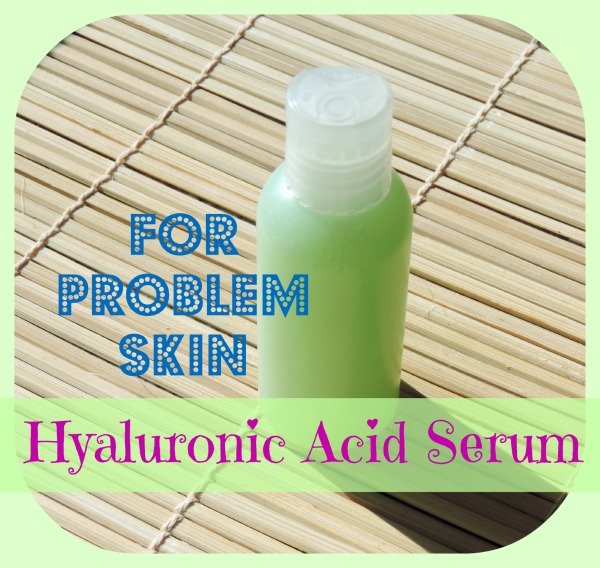
Lab Note: My “Problem Skin” Niacinamide Serum
Hello Hello! 😀 Today I’m looking back at a formula for a super simple but highly effective serum. I designed this one specifically for those “problematic skin” days—you know, when you have a bit of an oily T-zone, some mild blemishes, and maybe those annoying red marks left over from previous spots.
I have to remind myself: this isn’t a “magic cure” for serious acne. It’s just a helping hand to keep the skin hydrated and soothe that irritation. yeheee!
The Niacinamide “Trick”
The star here is Niacinamide (Vitamin B3). It’s a powerhouse for sebum and redness, but it has a secret: it’s a close friend of Nicotinic Acid. If the pH drops too low, the Niacinamide can turn into Nicotinic Acid, which causes flushing and burning—the exact opposite of “soothing!”
Because of this, I was incredibly “fussy” about the pH in my lab. My goal was a safe pH of 6–6.5. At the time, I was using the most reliable pH strips I could find, though a pH meter is definitely the “gold standard” for this!
The Formula I Used:
- Water: to 100
- Niacinamide: 4.0 (The blemish fighter)
- Aloe Vera Powder (200:1): 0.5
- Betaine (Trimethylglycine): 5.0 (The soothing powder—not the surfactant!)
- Glycerin: 1.0
- Sodium Hyaluronate: 0.9 (Used here as the “gelling agent” and for deep hydration)
- Preservative: 1.0 (I used my Ecocert approved one)
- Extras: A drop of green food-grade colorant and a hint of fragrance.
Notes from my Beaker:
- The Base Mix: I started by dissolving the Aloe, Glycerin, Betaine, and preservative into the water.
- The pH Balancing Act: This was the most important part. When I first measured the mix, the pH was a bit low (under 5.5). Since I didn’t want to play with Sodium Hydroxide that day, I used a clever trick: I added a tiny bit of SAP (Sodium Ascorbyl Phosphate). It’s a stable Vitamin C that is quite alkaline, so it raised my pH perfectly into that 6–6.5 “safe zone” for the Niacinamide.
- Adding the Active: Once the pH was stable, I stirred in the Niacinamide. And yes… I checked the pH again! You can never be too sure when you’re avoiding that Nicotinic Acid flush.
- The “Patience” Test: I poured the Sodium Hyaluronate on top. Usually, you’re supposed to just “forget about it” for a day while it hydrates into a gel. But since I have zero patience :D, I hit it with a spatula and then my immersion mixer. It worked like a charm!
- The Aesthetics: I added one drop of green colorant because it just felt “right” for a soothing aloe-based serum.
Final Verdict: Even though it was a bit of a “fuss” to keep the pH exactly right, the result was a serum that felt incredibly smooth. It didn’t feel sticky, and it really helped keep my T-zone in check without any of that scary flushing. ENJOY! 🙂
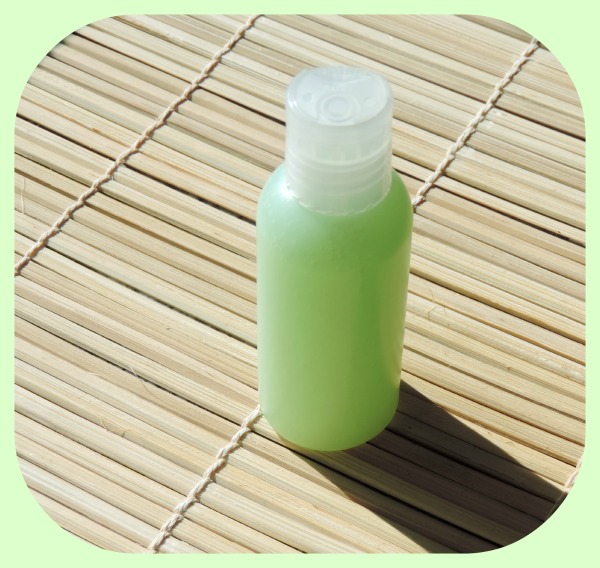
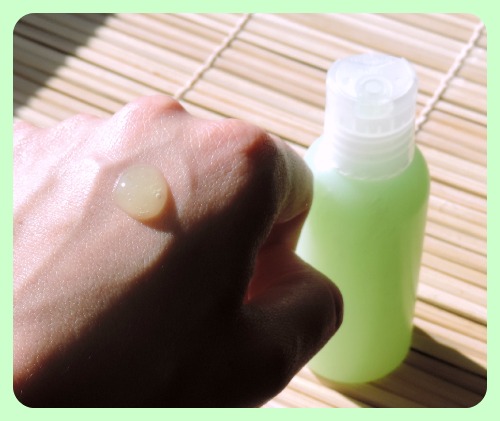

 IT'S ALL IN MY HANDS
Hello there, this sounds interesting, but I wonder what makes it gel? Is it aloe? Hyaluronic acid is horribly expensive and I haven’t worked with it yet,but hopefully one day I’ll get it for my serum and creams. Also, I wouldn’t add any fragrance and particularly not colours, maybe some essential oil instead.
My best regards,
Maja
LikeLike
Sodium hyaluronate costs approx 2.5 euro per gram. If you buy more than one gram you can pay it around 1.5 per gram.
You need 1 gram to make 100 grams of product and it is the ingredient which makes the gel (because it bounds with water).
I don’t think it is so expensive 🙂
You can choose to add essential oils but remember to add only one drop or it will come to the surface (in fact there are no emulsifiers in this formula)… And avoid citrus essential oils if you use this serum during the day (to avoid fotosensibilization) 😉
LikeLike
Do you think it will be fine to ass willow bark extract to this serum?
LikeLike
Hello Iolax. If “ass” was supposed to be “add” I don’t see why not.
Just be sure the extract is water soluble and the pH is compatible. Adjust the amount of water accordingly 😉
LikeLike
Oops! sorry about the typo. and thanks for your response. Will go try it out.
LikeLiked by 1 person
SOAP acid how you using it to elevating oh
LikeLike
SOAP acid? What do you mean?
LikeLike
Sap acid how elevating ph
LikeLike
Hi, I’m interested in this formula therefore would like to try it out. However, I do not have Betaine on hand, so could I just replace it with 5% of Kaolin instead as i know kaolin can also helps to soothe our skin.
Thank you.
LikeLike
or can I use 5% of Oat Kernel instead?
LikeLike
Oat kernel oil? Or what do you mean
LikeLike
Hello, no it is not a good substitutio because kaolin is NOT soluble and it being a powder it is going to destabilize your emulsion and bring a lot of preserving-related issues.
It is better to simply omit betaine and add 5% of water 😉
LikeLike
Hello, thank you for all your interesting articles !
May I know if it’s alright to use Niacinamide (Vit B3 ) powder in my Hyaluronic acid serum while I’m also applying Vit C serum? I need all that I can find to get rid of pigmentation problem.
Thank you very much for you kind advice:-)))
LikeLike
Hello,
No I wouldn’t use them together because of pH reasons.
You can use one them in separate days or anyway after having washed off the other 🙂
LikeLike
Hi again, I’ve purchased the Vitamin B3 (Niacinamide) on line, and just added 1% of the powder into my Hyaluronic Acid serum. Following your helpful instructions, I did get a pH6 but when I tested it on my inner arm, the skin flushed and redness appeared. I’m wondering if it’s possible that I’m allergic to Vitamin B3? (I’ve searched for days for reasons but to no avail.) I’d appreciate it if you would help me find the cause? (my skin is hardly allergic to products.) I can even use Vitamin C which is pretty acidic….
Thank you very much again in advance for your precious technical advice!
LikeLike
Did you purchase this ingredient from a cosmetic ingredients retailer?
Try rising the pH and reaching closer to pH 7 and try then on your arm.
I am no specialist for allergies, but I do know Niacinamide can cause this kind of reaction when it has become nicotic acid.
It might be that the pH is NOT actually 6 (did you check it with strips or with a pH meter? was the pH meter tested to be sure it signs the right pH?), or that there is some issue in the ingredient you purchased.
Try rising the pH closer to 7. Does it give you the same reaction?
LikeLike
Thank you so much for your kind reply. I still am thankful that I managed to make the Hyaluronic acid serum and I may have to leave this for the time being as I dont have the ingredient to play around with the pH :-))) I think it’s somehow an allergy in my case. I bought the powder On Line.
LikeLike
Hello,
Could I add the preservative at the end of formulation? Or is there any specific reason for adding preservative before niacinamide and sodium hyaluronate? Thanks!
LikeLike
If you add it before, when the water is still in liquid form (not gelled) you can be sure it is well mixed in. That’s all
LikeLike