LAB NOTES & SAFETY NOTICE
For educational purposes only. Content reflects personal, non-professional formulation experiments and is not instructional.
No formula or information on this site is intended for commercial use, consumer application, or third-party use.
Accessing this content means you accept all risks and full responsibility for safety, testing, legal compliance, and outcomes.
[Full Legal Disclaimer & Safety Requirements]
Hello there!
This is a recipe for an amazing cream (I have used it for few months now, so I edited the beginning of this article) 🙂
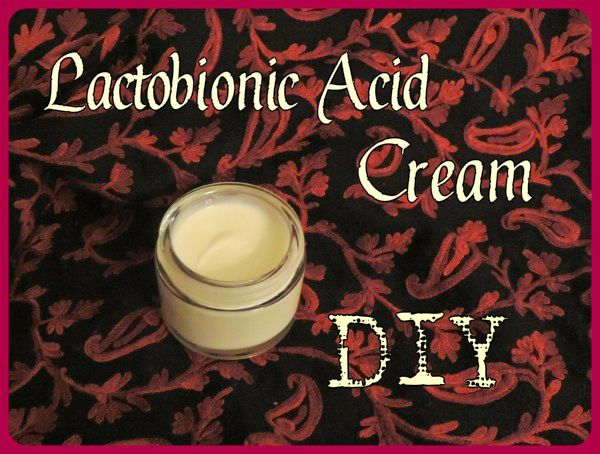
This cream has a quite consistent oil phase (or Phase B) because I needed it for winter, however (after one month of trial) I don’t think it is enough greasy for people with dry skin or who live in very cold countries (I find myself in Finland at the moment and at -20°C my skin was still dry 😀 ).
For this cream I tried to formulate a different grease-fall compared to what I usually make because, even though I have a quite oily skin, I have found out that low-density oils appear on my skin much more easily than more heavy ones: that’s because the lower the density of an oil, the higher the spreading ability. So that’s it, I tried adding more butters than I normally do and I must say my skin liked it, even though I am still not totally satisfied with the feel of this cream and I will definitely have to experiment much more before I find the “perfect grease-fall”.
Now a comment on the active ingredients 😀
In this cream there are quite a bunch 😀 but the PRINCE ingredient here is LACTOBIONIC ACID! This acid is a strong antioxidant (it should therefore have also a good action against light pigmentation of the skin (imagine a light hyperpigmentation after a pimple, this ingredient is supposed to help somewhat), it has good hydrating properties and, being a (mild) acid it also helps the exfoliation of skin and therefore its renewal 😀
It can be used from 2% up to 15% and it is usually used in substitution of other stronger acids (let’s say, for instance, glicolic acid) because it is not as strong and therefore it is more suitable for sensible skins.
Instead of leaving this Lactobionic Acid alone, however, I paired it with another good active ingredient: GLUCONOLACTONE! Also this one is a mild acid and doesn’t become aggressive once on the skin. Lactobionic acid and gluconolactone together, help fighting hyperpigmentation of the skin caused by oxidation.
Because this acid would make the cream have a too low pH for the carbomer (carbopol ultrez 21) to work, I decided to simply omit it and rise the % of Xanthan gum up to 0.2%.
Now, TO THE RECIPE! 😀
Phase A:
Water to 100 (HERE the explanation)
Glycerin 1.5
Xanthan gum (non transparent grade) 0.2
Lactobionic Acid 3
Trimetilglicine 3 (it has soothing properties)
Phase B:
Cetiol Sensoft 3
Tocopherol (Vitamin E) 1
Murumuru butter 2
Kokum butter 2
Jojoba oil 1
Metil glucose sesquistearate 3
Cetyl alcohol 1
cetyl palmitate 0.5
Phase C (oily):
Safflower oil 3
Dry flo 0.5
Aperoxid 3 drops
Phase C (hydro):
Gluconolactone acid 2
Water 10
(caustic soda solution 20% to bring pH up to 4.5)
Sodium Lactate 3 (helps hydration of the skin)
Cosgard 1 (this is the preservative I used)
HOW TO:
1) I measure the Phase A and warm it up to 70°C (for the record: I added glycerin, xanthan gum, mixed and then added the water where I had already poured lactobionic acid and trimetilglicine little by little
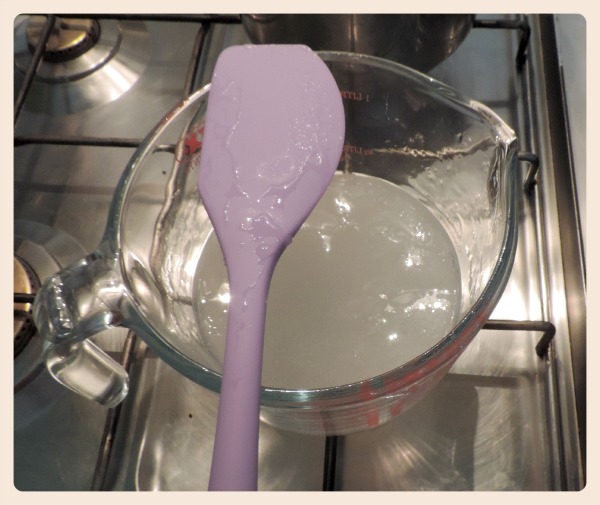
It formed a light gel.
2) I measure the Phase B and warm it up in a double boiler (please do not mind my “extra professional” double boiler system 😀 ) up to 70°C.
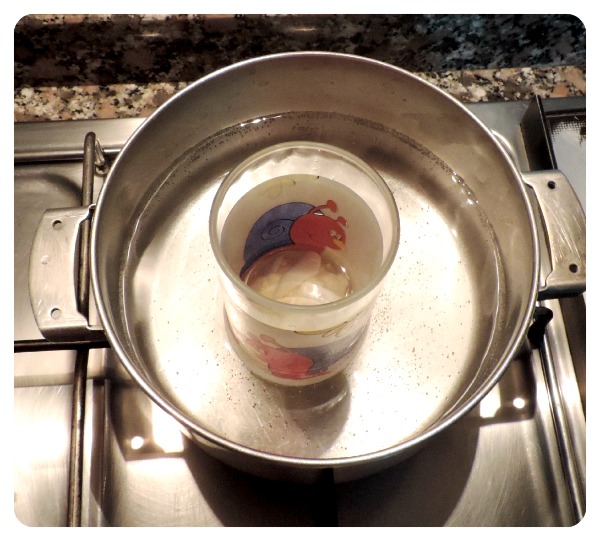
3) Once both the Phases reached 70°C, I pour the Phase B into Phase A and mix with an immersion mixer

It becomes a white liquid
I kept stirring it until it complete cool down to room temperature (might take 30 min).
4) I add the Phase C (oily)
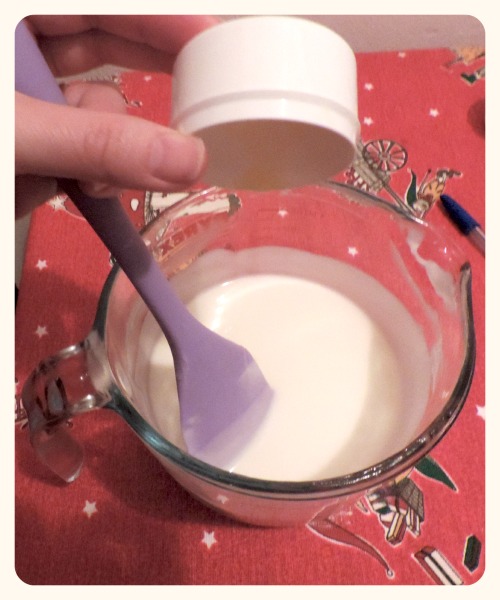
5) I make the Phase C (hydro) checking that the pH is not lower than 4.5
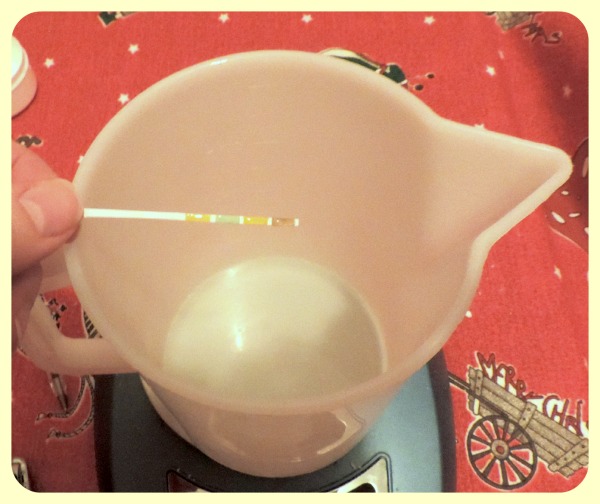
6) I add it to the cream, add also the preservative and the sodium lactate and use the immersion mixer again, then check the pH (it should be 4.5, if it is not… it needs to be adjusted to 4.5).
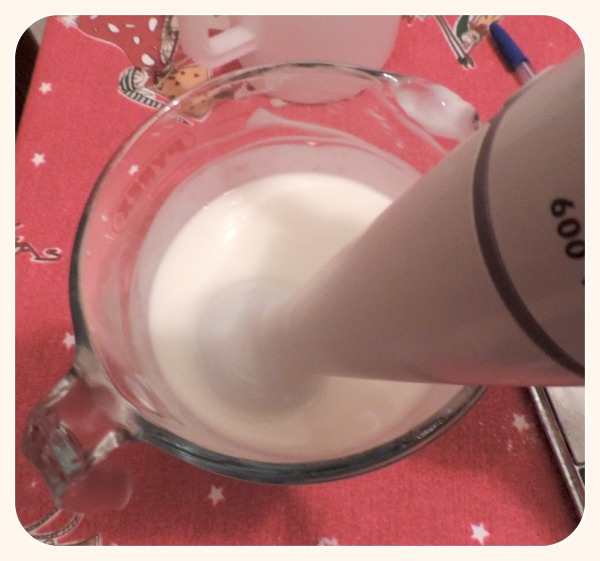
7) I kept it in the container for a couple of days, having covered it with a plastic wrap so no dust would enter. I would mix it every now and then, this is because the cream would thicken in a few days and I didn’t want it to thicken in the jars. After a couple of days I poured it in the jars.
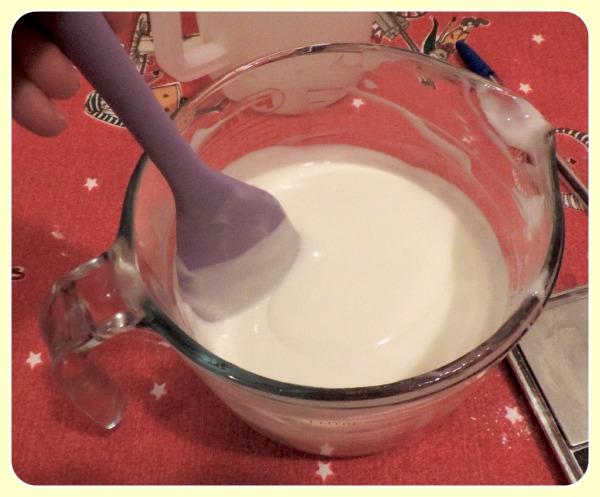
ENJOY!!! 😀 😀 😀
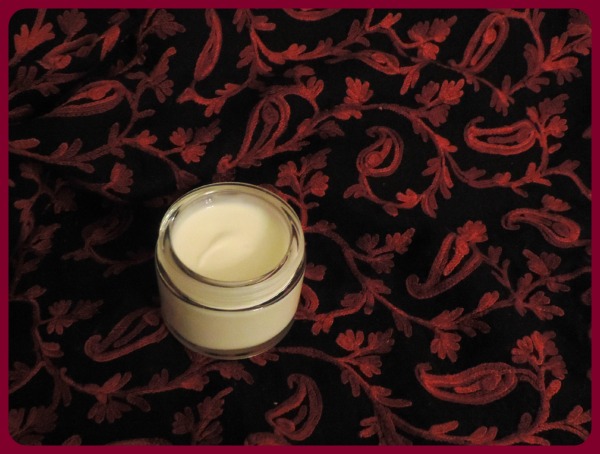
Comment on the cream:
I like this cream a lot but the consistency is more liquid than I expected and I would like to find another gelling agent which will resist acid pH (Xanthan gum is not the best: it gives a weird finish to the cream 😀 ). I will also have to improve the grease-fall, probably increasing even more the butters and lowering the cetiol sensoft 😀

 IT'S ALL IN MY HANDS
Nice Information, thanks for sharing. Hope we will read many other good things from you in future also.
Regards
LikeLike
Hi, this formulation looks wonderful. I’m curious as were you got your acids at, (gluconolactone .) Once I get my hands on the acids, I am going to make it.
LikeLike
Hello! 🙂
I posted a list of websites that I have tried (I haven’t tried all, though) where you could find the cosmetic ingredients 🙂
The name of the post is something like “Buying cosmetic ingredients online”.
However, I found the acids very cheap on the Polish website (the name is difficult to remember for me but the website names is the only one in my list starting with a “Z” 😀 you will find it for sure! 🙂
LikeLike
Hi! I’ve got both of those acids, bought from the same website, but i have no all of “Yours” ingredients for cream. I have some items that i can create serum, can i count on your help? I formulated already one with gluconolactone, seems fine, but it my first creation, and i’m not sure it’s done correct. I would appreciate of advice from someone experienced.
LikeLike
Ok but I didn’t understand:
which ingredients do you have?
you want to make a gel and not a cream?
what is going to be the purpose of the cosmetic? hydrate? 🙂
LikeLike
What’s about using triethanolamin instead of sodium hydroxide as ph adjusting
LikeLike
It does the same job but it is a very different ingredient. Use it if you like it!
LikeLike
Have you found a perfect emulsifier for a low PH?
When can you make a face toner. Keep up the good work.
LikeLike
Hey Ella!
Hmm… Depends how low we are talking about 🙂 let me know!
I have never formulated a toner because they seem so simple but I’ll think about it 😉
LikeLike
just saw your reply. Am dancing like seriously. Thanks for replying.
You talked about the cream being softer than you would like, thats why i asked if u got a substitute for it(emulsifier). Could HEC do a better job in this reciepe?
Its hard to find lactobionic acid here. Could i use lactic acid in place of it? If yes, what will make a good synergy with lactic acid. Thank you.
LikeLike
Lactic acid is something else. The thickness of a lotion depends on the thickeners and not the emulsifiers, that’s why I didn’t understand the question 🙂
I haven’t made this cream again but I have made many different ones! Lactobionic acid is “essential” for making this cream but it is not essential to make a good cream.
You can use other actives that suit your aim. What do you want from your cream?
LikeLike
I want to make a cream with exfoliating properties to fade my dark spots from pimples and also make my skin glow. I dont mind a little bit of lightening action.
I have the following
Lactic acid
Alpha arbutin
MAP
L ascobic
Willow bark extract powder
Niacinamide
N-acetyl glucosamine
But i am open to a suggestions for my purpose in my face cream and hope to hunt down the necesarry ones even if it means ordering from abroad. I love to have my face back, i know it will take time but i am patient. Thanks so so much for your response
LikeLike
Niacinamide is good at 5% for brightening skin (and not just that).
For a night cream you can use the arbutin.
If you still have pimples niacinamide and willow bark extract powder are good.
The acids you have, are not easy to use.
You could do the L ascorbic acid serum on my blog, but now it is not the best time in the year to use acids actually. The sun makes the skin sensitive and acids make things worse. Wait when it is autumn or winter for these “treatments” 🙂
LikeLike
Thanks so much for your Advice.am in Africa. Its Rainy season here and a great season for skin pampering😙. Is it paramount to combine the niacinamide with n-acetyl? Whats the best approach for chemical exfoliation? I want to do it atleast 2 to 3 times a week and follow up with the night cream and sunscreen when goin out in the morning. Sorry if asking too much😣😣
LikeLike
No I never used N-acetyl Glucosamine so I have no idea what the combination of it with Niacinamide would do.
I wouldn’t combine too many ingredients, specially if it is the first times you make lotions: better to make simple cream. As I said, niacinamide at 5% can already have good effects, so don’t add too many things unless it is stated somewhere that they work in synergy. Did you read somewhere that Niacinamide and N-acetyl Glucosamine work in synergy? What kind of synergy? Does the effect make sense for the cream you want to obtain? (you don’t need to reply to these questions to me, they are just examples of questions you should ask yourself when you formulate a cream 😉 ).
LikeLike
What % of arbutin and willow bark extract would give the effect? Thanks and sorry for plenty questions😣😣
LikeLike
Arbutin no more than 2%, willow bark extract you have to check at what percentage it is suggested its use. I have never used it nor owned it, so you will have to make sure that the suggested pHs are compatible (of both these ingredients)
LikeLike
Thank you
LikeLiked by 1 person
Niacinamide instead needs a quite neutral pH, at least 6, 7 even better.
LikeLike