LAB NOTES & SAFETY NOTICE
These are personal experiments for educational use only— not instructions and not for commercial or consumer use. By proceeding, you assume all risks related to safety, testing, and regulatory compliance.
[Full Legal Disclaimer & Safety Requirements]
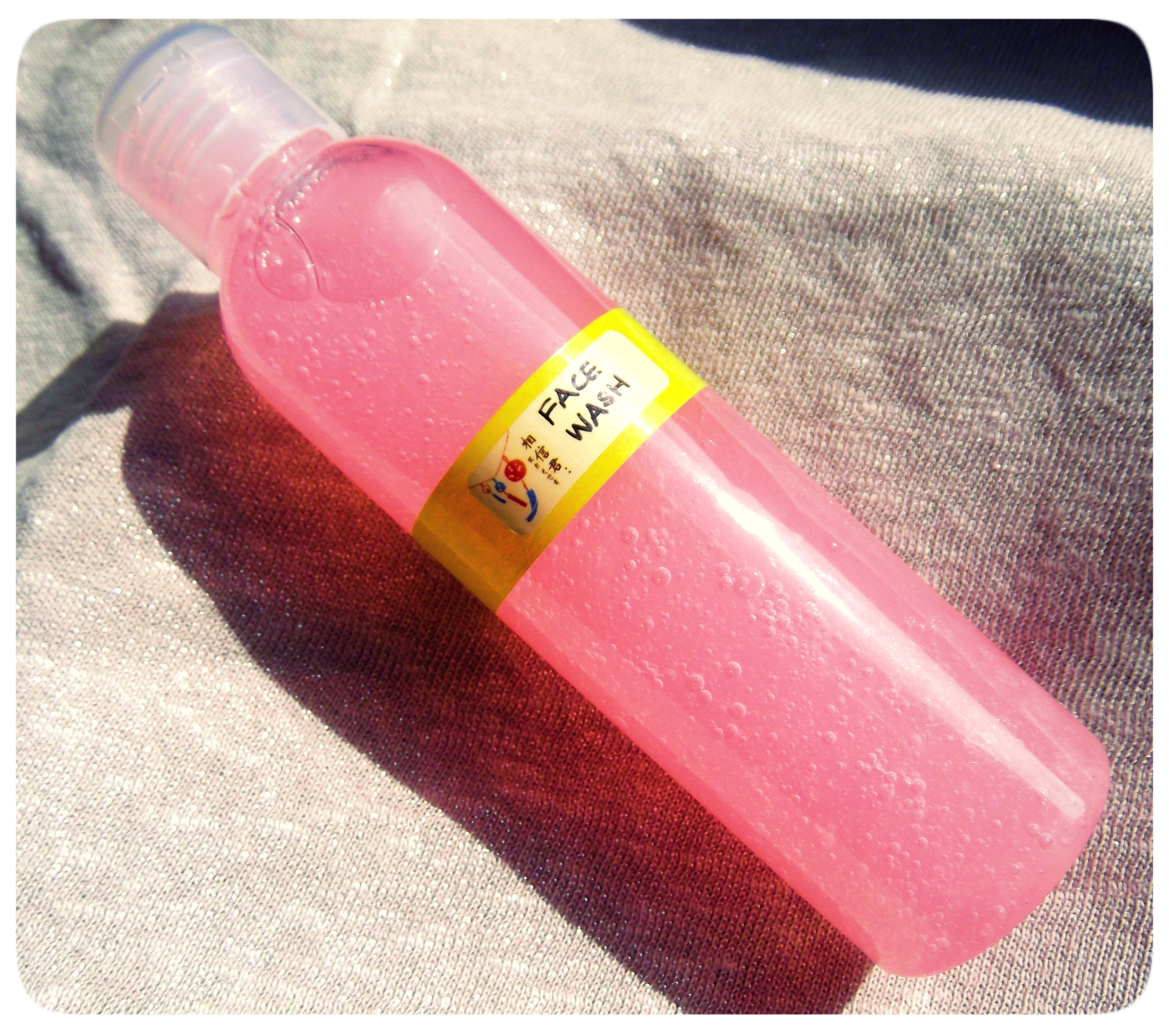
Today I experimented on an “extra-mild” facial cleanser. My goal here was to build a balanced Surfactant Trio (Anionic, Amphoteric, and Non-Ionic) but keep the concentration low enough to respect a compromised skin barrier—especially for my skin, which tends to get acne when it’s irritated.
The ASM Calculation & My Surfactant Logic
To make sure this was as gentle as possible, I targeted a total ASM of 6.5%. Most store-bought face washes are 10–15%, so I knew this would be much softer.
-
Sodium Lauroyl Sarcosinate (Anionic): My primary choice for a creamy lather. It’s so much milder than SLES or SLS.
-
Cocamidopropyl Betaine (Amphoteric): I included this to “buffer” the Sarcosinate. It helps stop the cleanser from being too aggressive on the skin.
-
Lauryl Glucoside (Non-Ionic): This completes the trio. It’s great for removing oily residues without causing irritation.
The Math (Validated against my 6.5% ASM target):
-
Sarcosinate 10g: 10 * 0.29 = 2.9g
-
Betaine 6g: 6 * 0.32 = 1.92g
-
Lauryl Glucoside 3g: 3 * 0.52 = 1.56g
-
Total ASM: 6.38% (Perfect!)
My Formula: Mild Face Wash
| Phase | Component | % / grams | Function |
| A | Distilled Water | to 100 | Solvent |
| A | Glycerin | 3.0 | Humectant |
| A | Xanthan Gum | 0.5 | Thickener / Suspension |
| B | Sodium Lauroyl Sarcosinate | 10.0 | Primary Mild Anionic |
| B | Lauryl Glucoside | 3.0 | Non-Ionic Detergent |
| B | Lavender & Sage EOs | 4 drops | Soothing / Antimicrobial |
| C | Cocamidopropyl Betaine | 6.0 | Amphoteric Buffer |
| C | Preservative & Lactic Acid | q.s. | Safety / pH Calibration |
What I Noticed During the Process
-
Gelling the Water: Sarcosinate is notoriously hard to thicken! I used 0.5% Xanthan Gum to give it enough “body” so it wouldn’t just run off my hands.
-
The “Heat” Trick: My Lauryl Glucoside was a thick paste. I had to give it a quick warm-up in a water bath to liquefy it before mixing, otherwise, I would have ended up with “fish-eyes” (lumps) in my gel.
-
The “Slow-Mix” Rule: Sips water. I stayed away from the high-speed mixers. I just used a manual stirring motion because I didn’t want to turn my beaker into a bubble bath before I even finished!
-
The pH Moment: This is the most sensitive part. I used Lactic Acid to bring the pH down to 5.0.
-
My Observation: At pH 5.5, the Sarcosinate reaches its best density. But I have to be careful—if the pH drops much lower than that, the whole structure can fail and turn back into a liquid mess, plus the betaine should never go below that pH!
-
Final Thoughts
For me, this face wash is the definition of “Less is More.” By getting rid of harsh alcohols and scrubs and using this low-ASM blend instead, I finally gave my skin some space to breathe.
Personal Observation: This formula was a real turning point for my skin. It really confirms my theory: cleaning the skin shouldn’t mean stripping the skin.

 IT'S ALL IN MY HANDS
I’ve made this recipe a few times and I love it. I follow your instructions carefully, but the only thing I have trouble with is the xantham gum clumps like crazy when I add it to the glycerin. What is your method for getting rid of the clumps? Thanks!
LikeLiked by 1 person
Yes! After you add the xanthan to the glycerin you should stir until it makes a thick paste, then add a little water and stir, let it become a hard gel and add a little more water. Eventually it becomes smooth, but it does form clumps if you add the water all at once or too much at a time!
Hope this helps 🙂
LikeLike
I really enjoy your blog because it is so didactic and clear! I just have one specific question: did you use the coco glucoside and glyceryl oleate in this recipe? Because they are listed among the surfactants but not included in the formulation. Also the concentration of lauryl glucoside is 3% in the ASM calculation, then changes to 2% in the recipe. Did I miss something? Thanks a lot!
LikeLike
Hello Fernanda!
Thank you for the comment. I wrote 2 by mistake and there was 1% of the pre-combined coco glucoside and glyceryl oleate. It doesn’t enter the ASM calculation because it is already superfatted. 🙂
I will adjust the formula, thank you!
LikeLike
Can i replace xanthum gum with guar gum?
LikeLike
Guar is very different from xanthan in the sense of results. I personally wouldn’t.
You could use Sclerotium gum instead.
LikeLike
Can I replace Lauryl Glucoside with something else? Can’t find it in my country 😢
LikeLike
You can use another glucoside for example.
LikeLike
I used coco glucoside, and decyl glucoside with oils but i noticed that they surfactants separated from the oil. How can i stop my oils separating from they these two surfactants ?
LikeLike
Then you put too much oil. It needs a very small amount!
You measure the surfactants and add the oils directly to the surfactants. It might be helpful to heat up the mixture a little.
However you can start adding 0.5% oils and if it is still too aggressive the next time you try adding 1%…
However, IF separation happens you can still use the detergent, it just won’t be good looking.
Make a very small batch (100 grams or 200 max) so you can improve your formula easily each time around! 🙂
LikeLike
Hi
Thank you so much for your site.. it’s been so helpful to me…,
In a previous post you mentioned the ASM for intament care detergent/for personal hygiene should be 5, then on the next post you said
LikeLike
Hi Adrianna I didn’t understand 🙂
Do you mean intimate detergent (for lady parts)?
Anyway the ASM is just “ideal” around 5. What is important is that the detergent is very very mild, even milder than a face wash 🙂
LikeLike
Hiii .. omg … thank you for responding
Yes, I was referring to lady parts😜
Ok.. so ASM should be ideally around 5
What mild, ecocert surfactants could you reccomend…
LikeLike
Hi
Hope you are having a great day
… can you recommend a mild surfactant or surfactants that are great for a diy feminine wash for the the lady parts
On my previous post u said the ASM should be ideally 5 …
LikeLike
Hi Adrianna, i’m not the blog owner, but you can register an account with Ulprospector with a customised email (as long as it’s not a common one, such as gmail or hotmail) to look at the supplier formulas. You can search under the keywords “Intimate Hygiene”. Seppic has a small range of surfactant you can try out that are mild for intimate hygiene, but i’m not sure if they are ecocert. Please refer to the supplier info there.
LikeLiked by 1 person
Hi Adrianna! I can tell you which surfactants I have seen used a lot: in the “organic” range I have seen glucosides used really a lot. Of course you can find also products with SLES and CAPB in low concentration but I don’t think it is a great combination. The ones I have formulated had a low concentration of decyl and lauryl glucosides. Nothing special nor fancy 🙂
Not sure are these ecocert but it should be easy to check! 🙂
It is a very common product in the country I live in. I don’t know if this is your case as well but my suggestion is: find a commercial product which you like and then, using the INCI as a guideline, try formulating your own using the same ingredient if possible. That’s what I do when I start formulating something I have never formulated before 🙂
Ps. There are new surfs created every year and I haven’t tried formulating with all of them, so it is difficult to suggest you which surfs to use 🙂 there are many which I have seen used and I know are considered “mild” but I have never tried them. 🙂 Anyway surfs are usually not difficult to use, so you could try even an ingredient which I haven’t before!
LikeLike
Can i use potassium cocoate or sci instead of sls
LikeLike
Read my post about formulati g with surfactants: you will find out that substitutions are always possible BUT the end product will be different. To make effective substitutions (which means substitutions to get a similar product) you need to do a lot of trial and error and you would have to be able to compare with the original… But I don’t think this is at all necessary in this situation.
So the answer is: yes you can, but read the post on surfactants because you will have to change the quantities (SCI for example is usually in powder form so it is 100% of product, while the SLES I use is around 30%)
LikeLike
Hi, i was wondering if i want to create a mild foaming cleanser with PROTEOL APL (Sodium Cocoyl Apple Amino Acids from Seppic), how should i still follow the Active Surfactant Matter that you mentioned? The brochure only mentioned it having a dry extract of 28% – 32%, usage at 3% – 10%. Also if you recommend me using it as a primary surfactant or should i add another surfactant or solvent?
LikeLike
Hello Jeremeow,
You can try using it as a primary surfactant but I do suggest you add other surfactants as well.
The dry matter is the active matter and being between 28% and 32% you can make the calculations considering it is a 30% active matter.
With surfactants it is all about trial and error: I have never tried this surfactant so I cannot tell you if it is mild or aggressive, if it is thick or thin, if it makes a lot of bubbles or only a small amount… I really have no idea, so try making a simple cleanser with this and then tweak the formula according to your needs! 🙂
The good thing with surfactants is that it is pretty simple to make small amounts, so start by making a maximum of 100 grams so if you don’t like it, it is very easy to use it up fast and tweak the formula for then next time!
LikeLike
Thanks for the reply.
I was searching and i saw that Seppic had some sample formulas where they have the Sodium Cocoyl Apple Amino Acids with a solvent (ORAMIX™ CG110, INCI: Caprylyl/Capryl Glucoside) in a formula named Micellar Lotion for Teenagers Blemished Skin at 3% & 1% respectively. I guess it would be a good gauge.
LikeLiked by 1 person
Is it possible to add chemical exfoliant to this? Like lactic acid? If yes, at what point? ofcourse i know ph is important here.
LikeLike
A face wash needs to be at a pH which is ok for the eyes. The eyes are fine at pH 6.5-7.5
You can add a small amount of lactic acid if the starting pH is very high, to lower the pH to neutral… Of course doing so won’t make the lactic acid have ANY exfoliating properties.
I wouldn’t suggest making exfoliating face washes. Make a toner, make a serum, but a detergent is not the smartest idea.
Btw many surfactants might not be stable at the low pH needed for the lactic acid to have its exfoliating properties.
LikeLike
Hi, I love your formula, its really good. However, mine will lose its viscosity after a few hours. I dont understand what went wrong. Could it be beacuse i use different EO? I used damask rose and sweet orange EO, i love the combination.
LikeLike
Could be indeed. You might be adding more than the face wash can handle.
LikeLike
Thank you for your wonderful blog. It helped me understand surfactants better
LikeLike
Hi, i really like this formula but I can’t seem to find Sodium Lauroyl Sarcosinate anywhere online to buy. What would you recommend as the best anionic substitute that could be mixed in the same ratio as this?
LikeLike
I have grown to not really enjoy sarcosinate that much anymore… I like sodium lauroyl glutamate more or disodium laureth sulfosuccinate. Concentration can be kept the same as the surfactant matter is around 30% for both.
LikeLike
Great bloog post
LikeLiked by 1 person