LAB NOTES & SAFETY NOTICE
For educational purposes only. Content reflects personal, non-professional formulation experiments and is not instructional.
No formula or information on this site is intended for commercial use, consumer application, or third-party use.
Accessing this content means you accept all risks and full responsibility for safety, testing, legal compliance, and outcomes.
[Full Legal Disclaimer & Safety Requirements]
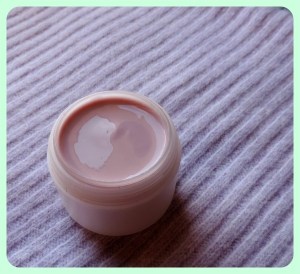
My Lab Notes: The Four Pillars of a Great Emulsion
Hello Hello! 😀
When I first started playing with body butters, I realized pretty quickly that I needed to dig a bit deeper into the science of it all. I didn’t want to just follow “recipes”; I wanted to understand the why.
These are my personal notes on the core structure of every face and body cream I make. While formulation can get incredibly complex, I’ve realized that my most successful experiments always come down to these four essential pillars.
1. The Mechanics of Hydration (Water + Fats)
I used to think water was just a filler, but it’s actually the hydration hero! The problem is that water evaporates too fast on its own. That’s where the Lipids (my oils and butters) come in—they act as a shield to keep that moisture trapped in.
2. Preservation: My Non-Negotiable Rule! 😀
PHEW! Let’s talk about preservatives. I know some people want to avoid them, but in my lab, preservation is NOT optional. * The Reality: Any time I add water to a formula, I’m basically inviting bacteria and mold to a party. Unless I want to keep my creams in the fridge and throw them away after three days (no thanks! 😉 ), I need a professional preservation system. I usually choose eco-friendly options around 0.5-1%. Safety first!
3. The Water Phase: Pure vs. “Poetic”
For my experiments, I always use demineralized, pure water to avoid any minerals messing with my emulsifiers.
-
A bit of Poetry: I love using Rose water or Witch Hazel, but I’ve started categorizing these as “poetic” ingredients. They smell amazing and feel luxurious, but I keep my expectations realistic—they are there for the soul of the cream, while the “active ingredients” do the heavy lifting!
4. The Lipid Phase: Balancing the “Fall”
I’ve stopped believing in “miracle oils.” Now, I focus on the Grease-Fall.
-
The Strategy: Instead of just picking one oil, I look at the density ($\rho$) and the viscosity. I want a blend of light, medium, and heavy fats so the cream feels balanced from the moment I put it on until it sinks in.
5. Emulsifiers: The Architecture
The emulsifier is the “bridge” that holds the whole thing together. I choose mine based on:
-
Temperature: Do I want a cozy hot-process session at 70°C, or a quick cold-process fluid?
-
The “Touch”: Some give a dry, powdery finish, while others feel rich and velvety.
These four pillars are the foundation of everything I do. Once I get these right, I can start playing with the fun stuff—the actives!
HAVE A GREAT DAY! 😄


 IT'S ALL IN MY HANDS