Pink Sugar Frosting Body Lotion (Recipe)

LAB NOTES & SAFETY NOTICE
These are personal experiments for educational use only— not instructions and not for commercial or consumer use. By proceeding, you assume all risks related to safety, testing, and regulatory compliance.
[Full Legal Disclaimer & Safety Requirements]

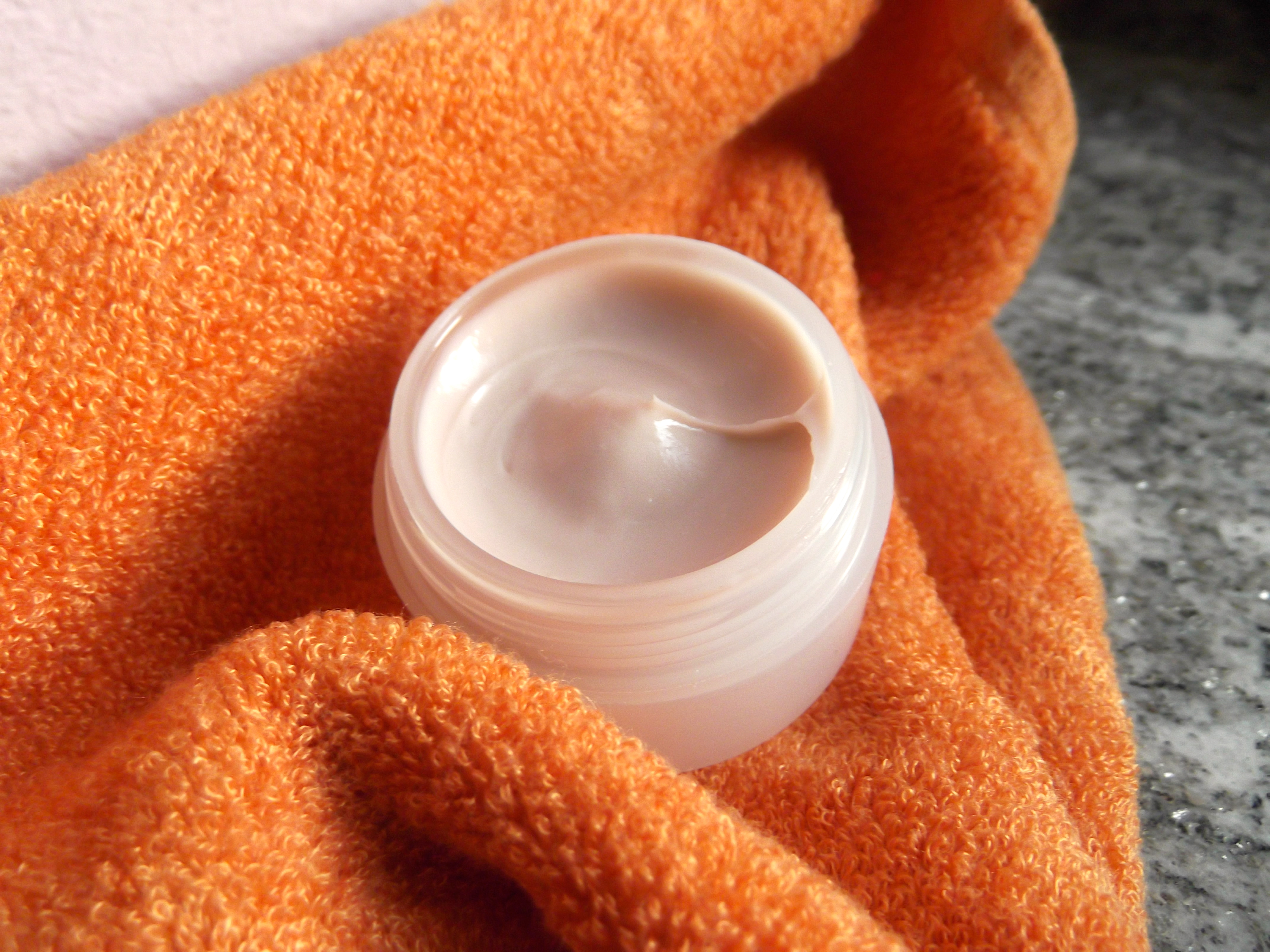
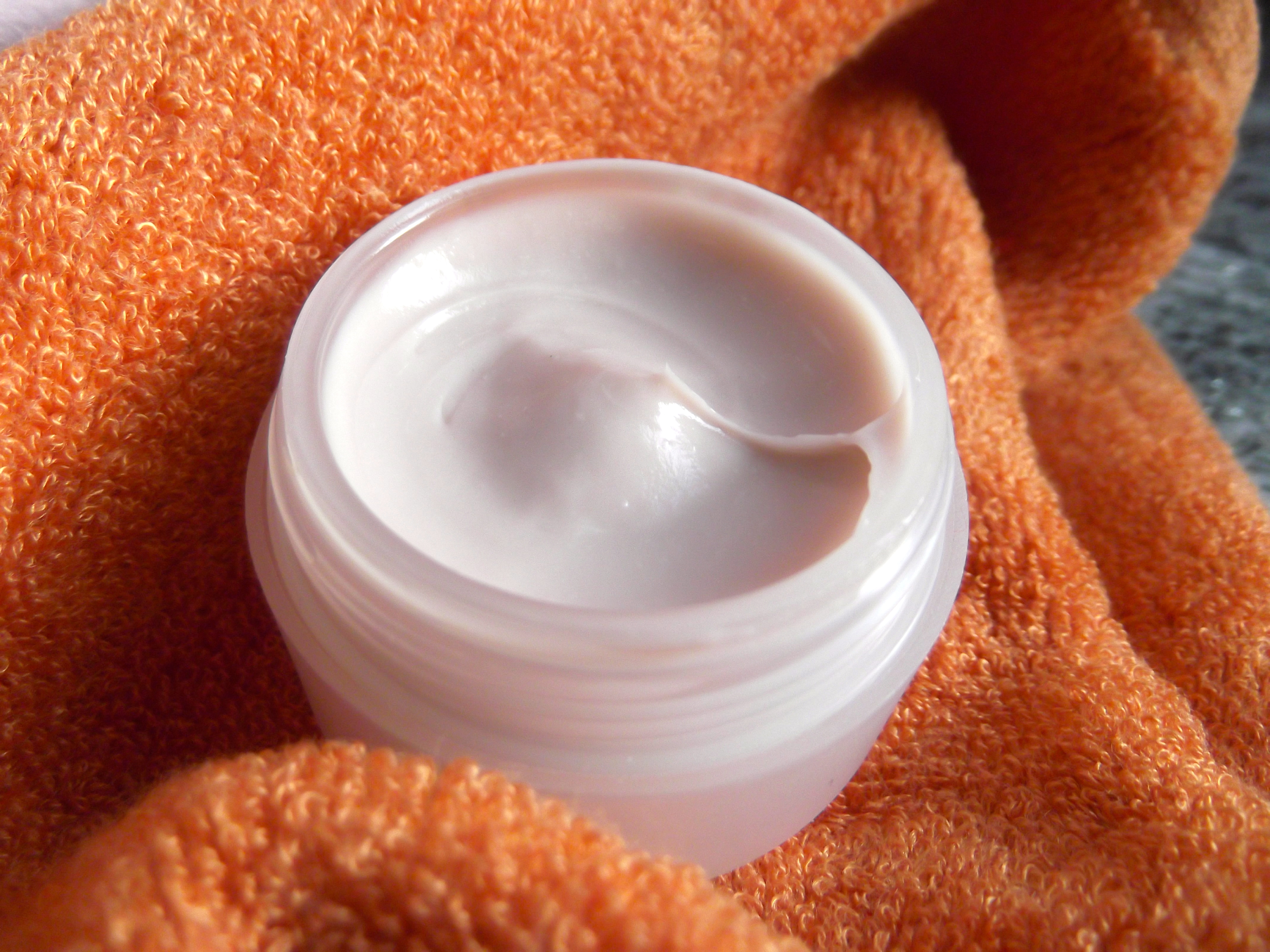
DSCF3571

Silk-Touch Body Cream

Hello Hello! 😀 My goal for this one was to make a super emollient cream—the kind that feels really luxurious on the skin. I didn’t want to pack it with a million actives; I just wanted it to do good for the body! We spend so much time on our faces, but our body skin deserves some love too, right? 😉

The “Grease-Fall” (My Oil Selection):

Since this is for the body, I wasn’t worried about oils being comedogenic. I used 5% Shea Butter (which is comedogenic, whatever you read online! :P) because it is absolute heaven for body skin.

For the rest, I created a “Grease-Fall” using light and extra light oils. Most of these are synthetic or waxes (like Jojoba) because they make the cream feel so much better on the skin. If you want only natural oils, it won’t feel quite as silky, but Jojoba gets you pretty close!

The Formula:

Phase A:

  • Water to 100

  • Glycerin 5

  • Carbopol Ultrez 21 – 0.1 (A little gelling agent to keep it bouncy!)

Phase B (The “No-Heat” Emulsifier):

  • Abil Care 85 – 2 (This is a silicone-based emulsifier. I don’t use it on my face because it gives me tiny pimples, but for the body? I totally enjoy it! It makes the cream velvety and it’s almost impossible to fail with it! :D)

  • Tinovis ADE – 1.5 (This is the thickener/gel maker that works at room temperature—no heating needed, yeheee!)

  • Shea Butter – 5

  • Safflower Oil – 3

  • Borage Oil – 3

  • Jojoba Oil – 5

  • Dicaprylyl Ether – 5 (Extra light synthetic oil)

  • Cetiol Sensoft – 5 (The lightest oil ever—it feels like silicone but it isn’t!)

  • Tocopherol – 1 (Vitamin E)

Phase C (The Actives):

  • Allantoin – 0.35

  • Oat Hydrolyzed Proteins – 1.65 * Panthenol – 1 (Vitamin B5)

  • Preservative (The amount needed for yours!)

  • Fragrance Oil (I used “Pink Sugar” from Gracefruit… mmm! :D)


Notes from the Beaker:

  1. The Allantoin Hack: Allantoin can be a pain to dissolve—it gets gritty! But I found a trick: if you mix it with the hydrolyzed proteins first, it melts in so fast! That does the trick every time! 😀

  2. No Double Boiler: Since I used Abil Care 85 and Tinovis ADE, I didn’t have to heat anything up! It’s a fast way to get a professional texture.

  3. Mixing: I just poured Phase A into Phase B and mixed. It gets thick and silky almost instantly.

  4. Substitution Note: If you swap the emulsifier for one that does need heat, you have to move the Tinovis to Phase C because it hates heat!

Final Verdict: I am so satisfied with the “Silk-Touch” on this one. It’s emollient without being a sticky mess. ENJOY!!! 😀

How to make a lotion: EMULSIFIERS pt.2 – THEORY

LAB NOTES & SAFETY NOTICE
These are personal experiments for educational use only— not instructions and not for commercial or consumer use. By proceeding, you assume all risks related to safety, testing, and regulatory compliance.
[Full Legal Disclaimer & Safety Requirements]

In the previous post about emulsifiers, we talked about HLB and how it mainly tells us whether an emulsifier is more lipophilic or more hydrophilic. Useful information, of course — but not the whole story.

What usually matters more, when trying to understand an emulsifier, is:

  • the conditions under which it is typically used (for example, hot or cold process),

  • and the percentage range in which it generally works.

These aspects are not the same for every emulsifier. Even emulsifiers with a similar HLB can behave very differently, which is why the amount used in a formulation can vary quite a bit from one to another.

This kind of information is usually easy to find at the moment of purchase. Suppliers normally indicate recommended usage levels and processing conditions on the product page. When that information isn’t available, it’s often a good idea to ask the supplier directly — clear documentation is usually a sign that the product is well understood.

With that in mind, here’s a general overview of how emulsifiers are commonly grouped and described.


Hot-process and cold-process emulsifiers

One of the main distinctions between emulsifiers is whether they only show emulsifying activity when heated, or whether they also work at room temperature.

Emulsifiers that require heat are usually solid and often sold in flakes or pearls. Their emulsifying ability is typically associated with temperatures around 70 °C. When the oil and water phases don’t reach this range, emulsions formed with these materials often turn out unstable and may separate over time. For this reason, temperature alignment of the phases is generally considered important when working with heat-dependent emulsifiers.

Since many commonly available emulsifiers fall into this category, a lot of formulation examples describe a process involving heated phases, followed by emulsification and cooling before adding more sensitive components.

Within this group, emulsifiers can be more lipophilic, more hydrophilic, or self-emulsifying. Looking at the INCI or product description usually gives a good idea of whether an emulsifier tends to work on its own or is commonly paired with a co-emulsifier.

Just to give a couple of familiar examples:

  • Methyl glucose sesquistearate is often described as more hydrophilic and commonly paired with a lipophilic co-emulsifier.

  • Montanov 68 is generally considered self-emulsifying, since its composition already includes both lipophilic and hydrophilic components (cetearyl alcohol and cetearyl glucoside), and it is typically associated with hot-process systems.

Many formulators find that combining separate emulsifiers, rather than relying only on self-emulsifying blends, offers more flexibility in terms of texture and skin feel, once they become familiar with how each emulsifier behaves.


Learning through comparison

A frequently mentioned way to understand emulsifiers better is by observing how different ones influence otherwise similar systems. Looking at changes in texture, stability, or skin feel across comparable bases can be very informative and helps build a practical understanding of what each emulsifier brings to a formulation.


“No-heat” emulsifiers

Emulsifiers marketed as “no-heat” are usually liquid or semi-liquid and maintain emulsifying power at room temperature. Products made with these emulsifiers are often described as lighter and less rich, partly because working without heat limits the use of solid butters and waxes.

That said, some “no-heat” emulsifiers can tolerate gentle heating, even though heating isn’t required for emulsification. In these cases, the supplier’s documentation usually specifies acceptable temperature ranges and compatibility with solid lipids.

As always, supplier information is the most reliable source when trying to understand how a specific emulsifier behaves.


That’s it for this overview of emulsifiers.
If you have more specific questions or want to dive deeper into particular types, just let me know 🙂

Have a great day! 😄

(Sources)

Anti-puffiness Caffeine Eye cream – Recipe

DSCF3492

LAB NOTES & SAFETY NOTICE
These are personal experiments for educational use only— not instructions and not for commercial or consumer use. By proceeding, you assume all risks related to safety, testing, and regulatory compliance.
[Full Legal Disclaimer & Safety Requirements]

The skin of the eye area is very delicate and thin.

The “Prince Ingredient” of this cream I have formulated is CAFFEINE, which is traditionally used in eye-area formulations for its well-known de-puffing and stimulating propertie
Read the post about caffeine to know how to use it in cosmetics.

FORMULA: 

KEEP ON READING

How to make foot & hand cream: formulating!

LAB NOTES & SAFETY NOTICE
These are personal experiments for educational use only— not instructions and not for commercial or consumer use. By proceeding, you assume all risks related to safety, testing, and regulatory compliance.
[Full Legal Disclaimer & Safety Requirements]

DSCF3497

Formulating a Protective Barrier Cream (Hands & Feet)

In this experimental batch, I am documenting the creation of a high-lipid barrier cream designed for hands and feet. These areas require a specific “Heavy Emollient” profile—thick, protective, and highly hydrating. My goal was to achieve a 25% lipid load while maintaining a stable, professional texture.

Phase A: Rheology and Electrolyte Stability

In my lab notes, the choice of gelling agent for this formula was dictated by the active ingredients in Phase C.

  • Distilled Water: to 100

  • Glycerin: 4.0% (Increased humectant levels for extreme dryness).

  • Xanthan Gum: 0.5% Technical Observation: I opted for a relatively high percentage of Xanthan Gum as the sole stabilizer. I purposely avoided Carbomer polymers because the high concentration of Urea (an electrolyte) in Phase C would compromise the carbomer’s lattice, leading to viscosity loss.

Phase B: The Heavy “Grease-Fall” and Protective Waxes

For a hand/foot treatment, the lipid profile shifts toward the “heavy” end of the Gaussian distribution.

  • The Lipid Cascade: I prioritized hard butters (Cocoa and Shea) to provide structure and occlusion.

  • The Role of Waxes: I’ve introduced Jojoba Wax at 2%. Waxes are not strictly part of the “Grease-Fall” fluidity; instead, they function as film-formers, providing a protective “glove” effect against environmental stressors.

Experimental Oil Phase (25% total fats):

  • Jojoba Wax: 2.0%

  • Cocoa Butter: 5.0%

  • Shea Butter: 10.0%

  • Argan Oil: 5.0%

  • Grape Seed Oil: 5.0%

Phase C: Managing Urea and pH Stability

Phase C contains the “Hero” ingredients, but they require careful chemical management.

  • Urea (10%): A potent humectant known for its water-binding and keratolytic (exfoliating) properties.

  • Gluconolactone (2%): In my research, Urea is known to cause a pH drift (becoming more alkaline over time). To counter this, I’ve included Gluconolactone as a buffering/sequestering agent to maintain pH stability.

  • Texture Modifier: I added Aluminum Starch Octenylsuccinate (1%) to mitigate the greasiness of the 25% fat load, resulting in a matte, “velvet” after-feel.


My Batch Processing Workflow

  1. Hydration: I dispersed the Xanthan Gum in Glycerin before adding the water (setting aside 15g for the urea solution).

  2. Thermal Phase: Both Phase A and Phase B were heated to 70°C.

  3. Emulsification: Phase B was incorporated into Phase A in three stages using an immersion mixer.

  4. Urea Integration: Once the emulsion cooled to room temperature, I dissolved the Urea and Gluconolactone in the reserved 15g of water and integrated this into the base.

  5. Final Finish: I added the preservative, essential oils (Grapefruit and Mint), and a touch of food-grade coloring for aesthetic appeal.

Final QC Check: The pH was measured and found to be stable between 5.5 and 6.0.