LAB NOTES & SAFETY NOTICE
These are personal experiments for educational use only— not instructions and not for commercial or consumer use. By proceeding, you assume all risks related to safety, testing, and regulatory compliance.
[Full Legal Disclaimer & Safety Requirements]
This post is a great way to show how formulation shifts when you move from “heavy” emulsions to “active-heavy” serums. In 2026, the trend is all about “minimalist science,” so framing this as your Technical Brief on Aqueous Systems is perfect.
Here is the “Studio” revamp, using the Lab Notes persona.
Lab Notes: Observations on Aqueous Systems & Serum Theory
In my formulation research, serums represent a distinct category of product design. While lotions are designed for barrier protection and emollience, serums are engineered as high-delivery systems for specific active components. Below are my documented observations on the characteristics and structural theory of these fluid systems.
Defining Characteristics of a Serum
In my lab records, I categorize a “Serum” based on these specific technical parameters:
-
Lipid Load: Systems are typically very light, with a total fat content often documented between 1.5% and 4%.
-
Viscosity ($\eta$): Serums are designed to be fluid or semi-fluid rather than high-viscosity creams.
-
Active Density: They are formulated to hold a higher concentration of “hero” ingredients.
-
Cold Process Theory: Because the lipid load is so low, many of my serum experiments are conducted at room temperature (Cold Process), preserving the integrity of heat-sensitive vitamins.
Theory Perspective: If a cream is the “protector” of the skin, a serum is the “booster.” Expecting a serum to provide the same occlusion as a rich cream is a common misconception in formulation theory; they serve different physiological goals.
Structural Phases in Serum Design
Phase A: The Aqueous Base
Phase A is the backbone of the serum. In my experiments, I focus heavily on the choice of Rheology Modifiers (gelling agents) to determine the “pick-up” and “after-feel” of the product.
-
Robustness: I prioritize gelling agents that can withstand high electrolyte (salt) loads from actives.
-
My Go-To Polymers: I often record the use of Xanthan Gum or Hydroxyethylcellulose (HEC). Note that HEC requires a thermal trigger to hydrate, which I account for in my processing notes if cold-sensitive actives are involved.
Phase B: The Targeted Lipid Phase
Even in a water-heavy system, a small lipid phase is often necessary to carry oil-soluble vitamins (like Vitamin E/Tocopherol).
-
Solubilization vs. Emulsification: In my lab, when the oil phase is under 2%, I often experiment with solubilizers (surfactant-based materials) rather than traditional waxes. This allows the final system to remain translucent and liquid.
-
Cold Emulsifiers: For serums, I frequently document the use of liquid, room-temperature emulsifiers to maintain a “Cold Process” workflow.
Phase C: The Active Integration
In serum theory, the line between Phase A and Phase C is often blurred. Since many serums are cold-processed, I can incorporate the actives directly into the water phase from the start.
Hyaluronic Acid: The Dual-Purpose Ingredient
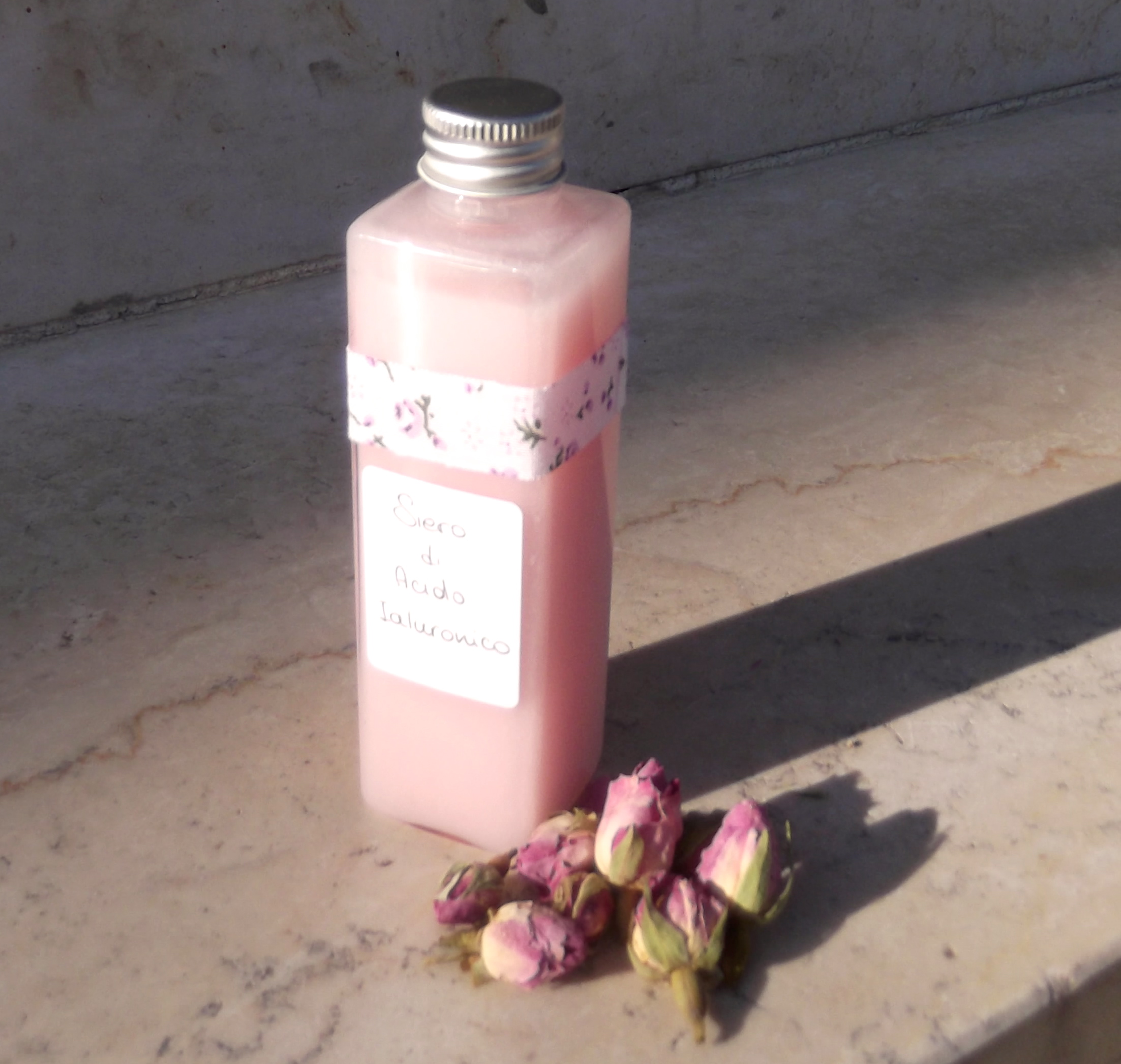
I’ve found that Sodium Hyaluronate is a fascinating case study in serum design. It acts simultaneously as a high-performance active and a gelling agent. In my records, I’ve noted that a high-molecular-weight Hyaluronic Acid can create a complete serum structure on its own, requiring nothing more than water and a preservative.
Concluding Thoughts on Serum Strategy
Designing a serum is an exercise in precision. Because the formula is so “exposed” (lacking the heavy waxes of a cream), every ingredient must be perfectly balanced to avoid tackiness or instability. I find these systems to be the ultimate test of an active ingredient’s compatibility with a base.
What’s next in the lab?
I am currently reviewing my notes on Niacinamide stability within these aqueous systems. If you have specific observations on pH-sensitive actives in serums, I’d love to compare data!


 IT'S ALL IN MY HANDS