How to formulate a Face Wash – with Recipe

LAB NOTES & SAFETY NOTICE
These are personal experiments for educational use only— not instructions and not for commercial or consumer use. By proceeding, you assume all risks related to safety, testing, and regulatory compliance.
[Full Legal Disclaimer & Safety Requirements]
Now that we have studied the theory of Surfactants (here and here) and we have the values of some of them it is time to finally formulate! 😀

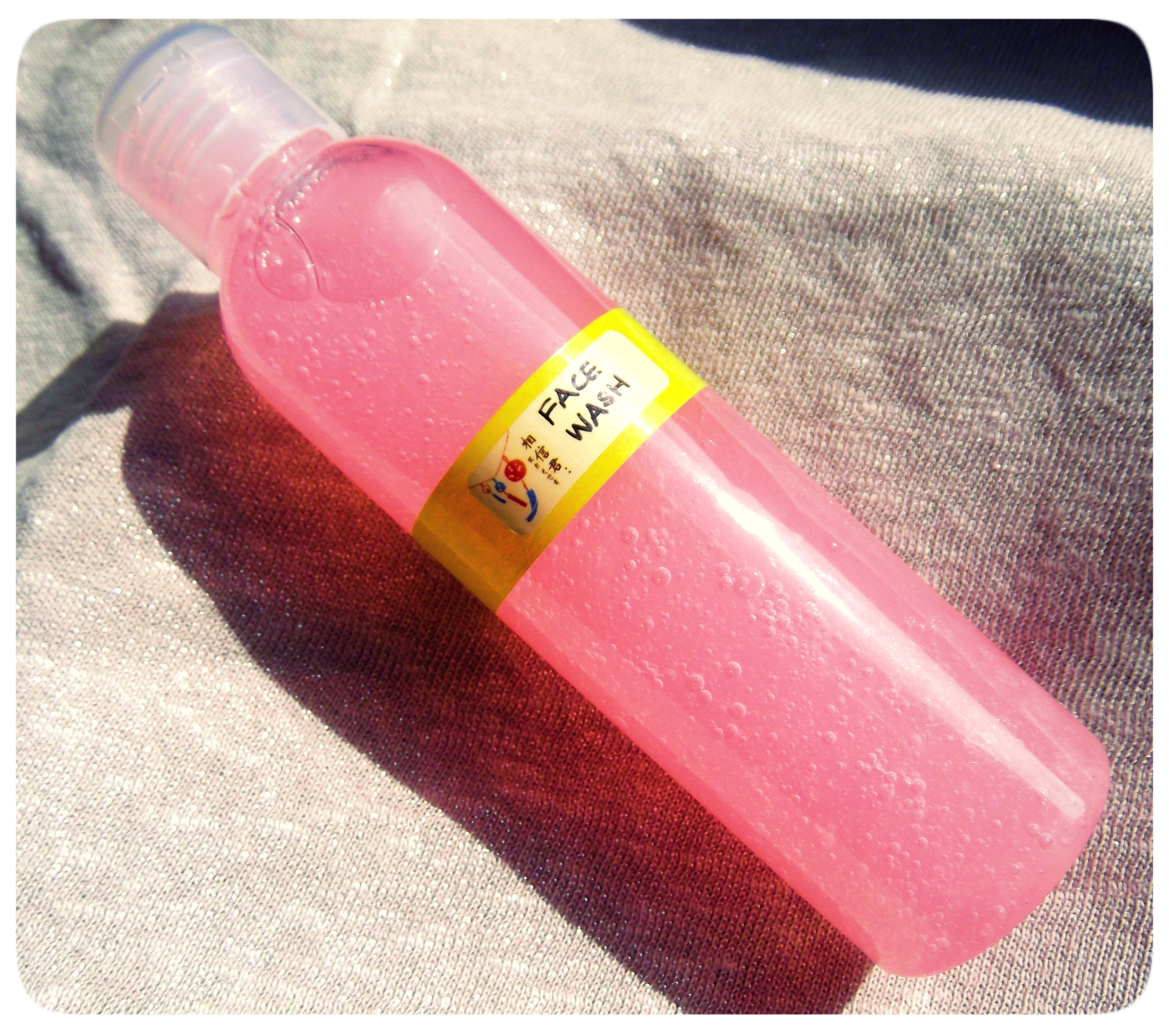
The recipe of today is for a very delicate Face Wash which helped me when I used to suffer of a mild but annoying and constant (meaning that my skin wasn’t covered in pimples completely but I did have a few all the time and this lasted over two years) form of acne. I should make a post about this! I used to be quite aggressive with my skin: I was scrubbing, using alcoholic toners, applying aggressive creams… but nothing was helping (on the contrary…).
Then one day I decided to give a break to my skin, I stopped scrubbing crazily, I stopped attacking my skin and I started concentrating on eating more healthy food and… TADAAA it did the trick 😀 I simply found out that all my skin needed was to be treated gently.

DIY Face Wash - Recipe

This is how the formulation was done:

KEEP ON READING

On Surfactants and Formulation (face wash, shampoo and shower gels)

LAB NOTES & SAFETY NOTICE
These are personal experiments for educational use only— not instructions and not for commercial or consumer use. By proceeding, you assume all risks related to safety, testing, and regulatory compliance.
[Full Legal Disclaimer & Safety Requirements]

So now we know how to combine (and why to combine) the different surfactants… but how to calculate the Active Surfactant Matter we want in our product? (which also mean: how much surfactant we have to add to our product to have the surfactant concentration we want to obtain?).

As I already explained the Surfactant Matter of a liquid surfactant which we buy is not 100%: the surfactant is made of the Surfactant Matter and Water (and probably other ingredients like glycerin, for example); therefore every surfactant we buy has a “Active Surfactant Matter” percentage which is what we have to consider.

As I wrote in the previous posts about formulation of detergents (shampoo, bubble bath, shower gel, face wash), the amount of the TOTAL Active Matter of surfactants has to vary according to the purpose of our detergent.

Generally this is the scheme:
– face wash: <10% 
– detergent for intimate use: <10% 
– shampoo: 10%-15%
– shower gel: 15%-20% 
– bubble bath: 20%-25% (in case you really use it only to make bubbles in the bath tub and you never use it directly on your skin, you could even reach 35%… but I don’t suggest it).

Now let’s learn how to formulate the detergent.

KEEP ON READING

How to formulate a detergent – THEORY pt.2

LAB NOTES & SAFETY NOTICE
These are personal experiments for educational use only— not instructions and not for commercial or consumer use. By proceeding, you assume all risks related to safety, testing, and regulatory compliance.
[Full Legal Disclaimer & Safety Requirements]

Now we know the basics about our surfactants (if you haven’t read the previous post, go HERE) now it is time to actually formulate a detergent.

Even if you don’t plan on making the detergent by yourself, reading this might be useful to you in order to understand what’s actually inside your shampoo or other detergents and you will be able to understand if these products are delicate or not 😉

How to formulate a detergent

There are not totally wrong combinations of surfactants: you can mix them just by chance and eventually you will always get a detergent, whatever you do. What could go wrong is that you might get a very liquid detergent or you might get it more aggressive than you expected, but it will still be a detergent!
However there are some rules that, if followed, will give you a good detergent with a good density and the right washing-ability.

Controlling the DELICACY:
So far what we said is that mixing more surfactants will eventually give us a less harsh detergent (of course than a detergent made with a single surfactant keeping the active matter value stable).
We also said that when formulating, the best choice should be:
– an anionic or non-ionic surfactant; it is the surfactant which we will add in our detergent at higher %.
– an amphoteric surfactant; it will make the first surfactant more mild.
extra surfactants: (usually non-ionic) these are used in very low percentage and are added to improve the lather or the consistency of the detergent.
Making this kind of combination of surfactants will give, as a result, a balanced detergent which will be delicate enough (this is of course also related to the active matter %).

Always as a matter of delicacy, if you add certain substances, they act as a protector to your skin (for example proteins, at 1-2%).
You could also think of superfatting your detergent and this low percentage of oil will “use” some of the surfactants making your detergent more mild on the skin. Notice, however, that some surfactants don’t “bear” the presence of oils (even an extra drop of perfume oil can disturb them) and get liquid immediately after you add them to the mixture (for example it is the case of sodium lauroyl sarcosinate).

VISCOSITY:
The viscosity of your product is very important: a water-like detergent gives to our subconscious the feeling that it cannot clean enough (even if it is not so).
The negative thing is that some surfactants, when combined, give a very liquid result.
Luckily there are few combinations of surfactants which work very well in giving you a dense detergent:
– SLES + betaine (an amphoteric surfactant) + salt = very dense detergent. Sodium chloride (salt) is often in commercial detergents, even in shampoos. However if you add too much it can make your detergent too harsh. In my shampoo I use SLES, cocamidopropyl betaine and I never needed to add salt because it was dense enough (sometimes even too much).
SLS + a glucoside (this means a non-ionic surfactant: lauryl glucoside, decyl glucoside are the most common for example).
– sodium lauroyl sarcosinate + pH 5 (acidify your detergent to pH 5, using citric acid in a solution or lactic acid, and the sarcosinate will become thick)

There are also other things you can use in case your detergent is too liquid:
if you have already tried the recipe and you like the result as detergent but it is too liquid, the next time you repeat the recipe you can add xanthan gum to the water of the detergent in order to thicken it up a little bit. However do not use xanthan gum at more than 1% or the detergent will get an unpleasant slimy feeling.

There are also some synthetic thickeners exactly made for surfactants.
The best one so far is Tinovis GTC (Inci: Acrylates / Beheneth-25 Methacrylate Copolymer) because you can add it at the end of the making of your detergent and therefore you can adjust the density little by little.

Obviously if you don’t care how your detergent looks and you are fine with washing yourself with a water-liquid detergent… you can use it as it is! 🙂

Now finally to THE FORMULATION

Also the formulation of a detergent is divided in Phase A, B and usually C.

Phase A:
this will be our water phase and usually it contains water and glycerin (remember glycerin is important to keep our products hydrated, this is because glycerin is highly hydrophilic).
In case you want to add xanthan gum you have to add it now (also some synthetic thickeners have to be added in beginning so be sure to read the data sheet of your raw material in advance! 🙂 ).
You also add here any hydrophilic ingredient: for example you add your preservative (ONLY in case it is hydrophilic of course), your hydrophilic colorant (for example the food grade ones), and so on.

Phase B:
In our phase B we have most of the surfactants: usually we add the surfactant at higher percentage (which is usually an anionic surfactant) and one by one we add the “extra surfactants” which are usually the non-ionic ones.
IMPORTANT: do not add now the amphoteric surfactants (generally the betaine) or your detergent might get ruined (in the way it gets very liquid… once again: a detergent cannot really get spoiled and it will still clean your body even if you do something wrong).
Often I add the perfume and the lipophilic preservative directly here in the mixture of surfactants (of course in case I am not using already an hydrophilic one).
One important thing to notice is that once you add a surfactant to another you are supposed to mix slowly and combine them very well because you add a third one.

Now it is time to pour Phase A slowly into Phase B and mix.
This time we only use a spoon to mix, paying attention to not make too many bubbles (however even if you get too many bubbles, they will disappear with time).

Phase C:
This is the phase where you add the amphoteric surfactant and usually your detergent gets thick here.
If this doesn’t happen you can always add here your synthetic thickener (in case it is the kind that needs to be added in the end) or you can try by adding 1% salt or… once again… you can just use your detergent as it is and try to do better next time. 🙂
In case of shampoo you also are supposed to add at this moment all the hair conditioner substances (which will help your shampoo to not feel harsh on the hair)… but I will make a post specifically about hair shampoo to explain this better 😉

Next post will be a recipe for a detergent and I will also show you how to calculate the ACTIVE matter of your detergent, so stay tuned! 🙂
Have a great day! 😀


Sources 

(Sources)
Creative Commons License
This work is licensed under a Creative Commons Attribution-NonCommercial-NoDerivatives 4.0 International License.

How to formulate a detergent – THEORY pt. 1

How to formulate a detergent

LAB NOTES & SAFETY NOTICE
These are personal experiments for educational use only— not instructions and not for commercial or consumer use. By proceeding, you assume all risks related to safety, testing, and regulatory compliance.
[Full Legal Disclaimer & Safety Requirements]

In this post I am going to talk about the formulation of detergents like face-wash, shampoo, shower gels, bubble bath and so on…

All these detergents are made starting from a family of ingredients: SURFACTANTS.
Surfactants are compounds that lower the surface tension of a liquid and therefore they emulsify the grease and the dirt on our skin and help us to wash it off with the aid of water.

Surfactants can be divided in four groups according to their ionic nature:
– cationic – positive charge when ionized. They are mostly used in conditioners.
– anionic – negative charge when ionized. They are largely used in detergents and shampoos and provide good detergency and lather. In this family we ding: SLS (sodium lauryl sulphate), SLES (sodium laureth sulphate), ammonium lauryl/laureth sulphate, sodium lauroyl sarcosinate, disodium laureth sulfoccinate.
– non-ionic – no charge (unionizable). They are lauryl glucoside, decyl glucoside, coco glucoside, caprylyl/capryl glucoside. These are usually not used in shampoos because they don’t leave a comfortable feeling on the hair (it makes them feel dry) unless they are included in the formulation in small amount (and therefore they work more as foam stabilizers). 
– amphoteric –
 both positive and negative (depending on the pH). These are used a lot in shampoo formulation: specially if combined with SLES they help the shampoo to be thick and they also decrease the irritancy (read this in a relative way 🙂 ). They are for example: cocamidopropyl betaine, lauramidopropyl betaine, coco-betaine, cocamidopropyl oxide.

THE ACTIVE MATTER of a surfactant:
How “strong” do we need our detergent to be? This of course depends to what we aim to make: if we are going to make a bubble bath it will need to have a higher washing ability than a face-wash, which should, on the contrary, be very gentle and delicate. The washing ability of a detergent is determined by its “Active Matter” coefficient: every surfactant has an “active matter coefficient” which is a number in percentage (for example the SLES coefficient is 27%) and this tells us “how much active washing substance there is in our SLES… and in this case it is 27%”. This is because the liquid surfactants which we can easily find sold online are usually made of the real surfactant and water (so the active matter is not 100%). You should find out this number from where you purchase your surfactants (if they are not mentioned on the page, send an e-mail to the supplier).

Generally the active matter of surfactant we want in our detergent depending on its aim is this:
Face wash – lower than 10%
detergent for intimate use – around 5%
shampoo – between 10% and 15%
shower gel – between 18% and 20% 
bubble bath – between 20% and 25% (this is because the bubble bath should go directly in the water while the shower gel is supposed to be rubbed directly on the skin)

So now you might be thinking that to make a good shampoo you just need 45% SLES and rest of water and tadaaa… well… NO 😀
It is true that the 45% of SLES plus 55% water would give you a solution with 12.15% Active Matter (45*27(which is the active matter coefficient of SLES):100= 12.15) however there is something very important you still need to know:

In a formulation a single surfactant results more harsh than an equal “active matter %” formulation made with different surfactants.
To make it simple: if you mix surfactants together, you will have a milder results than using the surfactants alone.
A particularly happy mix is SLES with a betaine (usually I have cocamidopropyl betaine) because not only the betaine lowers the harshness of the SLES, but it also thickens the solution.

Generally when formulating you should use:
– anionic or non-ionic surfactant; it is the surfactant which we will add in our detergent at higher %.
– anphoteric surfactant; it will make the first surfactant more mild.
– extra surfactants: these are used in very low percentage and are added to improve the lather or the consistency of the detergent.

To be continued… 😉
[Theory of Formulating a Detergent Part 2]

(Sources)
Creative Commons License
This work is licensed under a Creative Commons Attribution-NonCommercial-NoDerivatives 4.0 International License.

How to formulate a SERUM

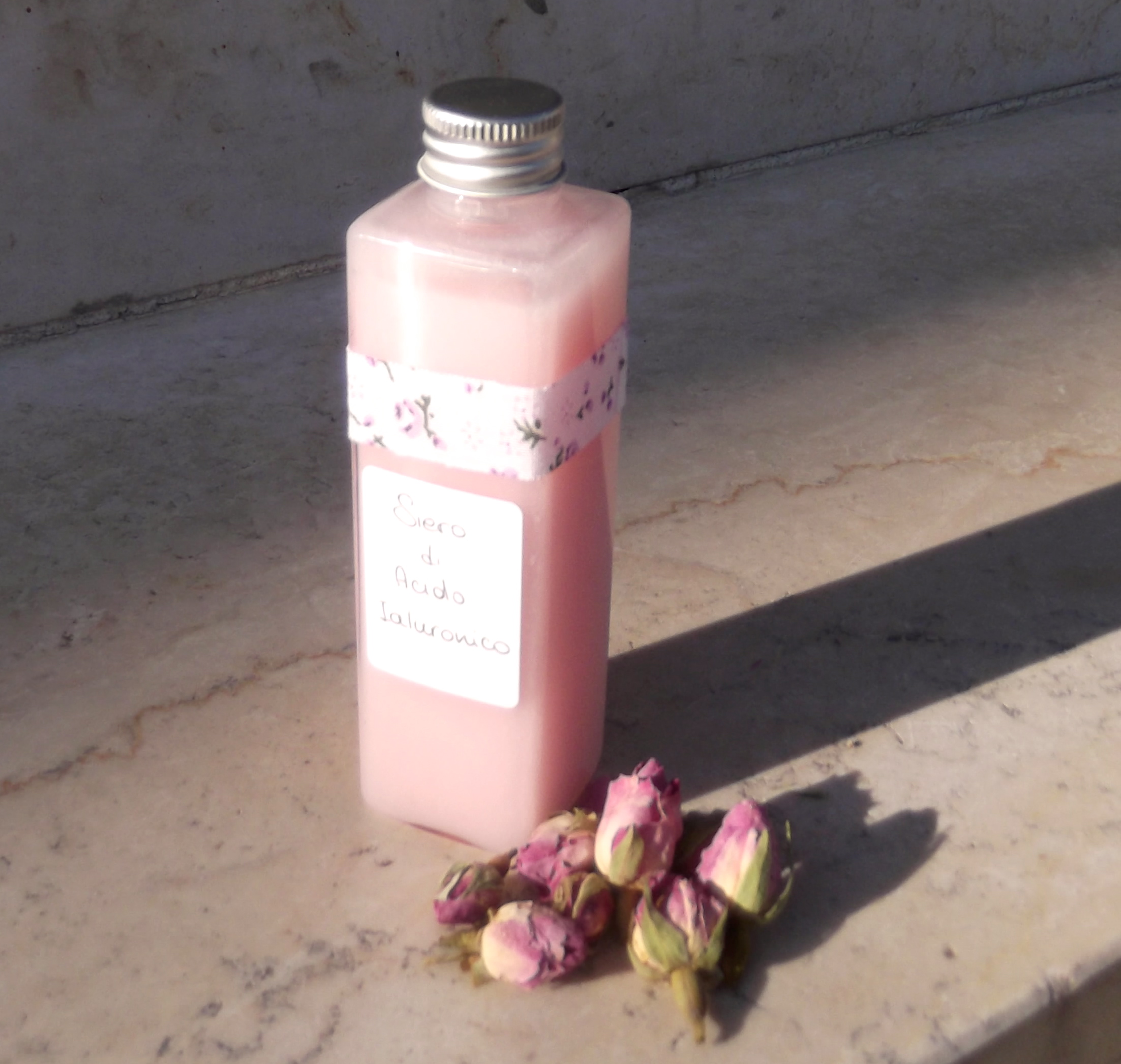
Hyaluronic Acid Serum

LAB NOTES & SAFETY NOTICE
These are personal experiments for educational use only— not instructions and not for commercial or consumer use. By proceeding, you assume all risks related to safety, testing, and regulatory compliance.
[Full Legal Disclaimer & Safety Requirements]

We’ve talked about how lotions are formulated, but what about serums? What exactly are they, and how are they generally put together? 🙂

Serums are products with a few distinctive characteristics:

  1. they tend to be very light systems (often associated with a low fat content, usually around 2% and rarely above 4%),

  2. they are typically fluid rather than creamy,

  3. they contain a high concentration of active ingredients,

  4. they are often formulated without heating (largely as a consequence of the points above),

  5. their role is usually described as providing an extra “boost” of targeted ingredients to the skin.

In that sense, serums and creams are often thought of as having different purposes. Creams are mainly associated with emollience and hydration, while serums are generally linked to delivering higher levels of specific actives such as vitamins, antioxidants, or anti-aging ingredients. Wanting a serum to behave like a rich moisturizing cream is a bit like expecting to bake a cake without an oven — different products, different goals 🙂


General structure of a serum

Even though serums are lighter than lotions, they are often still discussed in terms of phases. The phases are similar to those used for lotions, but their composition is usually a bit different.


Phase A

Phase A is commonly water-based and may include ingredients such as water, glycerin, and sometimes a gelling agent. Whether a gelling agent is present — and which one — depends on the type of serum and the ingredients involved.

One aspect often considered when choosing a gelling agent is how well it tolerates salts or more challenging active ingredients. Some gelling agents are known to be sensitive in this respect, while others are generally regarded as more robust. Xanthan gum and hydroxyethylcellulose, for example, are frequently mentioned in this context. Hydroxyethylcellulose, in particular, forms its gel only at elevated temperatures, which has implications for how heat-sensitive ingredients are handled later on.


Phase B

The oil phase in a serum is usually kept very small. References often mention a total oil-soluble content somewhere between about 1.5% and 4%, including oil-soluble active ingredients such as vitamin E. In other words, oil-soluble actives are typically counted as part of the overall “fat” portion of the serum.

To keep a serum fluid and lightweight despite the presence of oils, formulators often rely on emulsifiers or solubilizers that work at room temperature and remain liquid. In many discussions, this is where a combination of a more lipophilic emulsifier and a more hydrophilic one is mentioned.

In some cases, solubilizers are used instead of traditional emulsifiers, especially when the oily portion is very small. Solubilizers are commonly described as surfactant-based materials capable of dispersing tiny amounts of oil into a much larger water phase. When oil levels are extremely low (around 1–1.5%), some serum systems are even described as working without added emulsifiers or solubilizers at all, resulting in a very simple, single-phase product.


Phase C

In many serum formulations, the distinction between Phase C and Phase A becomes less important. Active ingredients are often incorporated directly into the water phase, unless there is a specific reason not to do so — for example, when heat is required earlier in the process and the actives are heat-sensitive.


Active ingredients in serums

One of the defining features of serums is the relatively high level of active ingredients they contain. In some cases, the active itself can even contribute to the structure of the product. A commonly cited example is hyaluronic acid, which can act both as an active ingredient and as a structuring or gelling component, allowing for very simple serum systems.


That’s a general overview of how serums are usually described and categorized.
If you feel like something important is missing, or you’d like to zoom in on a specific type of serum, just let me know 🙂

Have a great day! 😄

How to make foot & hand cream: formulating!

LAB NOTES & SAFETY NOTICE
These are personal experiments for educational use only— not instructions and not for commercial or consumer use. By proceeding, you assume all risks related to safety, testing, and regulatory compliance.
[Full Legal Disclaimer & Safety Requirements]

DSCF3497

Imagine we want to make a foot or hand cream: we know that it has to be rich in fats (around 20-25%) and it doesn’t need too many active ingredients or at least not the most expensive: a cream for foot and hands needs to be thick, very emollient and hydrating.

Let’s start FORMULATING:

Phase A:
water to 100 (HERE the explanation)
– glycerin – 4 (it doesn’t need to be too low)
– xanthan gum 0.5 (it is very high for a cream and I am not adding a carbomer like I suggested to do here: the reason for this is that I am going to use in high percentage an active ingredient which would destroy completely the carbomer, so why to waste 😉 )
Nothing to say about the phase A: except for the explanation of the choice of the gelling agent.

Phase B:
Here about the fats we know we can use even up to 25%, we don’t have problems about fatty acids and the only thing which can stop us from choosing merely out of our taste is to always remember about the GREASE-FALL rule. Just to sum it up: in the formulation of one cream you need to add butters and oils of different consistency. According to the result you want to obtain, you will try to create a gaussian wave distribution of oils and butter %: for example if you want a thick cream you will use the higher percentage of butters (but not only them!) and if you want a light cream you will use very light density oils mostly (but also a very low percentage of butter).
I never talked about waxes before, so I do it now: waxes are usually not counted into the grease-fall as their function is mostly to add a very thick and heavy feeling (but also quite dry) to the cream. However they give a good protection to the skin, creating almost a film, therefore it is a good idea to add them in our cream since feet and hands (specially in cold winters) need protection against the cold.
Now let’s formulate this grease fall 🙂

One way to do the Grease-Fall it could be this:
– jojoba wax – 2
– cocoa butter – 5 (very hard butter, will also help thickening the cream)
– shea butter – 10 (quite soft butter, good consistency)
– argan oil – 5 (medium oil)
– grape seed oil – 5 (light oil, easily absorbed)
25% fats (we don’t count the waxes)

As you can see every consistency of fat is added to the cream, giving more importance (read “more percentage”) to the butter which has to give the consistency to the cream.

Another way could be also this:
– jojoba wax – 1
– beeswax – 1
– cocoa butter – 4
– shea butter – 7
– mango butter – 5
– argan oil – 4
– primrose oil – 2
– grape seed oil – 2
– jojoba oil – 1
25% fats (remember we don’t count the waxes)This just to say that once you have the grip of it you can variate very much in your formulation; however having more ingredients in number doesn’t mean having a better grease-fall or having a better cream in the end.

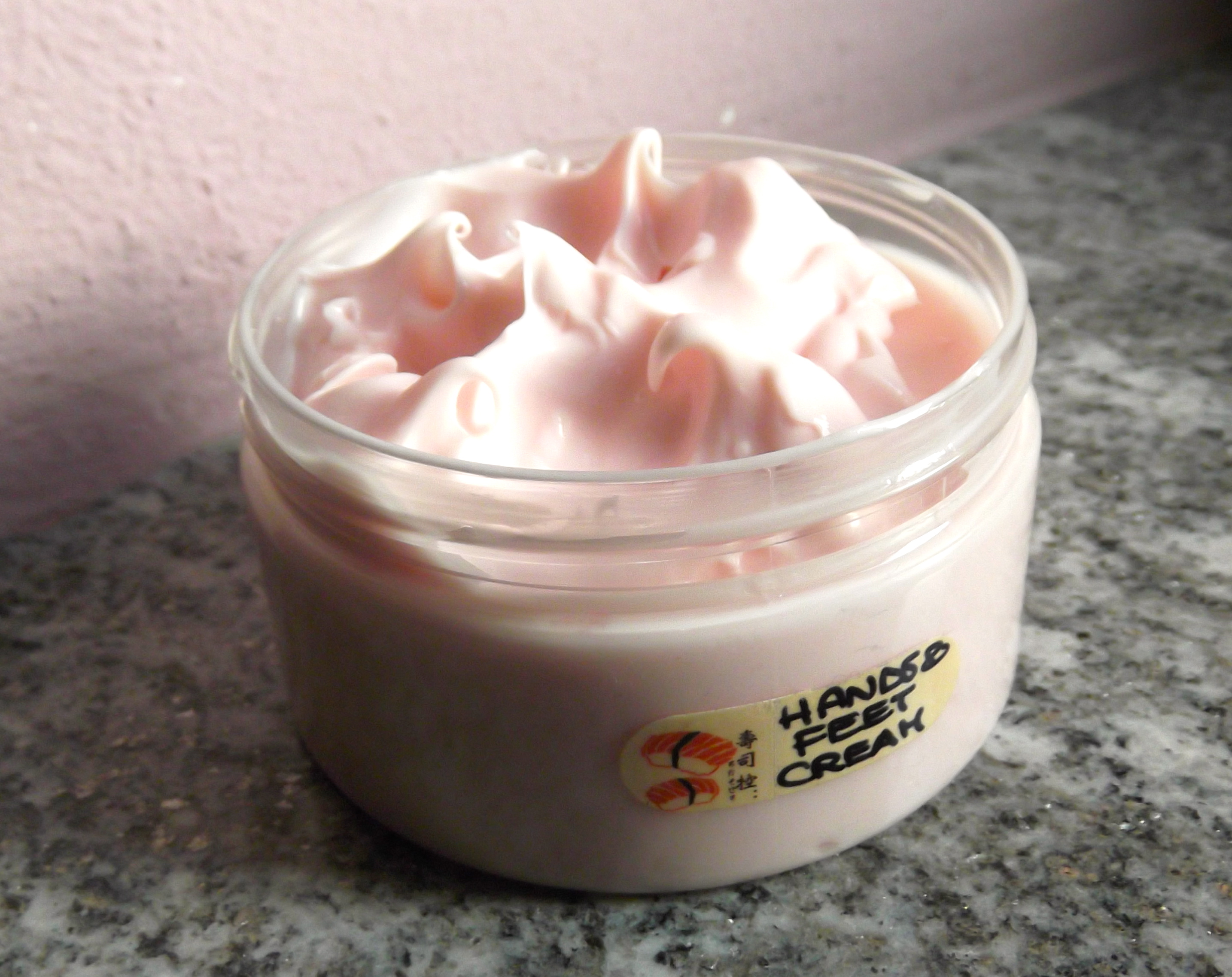
The recipe of the cream in the picture is done with the first example of grease-fall and this is the complete Phase B:

– jojoba wax – 2
– cocoa butter – 5 
– shea butter – 10 
– argan oil – 5
– grape seed oil – 5 
– Metil Glucose Sesquistearate – 3 (emulsifier) 
– cetyl palmitate – 1.5 (thickener) 
– cetyl alcohol – 1.5 (thickener) 

Phase C
preservative – 0.5 (this is because of my own choice of preservative: you will have to do according to what you use)
– aluminum starch octenyl succinate  – 1 (this is in powder and it helps leaving a dry feeling on the skin)
Now to the important active ingredients of this cream:
Urea – 10 (it is a very good humectant because of its water-binding property and it also exfoliates the skin, helping skin regeneration. One of the bad sides of urea, however, is the fact that inside creams it tends to rise the pH, this could cause a few problems which I will explain more in detail in the post about this ingredient, for now just trust me 🙂 )
gloconolactone – 2 This ingredient is an acid which, if used at 4-5%, is an exfoliant, while, if used at 2%, it has mainly a sequestrating-function (I copy pasted from a chemistry dictionary online: sequestrating is the action of forming a chelate or other stable compound with an ion, atom, or molecule so that it’s no longer available for reactions) to make it simple it means that it keeps the pH stable, therefore if you add urea in your cream, always remember to add 2% of gluconolactone.
3 drops grapefruit EO, 2 drops mint EO
1 drop of food grade red color 🙂 just for the final touch 🙂

Step by step:
I weighted the ingredients of Phase A in this order: glycering, xanthan gum, water (keeping 15 gr of water aside for the Phase C).
I weighted the ingredients of Phase B and added them in the second becher.
I put both of the bechers in a double-boiler and checked that they reached 70°C.
Once reached this temperature I poured Phase B into Phase A in 3 different times, mixing with an immersion-mixer until everything looked smooth, emulsified and white.
At this point I kept stirring slowly with a spatula until the cream reached room temperature.
I weighted the Phase C and added to the 15 gr of water which I had set aside: first the urea, then the gluconolactone. I added this mixture to the cream.
Then I added the preservative and mixed with the immersion-mixer once again (the final time: it will give a better result in the cream).
Eventually I added drops of the essential oils to my taste and the same for the drop of red colorant 😉

Now check the pH, it is fine if it is between 5 and 6 🙂 otherwise adjust it 😉

Have a great day! 😀

DSCF3496


Creative Commons License
This work is licensed under a Creative Commons Attribution-NonCommercial-NoDerivatives 4.0 International License.

Formulating lotion: Phase C & ACTIVE INGREDIENTS- THEORY pt.6

LAB NOTES & SAFETY NOTICE
These are personal experiments for educational use only— not instructions and not for commercial or consumer use. By proceeding, you assume all risks related to safety, testing, and regulatory compliance.
[Full Legal Disclaimer & Safety Requirements]

Finally the final step of making creams!

Phase A

In my formulation experiments, Phase A typically contains the heat-stable, water-soluble ingredients, while Phase B is comprised of fats, emulsifiers, and oil-soluble components that can withstand heat. However, the most delicate part of the process is Phase C.

What is Phase C? Phase C is often referred to as the “Cool Down” phase. In my lab notes, this phase typically includes:

  • Preservatives: Usually ranging between 0.5% and 1%, depending on the manufacturer’s technical data sheet.

  • Fragrance/Essential Oils: In my experiments, I find 2 drops per 100g is often sufficient for facial applications.

  • Active Ingredients: These are the components added for their specific properties, which can be heat-sensitive and are typically added at temperatures below 40°C. In my research, I aim to keep the total active load under 10% to maintain stability.

The Role of Active Ingredients Active ingredients are those which add specific value to a formula. Every active ingredient has a recommended usage rate provided by the supplier.

For example, Coenzyme Q10 (Ubiquinone) is theoretically used at around 0.1%. While this sounds low, my observations show that even at 0.1%, Q10 imparts a distinct yellowish tint to the cream. If a commercial Q10 cream is pure white, it may suggest a much lower concentration was used in its production.

Note on Sourcing: It is vital for a formulator to review the Safety Data Sheet (SDS) of every ingredient. For instance, “Liquid Q10” may be a pre-diluted blend, meaning the actual concentration of pure Q10 is much lower than expected.

Categories of Active Ingredients in Cosmetic Theory

  • Acids and Exfoliants: In formulation theory, these ingredients (like Citric or Lactic acid) are used to lower the pH or provide chemical exfoliation.

    • Safety Note: Formulations containing chemical exfoliants (like Glycolic or Salicylic acid) are traditionally intended for nighttime use. In my experiments, these are kept far from the eyes and lips. Research indicates that chemical exfoliants can increase photosensitivity; therefore, their use is typically avoided during periods of high sun exposure to prevent skin damage or staining.

  • Antioxidants: Ingredients like Vitamin E (Tocopherol) or Resveratrol work best in synergy. Theory suggests that combining multiple antioxidants can provide a more robust defense against oxidation than using a single one alone.

  • Oily Skin Targets: Niacinamide is a popular choice (theoretically used between 1-4%). It is important to note that Niacinamide requires a stable pH of 5-5.5 to prevent it from converting into Nicotinic acid, which can cause skin flushing.

  • Hydrating & Humectants: Beyond the standard hydration of an emulsion, ingredients like Allantoin (soluble at 0.4%) or Hyaluronic Acid are used for an extra moisture boost. In my lab notes, I find Allantoin requires careful handling to avoid precipitation.

  • Soothing Ingredients: My preferred choices for experimental batches are Bisabolol (derived from Chamomile) and Panthenol (Pro-Vitamin B5).

  • Addressing Puffiness: In my Eye Cream experiments, I favor Caffeine (up to 2%) and Escin, which are traditionally studied for their vasoprotective and draining properties.

In future posts, I will share more specific examples of how I apply this theory in my lab experiments.