Mood-booster Bath Salts

Hello everybody! 😀

I made a promise in my last post so here I am with the new extra-simple (but effective) recipe.

Mood Booster Bath Salts

This recipe won’t be like the ones I usually post, and this is for a very simple reason: I just do not measure the ingredients for this one! 😀
So you just need to gather the ingredients and you are almost done! 😉

The reason why I call it “Mood-booster” is that I make these salts when I feel little bit too tired (mentally or physically): they do really work for me! Is it the epsom salts (magnesium is known to be very good for muscles in pain and for mood 🙂 ), is it the good smell which creates in the bath-room or is it simply that I feel I am taking care of myself in a moment when I really need it… I don’t know! What I know is that having a bath with these salts always lifts me up! 😀

KEEP ON READING

Magic Powder Bubble Bath

Here is the recipe of the “Magic Powder Bubble Bath” 😀

Magic Powder Bubble Bath 2

It is great for kids (it’s easier to convince them at taking a bath 😉 ) and it is also little easier to use and make than the Bubble Bars!

The recipe is very similar:

Phase A: 
Sodium Bicarbonate 30
Citric Acid 25

Phase B: 
SLSA 20
Cocamidopropyl Betaine 10 (this is liquid and even if water in this recipe is not the best thing… we cannot avoid this ingredient: it is the one which makes the SLSA milder in our formulation).
Cornstarch 15

Phase C: 
Powder Colorant (I have used Micas in this case but you could also use food colorant powders if you have any – they will color the water much more than mixas do. Avoid ultramarines as they don’t behave well with citric acid and they will make your mixture smell bad and spoil)
Fragrance Oil (enough :D)

KEEP ON READING

DIY Bubble Bars

I have been trying to remake at home the famous L*sh Bubble Bars, with similar ingredients but with few additions also! 😀

I have to admit that it wasn’t too easy: it was the first time I was using sodium lauroyl sulphoacetate (SLSA – a powder surfactant, which is the main ingredient of this recipe because it is the one which makes bubbles :D) and tartaric acid… plus I had problems with getting the right procedure… but I did it! 😀
Finally ended up with a recipe which left me satisfied and so here I am sharing it with you! 😉

DIY Bubble Bars

For those of you who don’t know what a BUBBLE BAR is: it is essentially a solid bubble gel, if this makes any sense 😀 You have to make it into small crumbles inside of the tub while you are pouring water and tadaaa… few seconds and your tub will be full of foam and good perfume! 😉
Therefore, if you love foamy luxurious baths, keep reading 😀

KEEP ON READING

Zombie Vaccine – Lifting Eye Gel ;)

Who doesn’t look like a zombie in the morning? (ok maybe you don’t… but I do! 😀 )
So here is a simple recipe for deleting that zombie face!!! 😀

[unfortunately the name “zombie vaccine” is not my invention: I had seen it on a funny coffee cup but couldn’t resist using it for this eye gel! :D]

ZOMBIE VACCINE 2

Today I have decided to share the recipe for this lifting eye serum-gel with you!
Yes, I have called it “serum” because it is made of 100% active ingredients 😉 let me show you how…

ZOMBIE VACCINE 3

KEEP ON READING

Soap soap soap… decoration!

Violet Soap 2

The recipe for this soap is this: [New to soapmaking? 😀 no worry! You can learn here! 😉 ]

300 gr Coconut oil
400 gr Olive oil
150 gr Shea butter
50 gr Castor oil
50 gr Cocoa butter
50 gr Almond oil 

147 gr lye
330 water

but what I love of this soap is actually the decoration! 😀

I colored all the paste of violet, using a specific colorant for cold process soaps (but if you have micas you might want to try with that! BUT some micas do not keep their color in saponification: what you can do is drop some mica inside a small amount of water and lye just to see if the color changes in a strong alcaline environment – like soap is going to be – if the color stays same… you can use it to color your soaps! Yay! 😀 ).

Then I had some fresh leftovers of another soap which was white in color: I cut very small cubes and, using gloves, I rolled each cube in my hands to make it become a small ball! 😀
I also colored some paste with another drop of violet and that’s why some balls look more pinkish!

Eventually I collected all the little soap balls and poured on them a dark copper Mica! I mixed lightly until all were covered and simply dropped them in my soap (which was at a quite thick trace!). As you can see the result is a little dark mark around each ball! 😀

Hope you like this!
I loved the result! 😀

Have a great day!

[ps. as you can see I still haven’t got the hang on stamping soaps… but I will 😀 sooner or later 😀 ahahah]

Violet Soap

For more recipes click HERE 
To learn how to formulate cosmetics click HERE
For a list of online cosmetic ingredients suppliers click HERE 

Creative Commons License
This work is licensed under a Creative Commons Attribution-NonCommercial-NoDerivatives 4.0 International License.

DIY Karma Shampoo (extra delicate!) & chat on betaine

Hello everyone! 😀

Make your own Karma Shampoo
I was already in love with a shampoo recipe but I have “upgraded” it thanks to “betaine” (this is the INCI name, but to not confuse it with surfactants we better call it Trimethylglycine or TMG).
Wikipedia says: “Trimethylglycine (TMG) is an organic compound that occurs in plants. Trimethylglycine was the first betaine discovered by science; originally it was simply called betaine because, in the 19th century, it was discovered in sugar beets”.
So what is all the fuss about this ingredient? 😀
Properties of Trimethylglycine:
In detergents, at a 5% concentration, it helps making the detergent more gentle on the skin, so in this shampoo this is why I have added it 😀
But this is definitely not all about this great ingredient: it has anti-inflamatory and soothing properties, so it is great used in creams for people with sensitive skin, it helps reaching a very creamy consistency in creams (so it is a plus for texture! 😉 ), apparently it also helps to stabilize vitamin C.
How to use it: it is used at a percentage between 2% and 5% in creams but in detergents it should be added at 5%. It is water soluble. It has a basic pH so beware if you are using it with pH sensitive ingredients (like Niacinamide for instance… which should never reach very basic pH).

KEEP ON READING

Banana Smoothie – Hair Conditioner (with Cetrimonium Chloride)

Bananasmoothie2

Hello Hello Everyone! 😀

I know I posted a recipe of a Hair Conditioner not long ago (you can check it out HERE), but I am too excited about this one to wait any longer! 😀
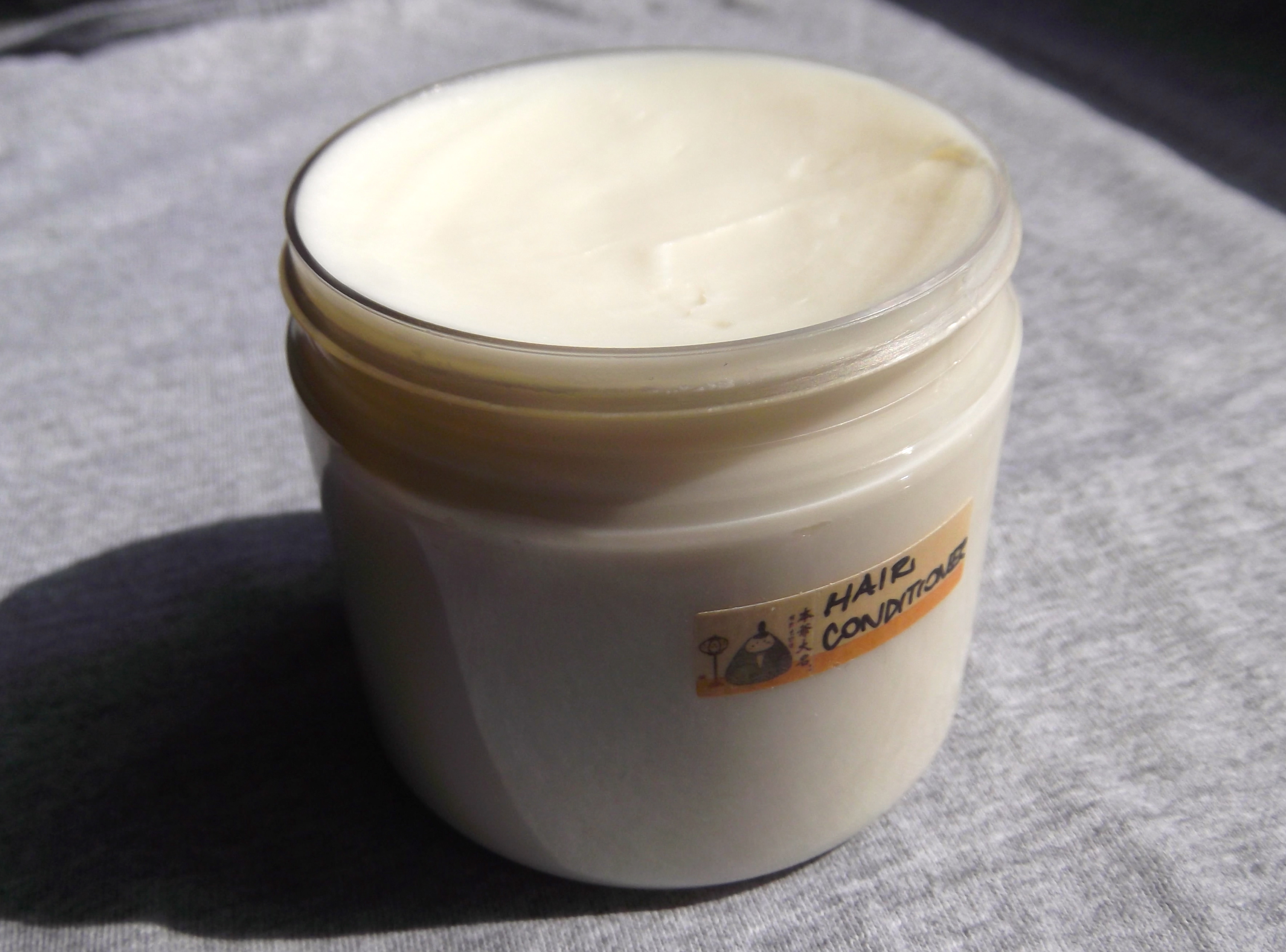
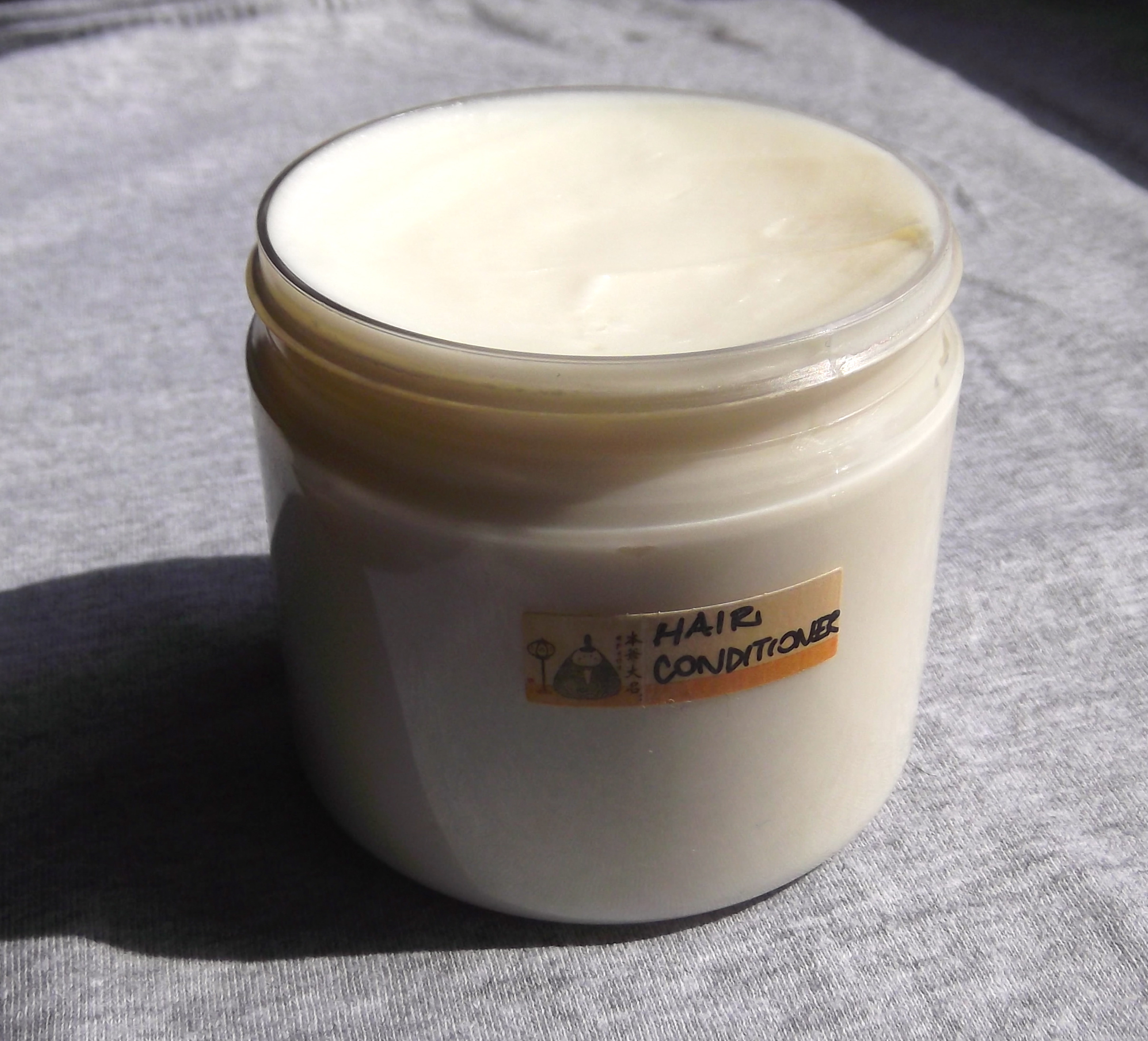
In the previous recipe I was using an eco-friendly emulsifier which gave me a good hair conditioner. I had also added a lot of thickening agents so it couldn’t be poured into a bottle but it needed to be put in a pot, as you can see from the picture.

This Hair Conditioner, instead, is done with a different emulsifier.
Ladies and Gentlemen please welcome Mr. Cetrimonium Chloride! 😀
It is a very good conditioner for hair, his effect lasts as long as it is still present on your hair therefore it is used very effectively in Leave-In Hair Conditioners!
This, however, won’t be a Leave-In (I am planning to formulate one soon enough anyway! 😀 So if you are interested… just keep tuned! 😀 ).

This is a creamy but not too thick Hair Conditioner, thanks to the fact that I didn’t use a high percentage of thickeners.

KEEP ON READING