Formulating lotion: Phase C & ACTIVE INGREDIENTS- THEORY pt.6

LAB NOTES & SAFETY NOTICE
These are personal experiments for educational use only— not instructions and not for commercial or consumer use. By proceeding, you assume all risks related to safety, testing, and regulatory compliance.
[Full Legal Disclaimer & Safety Requirements]
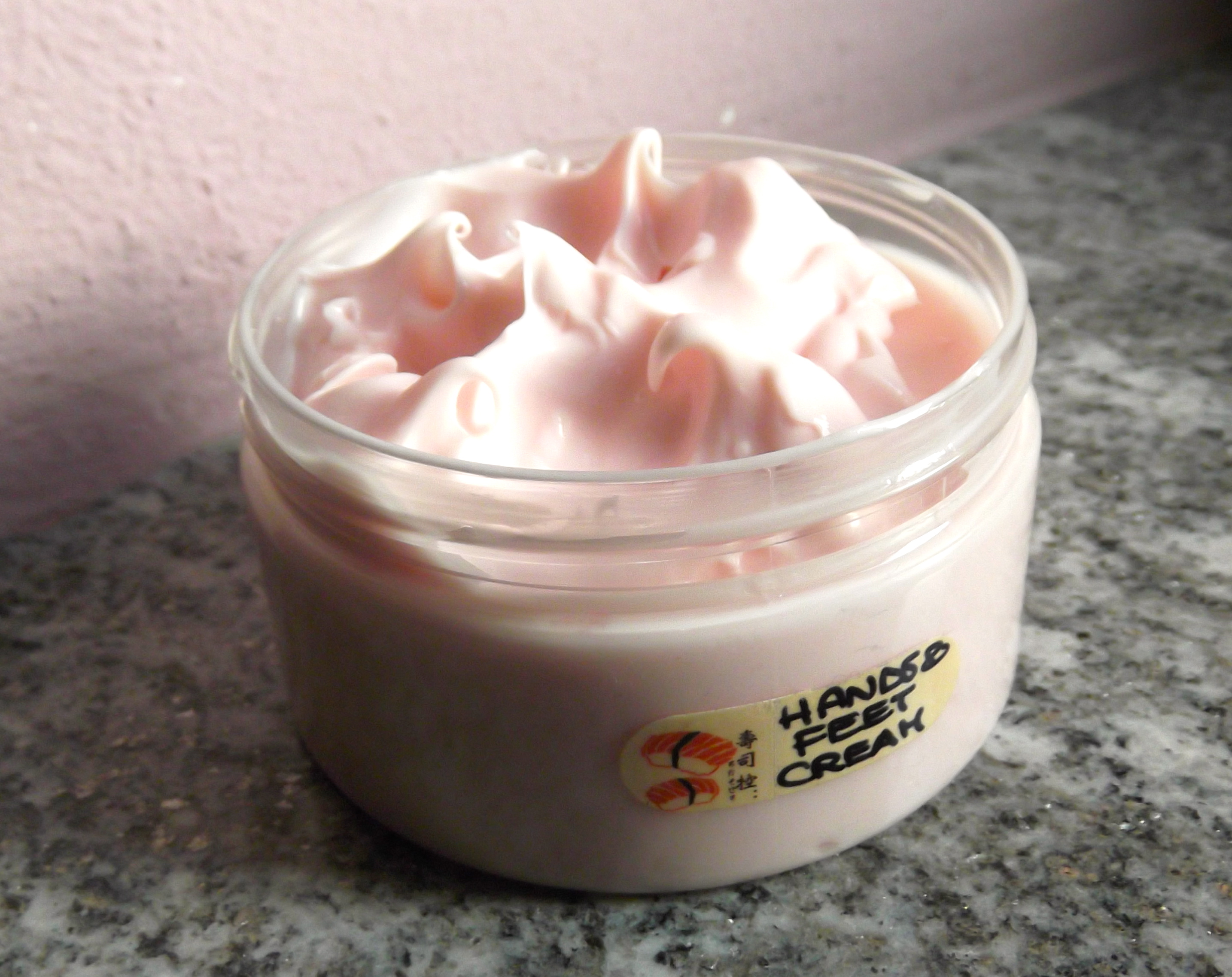
My Lab Notes: Phase C—The “Cool Down” & Active Ingredients

Hello Hello! 😀

If Phase A and B are the “body” of my cream, then Phase C is the personality! This is the “Cool Down” phase where I add all the fun stuff, but it’s also the part that makes me the most nervous. Why? Because most of these ingredients are total divas—they hate heat!

The “Waiting Game” Protocol

Sips water. Patience is everything here. I’ve learned that I absolutely have to wait until my emulsion drops below 40°C. If I get impatient and add things too early, I’m basically just cooking my expensive actives!

  • My Checklist: I usually keep my total “active load” under 10% to make sure the emulsion stays stable and doesn’t get “cranky.”

1. The “Antioxidant Cocktail” Theory

I’ve been reading that it’s better to use a team of antioxidants rather than just one.

  • My Observation: Mixing Vitamin E (Tocopherol) with something like Resveratrol seems to create a much stronger defense. It’s like they protect each other while they protect the oils in my cream!

2. Acids & The pH Balance

I use things like Lactic or Citric acid to either exfoliate or just fix the pH.

  • Safety Note: My notes are very strict about this—if I use chemical exfoliants like Salicylic acid, those batches are for NIGHT USE ONLY. I don’t want to mess with photosensitivity!

3. Niacinamide: The “Flushing” Constraint

Niacinamide is a hero in my oily-skin research (I usually use 1–4%), but it has a very specific rule: pH 5.0 to 5.5. * The Risk: I’ve documented that if the pH goes too high or too low, it can turn into Nicotinic Acid. If that happens… PHEW! It can cause the skin to flush and turn red. Not what I’m going for! 😀

4. Soothing & The “Grit” Problem

I love adding Panthenol (B5) and Allantoin for that soothing feeling.

  • Lab Lesson: Allantoin is a tricky one! It only dissolves at 0.4%. I’ve had batches where I used too much and ended up with “grit” in the cream. It felt like a scrub instead of a lotion! Now I’m much more careful with my measurements.

5. Eye Area Experiments (The Caffeine Boost)

For my eye creams, I’ve been experimenting with Caffeine and Escin. They are fascinating because of their “vasoprotective” properties—basically trying to help with puffiness and drainage.

**The “Reality Check” on Sourcing 😉 **

This is where my inner detective comes out. Marketing can be so deceptive!

  • The Q10 Case Study: Pure Coenzyme Q10 is a bright, intense yellow. Even at 0.1%, it turns the cream yellow.

  • My Thought: When I see a “Pure White” Q10 cream in a store, I just smile and shake my head. I know the concentration must be almost zero!

  • Check the SDS: I’ve learned to always check the Safety Data Sheet. “Liquid Q10” is often mostly filler with just a tiny bit of the real stuff. I want to know exactly what I’m putting in my beakers!

It really is a science, and every time I cool down a batch, I feel like I’m learning a new secret. It’s all in my hands! 😉

HAVE A GREAT DAY! 😄

Formulating a lotion: Fatty Acids and ACNE

LAB NOTES & SAFETY NOTICE
These are personal experiments for educational use only— not instructions and not for commercial or consumer use. By proceeding, you assume all risks related to safety, testing, and regulatory compliance.
[Full Legal Disclaimer & Safety Requirements]

This is a great base to work from. Let’s strip away the “lecture” feel and turn it into your personal lab journal. We’ll focus on the “Aha!” moments you had while studying—like realizing you were being overcharged for “exotic” oils that were actually just basic chemistry!

Here are your updated lab notes:


My Lab Notes: Fatty Acids & The “Marketing Trap”

Hello Hello! 😀

I’ve been digging deeper into the GREASE-FALL (my favorite way to balance fats!), and I realized I needed to understand what is actually inside my oils. I used to get so distracted by beautiful labels, but after looking at Fatty Acid Profiles, my whole perspective changed.

What I’m Learning About the Chemistry

I’ve started categorizing my fats by their structure rather than their name. It helps me predict how they’ll behave in a beaker:

  • Saturated Fats: (Like Stearic or Palmitic acid). These are the “solid” ones. I’ve noticed that if I use too much Stearic acid, I get that annoying “white-trail” when I rub the cream in.

  • PUFAs (The Liquids): These are the “Omega” oils. Because of their shape, they stay liquid and feel much “thinner” on the skin.

**The “Marketing vs. Reality” Reality Check 😉 **

Sips water. This was a big “Aha!” moment for me. I realized that many “exotic” oils are almost identical to cheaper ones.

  • The Duplicate List: In my notes, I’ve found that Almond, Macadamia, and Hazelnut oils have nearly the same fatty acid profiles.

  • My Conclusion: Why pay triple for a fancy name? I’ve started cross-referencing the chemistry first. If the fatty acids match, the skin doesn’t care about the marketing story!

My Notes on Blemish-Prone Skin

This is a theory I’m really interested in for my experiments. I read that acne-prone skin often has “unbalanced” sebum—specifically, too much Oleic Acid and not enough Linoleic Acid.

  • The Risk: High Oleic acid might be why some “natural” oils feel like they clog my pores (keratinization).

  • My Experimental Strategy: When I’m formulating for this skin type, I try to build a “Grease-Fall” using oils high in PUFAs.

My “Oily-Theory” Team:

  • The Oils: I’ve been reaching for Hemp, Grape seed, Safflower, or even simple Sunflower oil. They are rich in Linoleic acid and feel much “lighter.”

  • The Butters: I keep these very low (maybe 0.5%). I’ve been experimenting with Murumuru or Tucuma instead of Shea, because they seem to have a profile that works better for my oily-skin experiments.

At the end of the day, I’ve realized that a “miracle” oil is just a collection of fatty acids. Once I understand the profile, I can stop guessing and start formulating with intention. It’s all in my hands! 😉

HAVE A GREAT DAY! 😄

Formulating a lotion: Choosing the fats – THEORY pt.5

LAB NOTES & SAFETY NOTICE
For educational purposes only. Content reflects personal, non-professional formulation experiments and is not instructional.
No formula or information on this site is intended for commercial use, consumer application, or third-party use.
Accessing this content means you accept all risks and full responsibility for safety, testing, legal compliance, and outcomes.
[Full Legal Disclaimer & Safety Requirements]

My Lab Diary: The “Grease-Fall” (A Study in Balance)

Hello Hello! 😀

Today I want to talk about something very important when we make a cream: the Grease-Fall. I’ve been doing a lot of experiments lately because I wanted to understand why some of my creams felt “greasy” on my skin for a long time, while others disappeared too fast and my skin felt dry again.

I found out it’s all about the spreading velocity of the oils we use!

What is the Grease-Fall? Think of it like a waterfall of oils. If you only use one oil, like Olive Oil, it has one “speed.” But if you mix different oils, you can make a “cascade” where the skin feels good from the first second until many hours later.

In my lab notes, I divide my oils into three groups:

  1. Light Oils (The fast ones!): These are oils that spread very quickly. When you put the cream on, these are the ones that make it feel “silk” and not “fat.” I like to use things like Cetiol Sensoft or Dicaprylyl Ether.

  2. Medium Oils: These are the heart of the cream. They spread a bit slower than the light ones. Here I use my favorites like Argan oil, Jojoba, or Caprylic/Capric Triglycerides.

  3. Heavy Oils and Butters: These are the slow ones. They stay on top of the skin to protect it so the water doesn’t evaporate. Here I put my Shea Butter, Cocoa Butter, or Castor oil.

How I make my “Team of Oils”: I don’t just pick an oil because the marketing says it’s “miraculous.” (I don’t believe in miracles, I believe in INCI! 😉 ) I try to make a balance. For example, if I use 10% of oils in my cream, I don’t use 10% of Shea Butter. That would be like wearing a plastic mask!

I try to do something like this:

  • 3% Light oils

  • 4% Medium oils

  • 3% Heavy oils/butters

This way, the effect of rubbing the cream should be something like this :

  • First, the Light oils spread and it feels “Wow, so smooth!”

  • Then, the Medium oils take over.

  • At the end, the Heavy oils stay to protect the skin.

This is the secret to a professional cream! It’s not about the most expensive oil in the world, it’s about how you mix them.

It’s all in my hands! 😉

HAVE A GREAT DAY! 😄

Formulating a lotion: Phase B – THEORY pt.4

LAB NOTES & SAFETY NOTICE
For educational purposes only. Content reflects personal, non-professional formulation experiments and is not instructional.
No formula or information on this site is intended for commercial use, consumer application, or third-party use.
Accessing this content means you accept all risks and full responsibility for safety, testing, legal compliance, and outcomes.
[Full Legal Disclaimer & Safety Requirements]

My Lab Diary: Phase B—The Heated Oil Phase

Hello Hello! 😀

Today I’m looking over my notes for Phase B, which I call the “Heated Oil Phase.” This is where the cream really starts to take its physical shape. It’s a critical stage because if the solid components aren’t fully melted and happy at 70°C, the whole emulsion will be unstable.

1. The Emulsifier: The “Bridge”

In my lab, I see the emulsifier as the bridge that holds hands with both the water and the oil. While I love a good cold-process experiment, most of the professional materials I use need heat to build a strong “lattice” that won’t fall apart tomorrow. I always check their HLB and thermal requirements before I even turn on the stove!

2. Thickeners: The Structural Skeleton

I use lipophilic thickeners (like Cetyl Alcohol or Stearic Acid) to give the cream its “bones.” They usually come in cute little pearls or pellets.

  • My Ratios: I’ve found that a 1% total thickener is usually my “sweet spot.” Lately, I’ve been loving a 1:1 mix of Cetyl Alcohol (0.5%) and Cetearyl Palmitate (0.5%)—it makes the skin feel so elegant and professional! 😀

  • A Note on “All-in-One” Blends: I’ve learned to be careful with things like Montanov 68. Since it already has Cetearyl Alcohol inside, if I add more thickener to my notes, the cream ends up lumpy and “over-processed.” Less is definitely more here!

3. The Lipid Load (Fats & Oils)

Before I start a new “Theory Batch,” I always ask myself: “Who is this for?” The amount of fat I use changes everything. Here is the scale I’ve developed for my experiments:

Total Fats (%) My Intent / Skin Type
0% – 2% Oily skin / Fresh Summer Gels
4.5% – 7.5% Light, everyday facial creams
12% – 15% Rich creams for dry skin theory
25% + Heavy-duty barrier creams for hands and feet

**4. Don’t Fall for the “Khtululu Oil” Trap! 😉 **

Sips water. If there is one thing I’ve learned, it’s that price does not equal performance. It is so easy to fall for exotic, expensive oils with “miraculous” claims (I call them the “Khtululu Oils” of the world!).

In my lab, I ignore the marketing story. Instead, I focus on:

  • Viscosity: How thick is it?

  • Density ($\rho$): Is it heavy or light?

  • Spreading Velocity: How fast does it disappear into the skin?

A successful oil phase isn’t about finding the rarest oil in the world; it’s about the Grease-Fall. By blending different densities, I can create a professional feel that a single “miracle” oil could never achieve. It’s not magic—it’s just good formulation!

HAVE A GREAT DAY! 😄

(Sources)

Formulating a lotion: Phase A – THEORY pt.3

LAB NOTES & SAFETY NOTICE
For educational purposes only. Content reflects personal, non-professional formulation experiments and is not instructional.
No formula or information on this site is intended for commercial use, consumer application, or third-party use.
Accessing this content means you accept all risks and full responsibility for safety, testing, legal compliance, and outcomes.
[Full Legal Disclaimer & Safety Requirements]

My Lab Diary: Mastering Phase A (The Foundation)

Hello Hello! 😀 Today I’m looking over my notes on Phase A—the Aqueous Phase. I used to think water was the “easy” part of the cream, but I’ve learned that it’s actually the foundation of everything!

In my experiments, I almost always heat Phase A in a double boiler until it hits 70°C. Why? Because my favorite emulsifiers are “heat-required,” and if Phase A isn’t just as hot as Phase B, the whole thing can “shock” and separate. It’s all about keeping the phases in sync!

1. The Water: Pure or “Poetic”?

I usually keep my water at 70% or more.

  • My Thought: I love the idea of floral hydrosols (like Rose or Orange Blossom), but I’ve noticed they can be quite sensitive to the heat of the double boiler. Lately, I’ve decided to invest my “beaker budget” in high-performance actives instead, using water as my clean, reliable canvas.

2. Glycerin: The Hydration Magnet

Glycerin is a staple in my lab. It’s a humectant, which means it literally “grabs” water molecules and holds them to the skin.

  • Lab Observation: You have to be careful! If I use too much, the cream feels “tacky” or looks too shiny on the face. Sips water. * My Personal “Sweet Spots”:

    • 1.5%: For those days I’m formulating for oily skin.

    • 2.0% – 3.5%: My “Goldilocks” range for normal skin.

    • 4.0% – 5.0%: Only for heavy-duty body lotions!

3. The Gelling Agents (My Stabilizers)

I don’t just use gums for “thickness”—I use them to keep the emulsion from falling apart! Here is what I’ve learned about my favorite polymers:

  • Xanthan Gum: My old reliable! It’s tough and doesn’t care about salts (electrolytes).

    • Pro Tip: To avoid those annoying “fish-eye” lumps, I always mix the gum into the glycerin first before adding the water. Works like a charm! 😀

  • Carbopol® Ultrez 21: I LOVE this one. It makes the most elegant, crystal-clear gels.

    • The “Patience” Method: I just sprinkle it on the water and let it hydrate itself. No stirring!

    • The Bloom: It stays liquid until I add a few drops of Sodium Hydroxide to raise the pH. Then—POOF!—it thickens instantly. I love pairing it with a little Xanthan (0.4% Carbomer / 0.2% Xanthan) for the perfect texture.

  • Hydroxyethylcellulose (HEC): This is my “specialty” gelling agent for when I have lots of salts in a formula.

    • Lab Note: Unlike the others, HEC is a bit of a diva—it needs heat (70°C) to fully wake up and thicken.

Every time I look at these powders, I’m reminded that even the “water phase” is a beautiful science experiment. It’s all in my hands! 😉

HAVE A GREAT DAY! 😄

(Sources)

How to make a lotion – THEORY pt.2

LAB NOTES & SAFETY NOTICE
For educational purposes only. Content reflects personal, non-professional formulation experiments and is not instructional.
No formula or information on this site is intended for commercial use, consumer application, or third-party use.
Accessing this content means you accept all risks and full responsibility for safety, testing, legal compliance, and outcomes.
[Full Legal Disclaimer & Safety Requirements]

My Lab Notes: The “Dance” of the Three Phases

Hello Hello! 😀 I’ve spent so much time reading about lipids and polymers, but there is nothing quite like the moment when theory actually turns into a cream in my beaker! It feels like a little bit of magic every time.

I’ve been looking over my process, and I’ve realized that I always follow a very specific “rhythm” to make sure my emulsions don’t fall apart. In my lab, I call it the Core Three Phase System.

The Three “Buckets”

I’ve learned the hard way that you can’t just throw everything in at once! Sips water. I always separate my ingredients into three beakers:

  • PHASE A (The Watery Side): The water, glycerin, and gums that need to get hot.

  • PHASE B (The Oily Side): My fats and the emulsifier.

  • PHASE C (The Sensitive Stuff): This is my “cool-down” phase. These are the actives and preservatives that absolutely HATE heat.

My Experience with the “Double Boiler”

One of the biggest lessons I’ve learned is about the Thermal Threshold. I put both beakers (A and B) in the double boiler and wait for them to hit 70°C.

  • Lab Observation: If I get impatient and one phase is colder than the other, it “shocks” the emulsifier. It’s like they don’t want to shake hands! They have to be at the same temperature to bond properly.

The Mixing Moment (High-Shear vs. Spatula)

Once they hit the temperature, I pour B into A. This is the fun part!

  • The Mixer: I use my immersion mixer, but I’ve learned to keep the head submerged. If I lift it even a little, I get those “macrobubbles” that make the cream look like a sponge later. Not a good look! 😉

  • The Patience: Once it turns white and starts to thicken, I put the mixer away and switch to my spatula. This can take 30 minutes of manual stirring while it cools. It’s a great arm workout! But I’ve found that slow, constant stirring makes the final texture much smoother.

The Final Additions

I wait until the beaker feels cool to the touch (below 40°C) before I touch Phase C. I’ve realized that if I add my preservatives or my favorite delicate oils (like Rose Hip) while it’s still hot, I’m basically destroying the very ingredients I spent so much money on!

What I’ve Noticed (My Failure Points)

Even after so many batches, things can still go wrong:

  • The “Soap” Effect: Sometimes a cream leaves a white trail on the skin. I’ve noticed this happens when my thickener-to-emulsifier ratio is a bit “off.”

  • Separation: Usually, if a batch separates, I can trace it back to me being too fast with the temperature or a miscalculation in the HLB.

It’s a journey of trial and error, and honestly, every batch is a new chance to learn something about how these materials behave. It’s all in my hands! 😉

HAVE A GREAT DAY! 😄

How to make a lotion – THEORY pt.1

LAB NOTES & SAFETY NOTICE
For educational purposes only. Content reflects personal, non-professional formulation experiments and is not instructional.
No formula or information on this site is intended for commercial use, consumer application, or third-party use.
Accessing this content means you accept all risks and full responsibility for safety, testing, legal compliance, and outcomes.
[Full Legal Disclaimer & Safety Requirements]

Escin and Caffeine Eye Cream14

My Lab Notes: The Four Pillars of a Great Emulsion

Hello Hello! 😀

When I first started playing with body butters, I realized pretty quickly that I needed to dig a bit deeper into the science of it all. I didn’t want to just follow “recipes”; I wanted to understand the why.

These are my personal notes on the core structure of every face and body cream I make. While formulation can get incredibly complex, I’ve realized that my most successful experiments always come down to these four essential pillars.

1. The Mechanics of Hydration (Water + Fats)

I used to think water was just a filler, but it’s actually the hydration hero! The problem is that water evaporates too fast on its own. That’s where the Lipids (my oils and butters) come in—they act as a shield to keep that moisture trapped in.

  • My Observation: I’ve noticed that an emulsified cream (where the water and oil are actually “glued” together) works so much better than just shaking up a bottle of oil and water. It feels better, and the skin stays hydrated longer!

2. Preservation: My Non-Negotiable Rule! 😀

PHEW! Let’s talk about preservatives. I know some people want to avoid them, but in my lab, preservation is NOT optional. * The Reality: Any time I add water to a formula, I’m basically inviting bacteria and mold to a party. Unless I want to keep my creams in the fridge and throw them away after three days (no thanks! 😉 ), I need a professional preservation system. I usually choose eco-friendly options around 0.5-1%. Safety first!

3. The Water Phase: Pure vs. “Poetic”

For my experiments, I always use demineralized, pure water to avoid any minerals messing with my emulsifiers.

  • A bit of Poetry: I love using Rose water or Witch Hazel, but I’ve started categorizing these as “poetic” ingredients. They smell amazing and feel luxurious, but I keep my expectations realistic—they are there for the soul of the cream, while the “active ingredients” do the heavy lifting!

4. The Lipid Phase: Balancing the “Fall”

I’ve stopped believing in “miracle oils.” Now, I focus on the Grease-Fall.

  • The Strategy: Instead of just picking one oil, I look at the density ($\rho$) and the viscosity. I want a blend of light, medium, and heavy fats so the cream feels balanced from the moment I put it on until it sinks in.

5. Emulsifiers: The Architecture

The emulsifier is the “bridge” that holds the whole thing together. I choose mine based on:

  • Temperature: Do I want a cozy hot-process session at 70°C, or a quick cold-process fluid?

  • The “Touch”: Some give a dry, powdery finish, while others feel rich and velvety.

These four pillars are the foundation of everything I do. Once I get these right, I can start playing with the fun stuff—the actives!

HAVE A GREAT DAY! 😄