Can you recognize a good shampoo? pt.2

LAB NOTES & SAFETY NOTICE
For educational purposes only. Content reflects personal, non-professional formulation experiments and is not instructional.
No formula or information on this site is intended for commercial use, consumer application, or third-party use.
Accessing this content means you accept all risks and full responsibility for safety, testing, legal compliance, and outcomes.
[Full Legal Disclaimer & Safety Requirements]

Canyourecognizeagoodshampoo.jpg

Theory: Recognizing a Good Shampoo (Part 2 — Glucosides)

Hello Hello! 😀 Following our session on SLES and Betaine, it is time to look at another very common surfactant combination: The Glucosides.

If you see these ingredients in an INCI, you are likely looking at a “Bio” or “Eco-friendly” shampoo. Glucosides are Non-Ionic surfactants, meaning they carry no electrical charge. They are prized in green chemistry because they are usually easily biodegradable and derived from natural sources.

Common Glucosides in the INCI:

  • Lauryl Glucoside

  • Decyl Glucoside

  • Coco Glucoside

  • Caprylyl/Capric Glucoside (A particularly good solubilizer for oils)

The “Gentle” Myth

It is important to remember: a “gentle” surfactant doesn’t automatically mean a gentle shampoo! A poorly formulated glucoside shampoo can still be aggressive, just as a well-formulated SLES shampoo can be very mild.

However, because they are non-ionic, they are generally less irritating to the scalp and are the “gold standard” for baby products and sensitive skin. The trade-off? They are less conditioning than the SLES+Betaine combo. A good formulator will compensate for this by adding extra conditioning agents or proteins.


INCI Case Studies: The Glucoside Base

Example 1: The Complex Herbal Blend

Water, Decyl Glucoside, Cocoglucoside, Glycerin, Cocamidopropyl Betaine, [Extracts], Disodium Cocoamphodiacetate...

  • Analysis: This is a very well-thought-out formula. Using two different glucosides followed by Betaine and Disodium Cocoamphodiacetate creates a “surfactant cocktail.” The more surfactants you blend, the milder the result usually is. It looks like a very gentle, high-quality formulation!

Example 2: The “Minimalist” Eco-Shampoo

Water, Disodium Cocopolyglucose Citrate, Caprylyl/Capryl Glucoside, Sodium Lauroyl Sarcosinate, Sodium Lauroyl Glutamate, [Extracts]...

  • Analysis: Very simple and very green. All these surfactants are easily biodegradable and mild. However, notice the lack of conditioning agents. While “clean,” this shampoo might lack the wetting ability needed for thick hair and could leave it feeling a bit tangled.

Example 3: The Lipid-Enriched Formula

Aqua, Coco Glucoside, Lauryl Glucoside, Sodium Cetearyl Sulfate, Decyl Glucoside, Glyceryl Oleate...

  • Analysis: Here, Glyceryl Oleate is added specifically to “re-fat” the hair and make the wash even milder. You also see many essential oils (Tea Tree, Rosemary) added for sebum regulation. While honey is listed (great for label appeal!), its actual effect in a wash-off product is likely minimal compared to the surfactants.


Summary: Why Choose Glucosides?

Feature Glucoside-Based Shampoos
Sustainability High (Easily biodegradable)
Charge Non-Ionic (No charge)
Skin Feel Very low irritation, good for delicate scalps
Formulation Often more expensive/difficult to thicken than SLES
Best For Babies, eco-conscious consumers, very sensitive scalps

Interestingly, I have yet to find a “terrible” INCI that uses a glucoside base—usually, if a company is spending the money on these surfactants, they are also putting effort into the rest of the balance!

Do you have a “Green” shampoo at home? Check the label and see if you can spot these glucosides! 😀

Can you recognize a good Shampoo? pt. 1

LAB NOTES & SAFETY NOTICE
For educational purposes only. Content reflects personal, non-professional formulation experiments and is not instructional.
No formula or information on this site is intended for commercial use, consumer application, or third-party use.
Accessing this content means you accept all risks and full responsibility for safety, testing, legal compliance, and outcomes.
[Full Legal Disclaimer & Safety Requirements]

Theory: How to Read a Shampoo INCI (Ingredient List)

Hello Hello! 😀 Today’s session is about a superpower every formulator should have: the ability to recognize a good shampoo just by looking at the label!

The INCI (International Nomenclature of Cosmetic Ingredients) is the list of everything inside a product. They are listed in order of percentage, except for ingredients below 1%, which can be listed in any order at the end. While we can’t know the exact percentages, our knowledge of formulation helps us see if a product is well-balanced or just “poetry.”

The Three Rules of the Lab:

  1. Bio-Realism: I am not a “biodegradable-nazi.” I prefer eco-friendly ingredients, but I look for overall balance rather than perfection.

  2. Listen to Your Hair: If a shampoo gives you an itchy scalp or greasy hair, stop using it—even if the INCI looks “perfect” on paper!

  3. The 1% Line: Often, expensive plant extracts are listed above preservatives just for “label appeal,” even if they are only present at 0.01%. Don’t be fooled!


Analyzing the Surfactants

Surfactants are the “magic” that creates foam. In most commercial shampoos, the primary family is Anionic (negative charge), like SLES (Sodium Laureth Sulfate). SLES is effective and conditioning, but it can be aggressive if used alone.

The Golden Ratio: SLES + CAPB

The most common combination is SLES + Cocamidopropyl Betaine (CAPB). To make a shampoo mild, the CAPB should ideally be at least 1/3 of the amount of SLES.

  • A Good Sign: Water, Sodium Laureth Sulfate, Cocamidopropyl Betaine...

  • A Red Flag: Water, Sodium Laureth Sulfate, Sodium Chloride... Cocamidopropyl Betaine.

Note: If Sodium Chloride (salt) appears before the Betaine, it usually means the Betaine is too low (under 1-2%) to effectively buffer the SLES.


INCI Case Studies

Example 1: The “Poetry” Formula

Aqua, Sodium Laureth Sulfate, Citric Acid, Cocamidopropyl Betaine... [long list of extracts]

  • Analysis: Citric acid is usually used at max 1.5% to adjust pH. If it is in the 3rd position, everything following it (including the Betaine and all those fancy extracts) is likely at a very low concentration. This is mostly just SLES and water—very aggressive!

Example 2: The “Oily” Formula

Aqua, Sodium Laureth Sulfate, Cocos Nucifera Oil, Prunus Amygdalus Dulcis Oil, Caprylyl/Capryl Glucoside...

  • Analysis: This skips the Betaine but uses high levels of oils to buffer the SLES. While this feels milder, the oils might weigh down fine hair or cause issues for those with greasy scalps.

Example 3: The “Silicon Build-up” Formula

Water, Sodium Laureth Sulfate, Disodium Cocoamphodiacetate, Dimethicone...

  • Analysis: Dimethicone (a silicone) is high up on the list. It will make hair look amazing the first few times, but it eventually builds up, leaving hair heavy and dull. Also, without CAPB, the SLES might still feel quite harsh.

Example 4: The Balanced Formula

Aqua, Sodium Laureth Sulfate, Cocamidopropyl Betaine, Disodium Laureth Sulfosuccinate, Decyl Polyglucose...

  • Analysis: This is what we want to see! CAPB is in the 3rd position, followed by two more mild surfactants. It’s a complex, well-thought-out cleaning system.


Summary Table: Ingredients to Watch

Ingredient Type What to look for Function
Primary Surfactant SLES, Sodium Coco Sulfate Cleaning and Lather
Secondary Surfactant Cocamidopropyl Betaine, Glucosides Mildness and Foam stability
Conditioners Polyquaternium-7, Silicones, Guar Manageability and Shine
Proteins Hydrolyzed Wheat/Silk Protein Film-forming protection
Thickeners Sodium Chloride (Salt) Adjusting viscosity

This is just the beginning of our INCI journey! In the next session, we will look at shampoos that use different surfactant bases beyond SLES.

Do you have a shampoo at home with a confusing INCI? Post it below and let’s analyze it! 😀

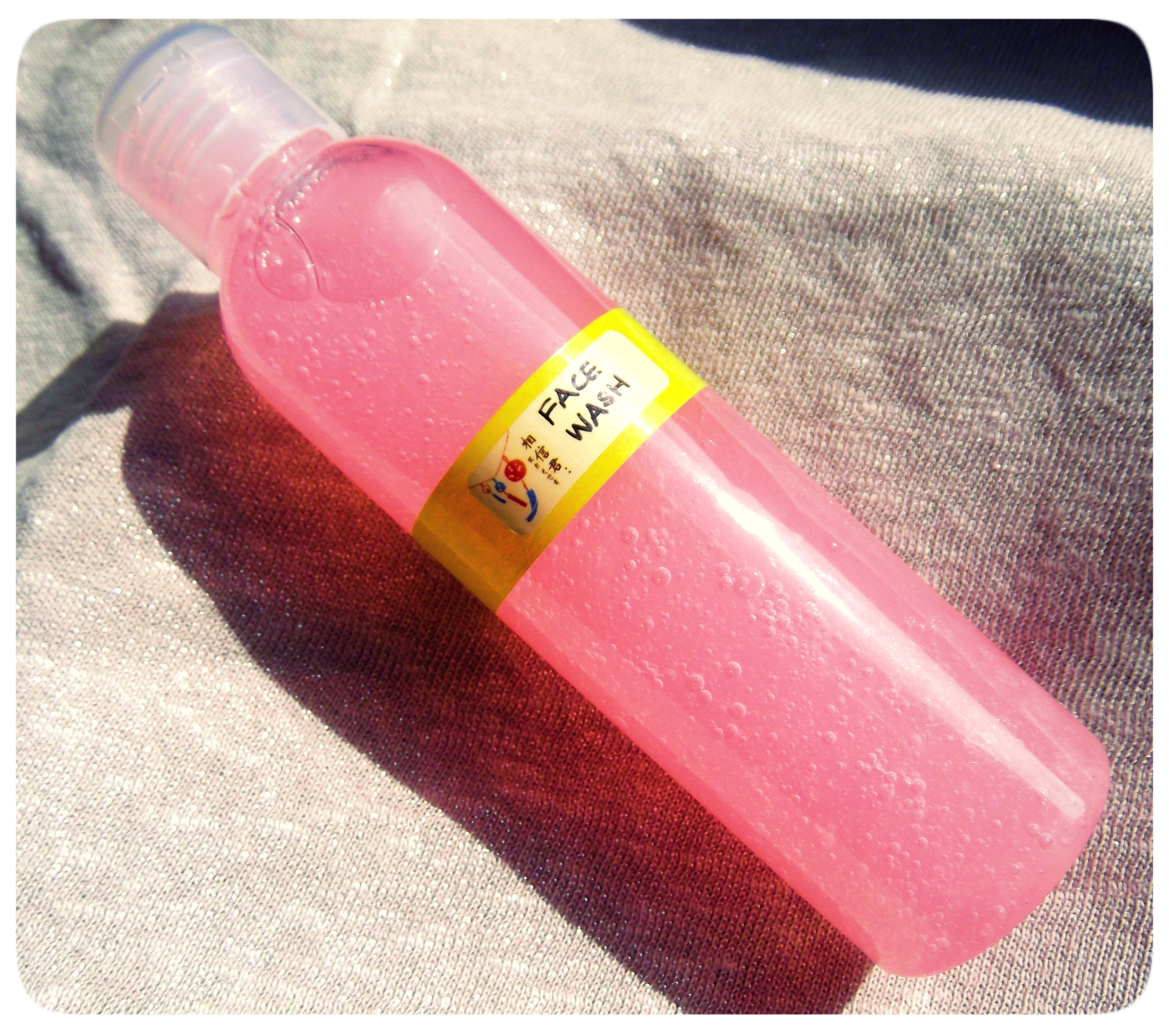
How to formulate a Face Wash – with Recipe

LAB NOTES & SAFETY NOTICE
These are personal experiments for educational use only— not instructions and not for commercial or consumer use. By proceeding, you assume all risks related to safety, testing, and regulatory compliance.
[Full Legal Disclaimer & Safety Requirements]

DIY Face Wash - Recipe

Today I experimented on an “extra-mild” facial cleanser. My goal here was to build a balanced Surfactant Trio (Anionic, Amphoteric, and Non-Ionic) but keep the concentration low enough to respect a compromised skin barrier—especially for my skin, which tends to get acne when it’s irritated.

The ASM Calculation & My Surfactant Logic

To make sure this was as gentle as possible, I targeted a total ASM of 6.5%. Most store-bought face washes are 10–15%, so I knew this would be much softer.

  • Sodium Lauroyl Sarcosinate (Anionic): My primary choice for a creamy lather. It’s so much milder than SLES or SLS.

  • Cocamidopropyl Betaine (Amphoteric): I included this to “buffer” the Sarcosinate. It helps stop the cleanser from being too aggressive on the skin.

  • Lauryl Glucoside (Non-Ionic): This completes the trio. It’s great for removing oily residues without causing irritation.

The Math (Validated against my 6.5% ASM target):

  • Sarcosinate 10g: 10 * 0.29 = 2.9g

  • Betaine 6g: 6 * 0.32 = 1.92g

  • Lauryl Glucoside 3g: 3 * 0.52 = 1.56g

  • Total ASM: 6.38% (Perfect!)


My Formula: Mild Face Wash

Phase Component % / grams Function
A Distilled Water to 100 Solvent
A Glycerin 3.0 Humectant
A Xanthan Gum 0.5 Thickener / Suspension
B Sodium Lauroyl Sarcosinate 10.0 Primary Mild Anionic
B Lauryl Glucoside 3.0 Non-Ionic Detergent
B Lavender & Sage EOs 4 drops Soothing / Antimicrobial
C Cocamidopropyl Betaine 6.0 Amphoteric Buffer
C Preservative & Lactic Acid q.s. Safety / pH Calibration

What I Noticed During the Process

  • Gelling the Water: Sarcosinate is notoriously hard to thicken! I used 0.5% Xanthan Gum to give it enough “body” so it wouldn’t just run off my hands.

  • The “Heat” Trick: My Lauryl Glucoside was a thick paste. I had to give it a quick warm-up in a water bath to liquefy it before mixing, otherwise, I would have ended up with “fish-eyes” (lumps) in my gel.

  • The “Slow-Mix” Rule: Sips water. I stayed away from the high-speed mixers. I just used a manual stirring motion because I didn’t want to turn my beaker into a bubble bath before I even finished!

  • The pH Moment: This is the most sensitive part. I used Lactic Acid to bring the pH down to 5.0.

    • My Observation: At pH 5.5, the Sarcosinate reaches its best density. But I have to be careful—if the pH drops much lower than that, the whole structure can fail and turn back into a liquid mess, plus the betaine should never go below that pH!

Final Thoughts

For me, this face wash is the definition of “Less is More.” By getting rid of harsh alcohols and scrubs and using this low-ASM blend instead, I finally gave my skin some space to breathe.

Personal Observation: This formula was a real turning point for my skin. It really confirms my theory: cleaning the skin shouldn’t mean stripping the skin.

DIY face wash

On Surfactants and Formulation (face wash, shampoo and shower gels)

LAB NOTES & SAFETY NOTICE
These are personal experiments for educational use only— not instructions and not for commercial or consumer use. By proceeding, you assume all risks related to safety, testing, and regulatory compliance.
[Full Legal Disclaimer & Safety Requirements]

Lab Notes: The ASM Reality

After spending so much time with surfactants, it’s clear that formulating a detergent isn’t about the volume of the bottle, but about the ASM (Active Surfactant Matter). It’s a core lesson: since raw surfactants are usually sold as solutions (mostly water), the only way to know the real “cleaning power” is to calculate the active part of the molecule.

What I’ve Learnt About ASM Targets

The ASM Protocol — Quantitative Detergent Design

In surfactant chemistry, we do not formulate based on the “volume of the bottle” but on the Active Surfactant Matter (ASM). Since raw surfactants are sold as aqueous solutions (e.g., 30% active matter and 70% water), we must calculate the true concentration of the “cleaning” part of the molecule to ensure safety and efficacy.

1. The ASM Target Reference

Before calculating, I define the target ASM based on the physiological needs of the area being cleansed. High ASM provides more “bubbles” and stripping power, while low ASM preserves the lipid barrier.

Product Type Target ASM Range Formulation Goal
Face / Intimate Wash < 10% Ultra-delicate; avoids stripping the acid mantle.
Shampoo 10% – 15% High wetting ability; removes sebum/styling products.
Shower Gel 15% – 20% Standard body cleansing; good foam volume.
Bubble Bath 20% – 25%+ Maximum foam stability; not intended for direct skin contact.

2. The Mathematical Approach: Solving for ASM

I utilize two primary methods in the lab to reach my target (e.g., a 18% ASM Shower Gel).

Method A: Quota Division (Precise)

I decide exactly what “share” each surfactant contributes to the total 18% and solve for the grams needed.

  • Sarcosinate (29% ASM): Quota 10% then I calculate: 10 / 0.29 = 34.48g

  • Betaine (36% ASM): Quota 5% so: 5 / 0.36 = 13.88g

  • Lauryl Glucoside (52% ASM): Quota 3% so: 3 / 0.52 = 5.76g

  • Total ASM = 18%

Method B: Gram Estimation (Iterative)

I estimate the grams first and check the result against the target.

  • 40g { Sarcosinate}* 0.29 = 11.6g

  • 15g { Betaine} * 0.36 = 5.4g

  • 5g { Lauryl Glucoside} * 0.52 = 2.6

  • Total ASM = 19.6% (Adjust grams downward to reach 18%).

3. Raw Material Profiles & Behavioral Notes

  • Sodium Lauroyl Sarcosinate (Anionic – 29%): Eco-friendly and creamy. Viscosity is highly dependent on a pH of 5.0. It is sensitive to oils and fragrances, often requiring Xanthan Gum for stabilization.

  • Cocamidopropyl Betaine (Amphoteric – 30-38%): The “Buffer.” When paired with Anionics (like SLES), it creates a salt-thickening curve. It significantly reduces the irritation potential of harsher surfactants.

  • Lauryl Glucoside (Non-Ionic – 52%): A thick, cloudy paste. Excellent for thickening and skin-mildness, but requires gentle heating ($40^\circ\text{C}$$50^\circ\text{C}$) to become workable.

  • Disodium Cocoamphodiacetate (Amphoteric – 38%): The “Baby” surfactant. Does not trigger the ocular sting reflex; ideal for “no-tears” formulations.

Researcher Summary

Calculating ASM is the only way to ensure reproducibility in the lab. By mastering this math, I can hopefully swap one surfactant for another (e.g., replacing SLES with a more eco-friendly Sarcosinate) while maintaining the exact same “strength” of the detergent.

How to formulate a detergent – THEORY pt.2

LAB NOTES & SAFETY NOTICE
These are personal experiments for educational use only— not instructions and not for commercial or consumer use. By proceeding, you assume all risks related to safety, testing, and regulatory compliance.
[Full Legal Disclaimer & Safety Requirements]

How to formulate a detergent

My Lab Notes: Surfactant Assembly & Phase Logic

Hello Hello! 😀

I’ve been recording my experiments with detergents, and I’ve realized it’s about so much more than just getting the skin clean. It’s about managing the “Micellar structure” so the product feels professional.

1. My “Trio-Strategy” for Softness

I’ve documented that a single-surfactant system is usually too harsh for my skin. I’ve started using a three-part team:

  • Primary: My “cleaning engine” (like SLES).

  • Secondary: A “buffer” like Cocamidopropyl Betaine to reduce irritation.

  • Aesthetics: A tiny bit of Glyceryl Oleate to make the lather feel like luxury.

2. My Thickening Observations

I’ve noticed that people associate thickness with quality, so I’ve been testing three reliable ways to build “body”:

  • The Salt-Curve: I’ve recorded that SLES becomes extremely dense when I add electrolytes (salt) because it forces the micelles to pack tighter.

  • The pH Trigger: In my experiments with Sarcosinate, the texture changes completely at pH 5.0. It goes from thin to thick almost instantly!

  • Polymeric Support: If the surfactants are being stubborn, I use Xanthan Gum (<1%) in Phase A to get the flow I want.

3. My Assembly Protocol (Avoiding the “Crash”)

I have to be very careful with the order of addition to avoid “crashing” the formula or making it cloudy.

  • Phase A (The Aqueous Foundation): I hydrate my gums and glycerin here.

  • Phase B (The Concentrate): This is where my main surfactants go. Sips water. I’ve learned to mix these very slowly with a spatula—no immersion mixers allowed, or I’ll end up with a beaker full of air bubbles!

  • Phase C (The Trigger): This is my favorite part. When I add the Betaine and the pH adjusters at the end, I often see the “thickening moment” happen right before my eyes.

Final Lab Thought

Formulating detergents is a game of patience. If I rush the mixing, I lose the clarity. A thin gel still cleans, but I’ve found that a thick, glossy gel is what makes the experience feel truly professional. It’s all in my hands! 😉

HAVE A GREAT DAY! 😄

How to formulate a detergent – THEORY pt. 1

How to formulate a detergent

LAB NOTES & SAFETY NOTICE
These are personal experiments for educational use only— not instructions and not for commercial or consumer use. By proceeding, you assume all risks related to safety, testing, and regulatory compliance.
[Full Legal Disclaimer & Safety Requirements]

My Lab Notes: Surfactant Theory & The Chemistry of Cleansing

Hello Hello! 😀

I’m recording my research into surfactants (Surface Active Agents). These are the amphiphilic molecules that make my cleansers work. Their “water-loving” head and “oil-loving” tail are what allow them to lift debris from the skin.

1. The Four Groups (My Personality Map)

Surfactants can be categorized by their electrical charge. It’s the easiest way to predict how they’ll interact with skin and hair:

  • Anionic (-): My “powerhouses” for foam and cleaning (SLES, Sarcosinate).

  • Cationic (+): I use these for conditioning because they “stick” to the negatively charged hair shaft.

  • Non-Ionic (0): Usually mild stabilizers (Glucosides).

  • Amphoteric (+/-): My “buffers.” I’ve found these are essential for reducing the irritancy of the Anionics (Betaine).

2. The ASM Calculation (Active Matter)

I’ve documented a common trap: raw surfactants are rarely 100% pure. They are usually solutions.

  • The ASM Coefficient: Always check my supplier’s sheet. For instance, if my SLES is 27% ASM, I have to calculate my formula based on that “pure” percentage, not the total weight of the liquid.

My Target ASM Hierarchy:

Based on my trials, I’ve set these “strength targets” for my formulas:

  • Intimate Wash: ~5% ASM

  • Face Wash: <10% ASM

  • Shampoo: 10% – 15% ASM

  • Shower Gel: 18% – 20% ASM

  • Bubble Bath: 20% – 25% ASM

3. The Synergy Discovery

One of the most important things I’ve recorded is that synergy reduces irritancy.
Using 12% ASM of a single surfactant is much harsher than a 12% blend of three different types. I now always use a “Trio” (Primary + Buffer + Aesthetic Booster) to keep the skin barrier happy.

Self note: It’s important that I keep checking the Technical Data Sheets. Sometimes the same ingredient can vary between 27% and 30% ASM depending on the batch!

It’s all about layering the charges correctly to get a product that cleans without being aggressive.

Homemade cosmetics trends (and mistakes)

Homemade Cosmetics Mistakes

LAB NOTES & SAFETY NOTICE
These are personal experiments for educational use only— not instructions and not for commercial or consumer use. By proceeding, you assume all risks related to safety, testing, and regulatory compliance.
[Full Legal Disclaimer & Safety Requirements]

Theory: My Formulation Philosophy (No Miracles, Just Science!)

Hello Hello! 😀 When I first started studying how to make real cosmetics at home, it was because I was tired of the “miracle” recipes I found online. You know the ones: the “firming soap” made of aloe vera, or the “acne cure” that’s just 50% tea tree oil.

After years of studying, I’ve realized that the more you learn, the more you realize how much you don’t know. Today, I want to clear the air about some of the most common (and dangerous) myths in the handmade beauty world.

1. The “Miracle” Trap

Let’s be honest: No cosmetic is a miracle. When I started, I made creams packed with every active ingredient I owned, hoping for “photoshopped magazine skin.” Guess what? I still had my skin—just a little better hydrated. Making your own products is about learning not to believe commercial marketing (or trending “DIY” solutions) anymore.

2. “Natural” Does Not Mean “Mild”

This is a huge one. I see people adding Essential Oils to products for infants because they are “natural.” This is terribly wrong. Essential oils are highly concentrated and full of allergens. They are NOT “fresh water” and can cause painful reactions on a baby’s delicate skin. If you want a nice scent for a baby product, use an allergen-free fragrance oil instead!

3. I am a Formulator, Not a Doctor

It’s tempting to feel like a chemist-wizard once you start making creams, but we are not pharmacists. If a friend asks for a cream to “cure” their dermatitis or a medical condition, the only right answer is “NO.” I always tell my friends to see a dermatologist. My creams can hydrate and soothe, but they are not a medical cure.

4. The “Synthetic = Bad” Myth

Synthetic ingredients like SLES (Sodium Laureth Sulfate) have suffered from terrible, misleading publicity. There is no scientific evidence that they cause cancer.

  • The Reality: Even “natural” soap can be harsher on the skin than a well-formulated synthetic detergent!

  • Concentration is Everything: People say SLS is used to clean garage floors—well, water can be lethal if you drink too much of it! It all depends on the concentration and the overall formula.

5. Preservatives Are NOT Optional

There is a massive campaign against preservatives, treating them like “concentrated evil.” In reality, they are the heroes that save your cream from becoming a bacteria playground.

The Rule: If your product contains water (or water-based ingredients), it MUST have a real preservative.

And no—Tea Tree oil is NOT a preservative, no matter what you read on the internet! 😀


Summary: The Formulator’s Code

Myth The Truth
“Natural is always safe” Essential oils can be highly allergenic and irritating.
“Preservatives are toxic” Mold and bacteria in your cream are much more toxic!
“It’s a healing cure” Cosmetics are for care and hydration, not medicine.
“SLES is dangerous” Aggression depends on the formula, not just one ingredient.

I hope this helps you look at your ingredients (and those “miracle” pins on Pinterest) with a more critical eye!

What’s the strangest “miracle” claim you’ve seen online lately? Let’s debunk it together! 😀