LAB NOTES & SAFETY NOTICE
For educational purposes only. Content reflects personal, non-professional formulation experiments and is not instructional.
No formula or information on this site is intended for commercial use, consumer application, or third-party use.
Accessing this content means you accept all risks and full responsibility for safety, testing, legal compliance, and outcomes.
[Full Legal Disclaimer & Safety Requirements]
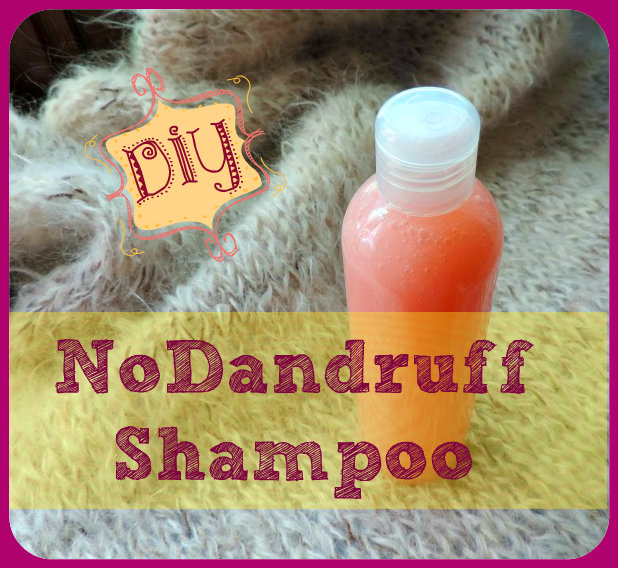
Lab Note: My “No Dandruff” Scalp-Calming Shampoo
Hello Hello! 😀 Today I am tackling something that is usually so annoying to deal with: dandruff! I got tired of the shampoos from the supermarket because they are so aggressive—they might kill the fungus, but they leave the scalp red and the hair feeling like straw. No thanks! 😛
I wanted to make a “Smart Shampoo.” Something that uses a real antifungal active but surrounds it with ingredients that actually soothe the skin and protect the hair.
The “Clear Scalp” Strategy:
The hero of my formula is Piroctone Olamine. Unlike the “Zinc” stuff you find in cheap shampoos, Piroctone Olamine is much more elegant—it’s very effective against the Malassezia fungus but it’s gentle. I also added Salicylic Acid to help “sweep away” the dead skin cells so the scalp can breathe again!
The Formula for my Experiment:
Phase A:
-
Water to 100
-
Glycerin 2
-
Polyquaternium-10 – 0.3 (This is a “conditioning” polymer—it helps the hair stay smooth even in a treatment shampoo!)
Phase B (The Cleansing Base):
-
Sodium Lauroyl Sarcosinate – 15 (My favorite “soft” surfactant!)
-
Cocamidopropyl Betaine – 10
-
Coco-Glucoside – 5
-
Piroctone Olamine – 0.5 (The antifungal powerhouse!)
Phase C (The Calming Touch):
-
Salicylic Acid – 0.5 (I pre-dissolved this in the surfactants to make sure it didn’t stay “gritty”!)
-
Panthenol – 1 (To soothe the itchy scalp)
-
Preservative (According to my lab’s type)
-
Fragrance (I used Tea Tree and Lavender—Tea Tree helps the “No Dandruff” mission, and Lavender makes it smell like a spa! :D)
-
Lactic Acid (To reach pH 5.5)
Notes from my Beaker:
-
The Dissolving Trick: Piroctone Olamine and Salicylic Acid can be a bit stubborn. I found that if I mix them into the surfactant blend (Phase B) before adding the water, they dissolve much more easily. No one wants “grains” in their shampoo!
-
The pH is Critical: For Piroctone Olamine to be happy and stable, the pH needs to be around 5.5. If you go too low or too high, it might not work as well.
-
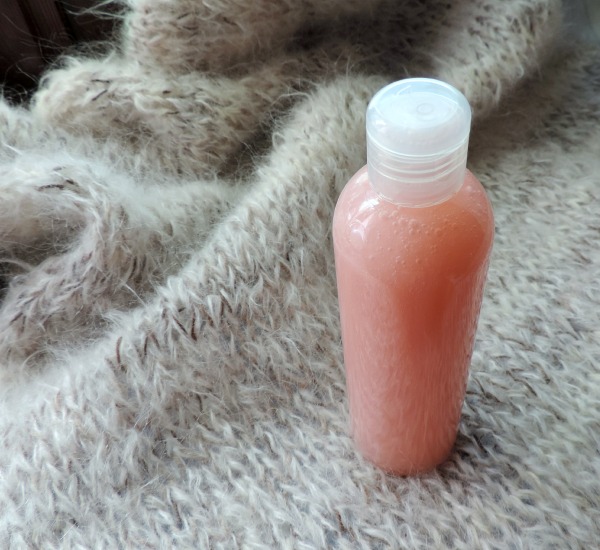
The Color: I left this one clear because I love how clean it looks. Without all the “fake blue” dyes of commercial shampoos, it looks so much more professional.
-
How I used it: Since this has an active medicine in it, I don’t just rinse it off immediately. I leave it on my scalp for about 3 minutes while I sing a song, then rinse! yeheee! 😀
Final Verdict: I don’t suffer of dandruff much but of itchiness sometimes I do, and this helped a lot 🙂

 IT'S ALL IN MY HANDS
Thanks for this……I love your posts
LikeLike
I will try to make this shampoo, but find materials are too hard for me 😦
LikeLike
Hello Suny 🙂
Where do you live?
There are really MANY websites that sell around the world 🙂
I also made a post with a list of online shops around the world 🙂
LikeLike
hi! thanks for sharing this recipe. 🙂 does the alcohol serve as a preservative or did you use it for another purpose?
LikeLike
No no here the preservative is another one 🙂
The alcohol here is used in order to “melt” salicylic acid, piroctone olamine and menthol! 🙂
These are ingredients that are difficult to melt in other ways, so alcohol helps 🙂
I have just remade a batch of this recipe 🙂
LikeLike
What is the percentage of salicylic acid in this shampoo?
LikeLike
Hi Tanya. The recipe is in percentages, so 0.5% 🙂
LikeLike
I would like to add colloidal sulfur to the shampoo. To what phase should I add it?
LikeLike
You could add some in the end Tanya.
LikeLike
Hi I need your answer, I have formulated my shampoo with SLES,SLS,CAPB,EDTA,CMEA SODIUM CITEATE, and ph balanced with citric PRESERVATIVE,FRAGRANCE, CENTRIMONIM CHLORIDE, and the pH is 7, after usage of one month,Hair fall and dandroof in my head What is missing in my recipe.
LikeLike
It might be that it is not your shampoo causing the fall or the dandruff (I am not a doctor)… but talking about the recipe: you haven’t written your concentration so I will tell you what I can from the info you have given me.
Are Cetrimonium Chloride and those anionic surfactants compatible? I have never used it mixed with anionic surfactants before and I don’t know how it would behave. I know Cetrimonium Chloride can be aggressive on its own so check the concentration (and the compatibility!).
What is the surfactant concentration of your formula? Could it be too high and therefore dry for your scalp?
Why would you leave a pH 7?
LikeLike
Thanks for your reply following are my formulation.
1,SLES – 11 % PRIMERY SURFACTANT
2,SLS – 4.9 % SECONDARY SURF
3,CAPB – 8 % THIRD SURF
4,PROP.GLYCOL – 2% HUMACTANT
5,GLYCERIN -1% MOISTURISATION
6,SODIUM CITRATE – 2% CHELATENT
7,EDTA (DI) – .5% SEQUESTING AGENT
8,iSO PROPYL MYRISTATE – .5% AVOID GREASYNESS
9,CENTRI CHLORIDE -2% – CONDITIONING
10,DOW CONDITINER – .5 %
11, COCOMONO E.A. -1% FOAM STABILIZATION
12, FRAGRANCE-0.70%
After a long time i got this formulation to get thick gelly like shampoo. I saw an article that shampoo should not Deavoid all sebum. if removed completely dry scalp is the result so flakes and itching etc happening. Is their any best ingredient to suggest me like cetyl,caster oil etc to maintain sebum level. and which is the best pH value to maintain hair. Again thanks for your reply.
LikeLike
I haven’t used some of these ingredients myself but this is what I thought:
Propylene glycol looks unnecessary here. It is in a sense a humectant but it works in a way that I personally not like and it might ruin the binding of the skin cells making it easier for aggressive surfactants to come through and do a little damage.
I don’t think of huge damage here, but a little dandruff maybe yes.
Your surfactants were all liquid, right? Or did you use powders?
I would avoid even isopropyl myristate if this is a shampoo for yourself and not for commercialization.
Cetrimonium chloride again is what makes me thoughtful. I don’t see its use in a shampoo. Yes it is a conditioning agent but are you sure it is compatible here? Why don’t you add other compatible conditioning substances like quat 80, polyquat 7 or 10 for example? 🙂
LikeLike
For makin the shampoo milder you could add a very small amount of oil like 1% BUT my personal rule is that if I want a milder detergent I make it milder by using different surfactants or simply lowering them rather than using up their washing abilities to solubilize my 1% oil. This is just my preference
LikeLike
Yes thanks for you support. Another one question, Is their any simple method to find out the product is Moisturising,conditioning and safe to skin.
LikeLike
Well I don’t know if it is simple enough, but studying is one way 🙂 there are many books that talk about cosmetic science or chemistry 🙂
LikeLike
Is the salicylic acid in this shampoo dangerous if it gets in your eyes while shampooing? You made such a serious point to wear gloves and googled when handling it so I’m concerned about safety in shampooing
LikeLike
The danger, as with anything, is in the quantity. Handling an acid in pure form without gloves is dangerous, handling something that has a small percentage of an acid is not that dangerous.
Surely it is not a good thing if it gets in the eyes, but nevertheless also all the other ingredients of all shampoos in the world are not a good thing to get in the eyes! 🙂 So, if it happens, just be sure to rinse very well and if stinging lasts too long visit a doctor, but this is true for any substance really 🙂
LikeLike
hi, for Phase B can I omit Sodium Cocamphodiacetate ,Coco Glucoside & Gliceryl Oleate ,Polyquaternium. Just adding Cocamidopropyl Betaine to milder the SLES?
LikeLike
You can, but it won’t be as mild as with all the ingredients. 🙂
LikeLike
Thanks for your reply. If i only have sles 70% and coco betaine. What is the % should i use for these 2? Do i need to dilute sles first?
LikeLike
I wrote a post about formulating with surfactants where all the calculations are explained 🙂 you will need to remake the calculations. No need to dilute SLES separately 🙂
LikeLike
Thanks a lot dear. Loves your sharing and may god bless you 🙂
LikeLiked by 1 person
Hi. Just made mine today with whatever ingredients i have on hand.
A
Water to 100
Glycerin 2
Xanthan gun 0.2
B
SLES 22
polyquat7 1
C
Menthol 0.4
Salycilic acid 0.5
Alcohol just a little to dilute SA
Cocamidopropyl Betaine 10
Germall plus
Spearmint and lemon e.o
LikeLiked by 1 person
How are you doing today?
I have sodium cocoyl isethionate and cocobetaine, can i use both alone? If yes, please what percentage will u advice? I checked your formulatory but i didnt see any information on sodium cocyl isethionate.
LikeLike
Is it in powder form the isethionate
LikeLike