LAB NOTES & SAFETY NOTICE
For educational purposes only. Content reflects personal, non-professional formulation experiments and is not instructional.
No formula or information on this site is intended for commercial use, consumer application, or third-party use.
Accessing this content means you accept all risks and full responsibility for safety, testing, legal compliance, and outcomes.
[Full Legal Disclaimer & Safety Requirements]
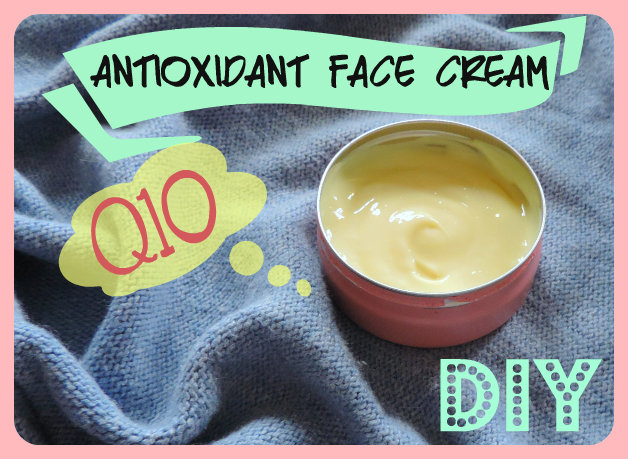
Lab Note: My “Antioxidant Network” Experiment!
Hello Hello! 😀 Today I am so excited to share an experiment that is a bit “brainy” but so cool! I call it the Antioxidant Network. Usually, we just pick one “hero” ingredient like Vitamin C, but I wanted to try something different. I wanted to build a team!
The idea is the Redox Theory—it’s like a relay race for your skin. When one antioxidant gets “tired” from fighting free radicals, the others step in to “recharge” it so the whole system keeps working. It’s synergy in a jar! yeheee! 😀
The Team Members:
-
Coenzyme Q10: The energy booster! It gives the cream a lovely yellow tint.
-
SAP (Vitamin C): I used Sodium Ascorbyl Phosphate because it’s way less “grumpy” and irritating than pure Vitamin C.
-
Alpha-Lipoic Acid (0.5%): The “Universal” antioxidant. Warning: This stuff has a “Hell-Smell” of its own—it’s very sulfuric! I only used 0.5% because I wanted the benefits without smelling like a matchstick factory. 😛
-
Vitamin E: To protect the oils and the skin’s lipids.
The Emulsifier “Fuss”: Hitecream 3000
I played with Hitecream 3000 for this one. It’s a vegetable, protein-based emulsifier that’s supposed to be super skin-compatible. I used it at 7% on its own. It gave a stable cream, but next time I might drop it to 5% and add a bit of Cetyl Alcohol to make the texture feel a bit more “posh.”
The Formula I Used:
Phase A:
-
Distilled Water: to 100
-
Glycerin: 2.0
-
Carbopol Ultrez 21 / Xanthan: 0.3 / 0.2 (My hybrid gelling system!)
Phase B:
-
Hitecream 3000: 7.0
-
Kokum & Murumuru Butters: 1.5 / 1.0 (Love my dry butters!)
-
Dicaprylyl Ether: 1.5
-
Tocopherol (Vitamin E): 1.0
Phase C (The Antioxidant Cold Phase):
-
Safflower & Ribes Nigrum Oils: 0.5 / 0.5
-
Q10 / Alpha-Lipoic Acid: 0.1 / 0.5
Phase D (The Finishing Touch):
-
SAP (Vitamin C): 1.0
-
Rose Water: 10.0 (To dissolve the SAP)
-
D-Panthenol / Preservative: 1.0 / q.s.
Notes from my Beaker:
-
The “No-Stir” Trick: For the Carbopol Ultrez 21, I just let it float on the water until it hydrated itself. No clumps, no stress! Then I added my Xanthan-Glycerin slurry.
-
Heat it Up: Hitecream needs to hit 70°C to wake up and start working.
-
The Cooling Phase: I was very careful here. I pre-dispersed the Q10 and that stinky Alpha-Lipoic acid in the cold oils (Phase C) and only added them when the cream was cool. I also dissolved the SAP in Rose Water before stirring it in.
-
The Look: The Q10 makes it a pale yellow, but I added one drop of food colorant just to make it look “fresh” and pretty on my vanity.
Final Verdict: The synergy between the SAP and the Q10 really made my skin look vibrant! Even with the slight “sulfur” hint from the Alpha-Lipoic acid, I really liked how this cream performed. It feels like a high-tech shield for the face! ENJOY! 🙂

 IT'S ALL IN MY HANDS
Woo!!!
LikeLike
how about we add kojic acid or sepi white for lightening?
LikeLike
What is the INCI for Sepi white?
Kojic acid is just an acid and, as such it can only lightly (and with time, unless you make a totally different cosmetic: an acid peel) peel your outer skin layer making your skin appear lighter in case you got tanned.
All acids work in the same way but they need to be handled differently in formulation (some are stronger than others), but they don’t really whiten the skin.
LikeLike
Hi there, could you substitute Hitecream 3000 with a different emulsifier? I have MGD and behenyl alcohol. Could I combine the two?
LikeLike
Hi Sophie, you can always substitute emulsifiers and thickeners with others that you have available… just keep in mind that the consistency of the lotion will change as well.
I never liked MGD much and I found it quite difficult to work with it, at least compared to other emulsifiers… So I wish you good luck 😀
LikeLike
So all this active ingredients will not work as whitening as they claim.but is there anything that help active ingredients like to boost it’s effectiveness
LikeLike
Hmmm the active ingredients do SOMETHING but they cannot do “as much as we often expect” them to do 😀 something that might HELP are systems in which the active ingredients are “transported” a little deeper in the skin (still, not THAT deep) like liposomes, and some actives are already sold encapsulated in them as it isn’t something we can really DIY.
LikeLike