LAB NOTES & SAFETY NOTICE
For educational purposes only. Content reflects personal, non-professional formulation experiments and is not instructional.
No formula or information on this site is intended for commercial use, consumer application, or third-party use.
Accessing this content means you accept all risks and full responsibility for safety, testing, legal compliance, and outcomes.
[Full Legal Disclaimer & Safety Requirements]
Hello there! 😀
I made a little experiment.
Well, this is a recipe for a very very delicate face wash 😉
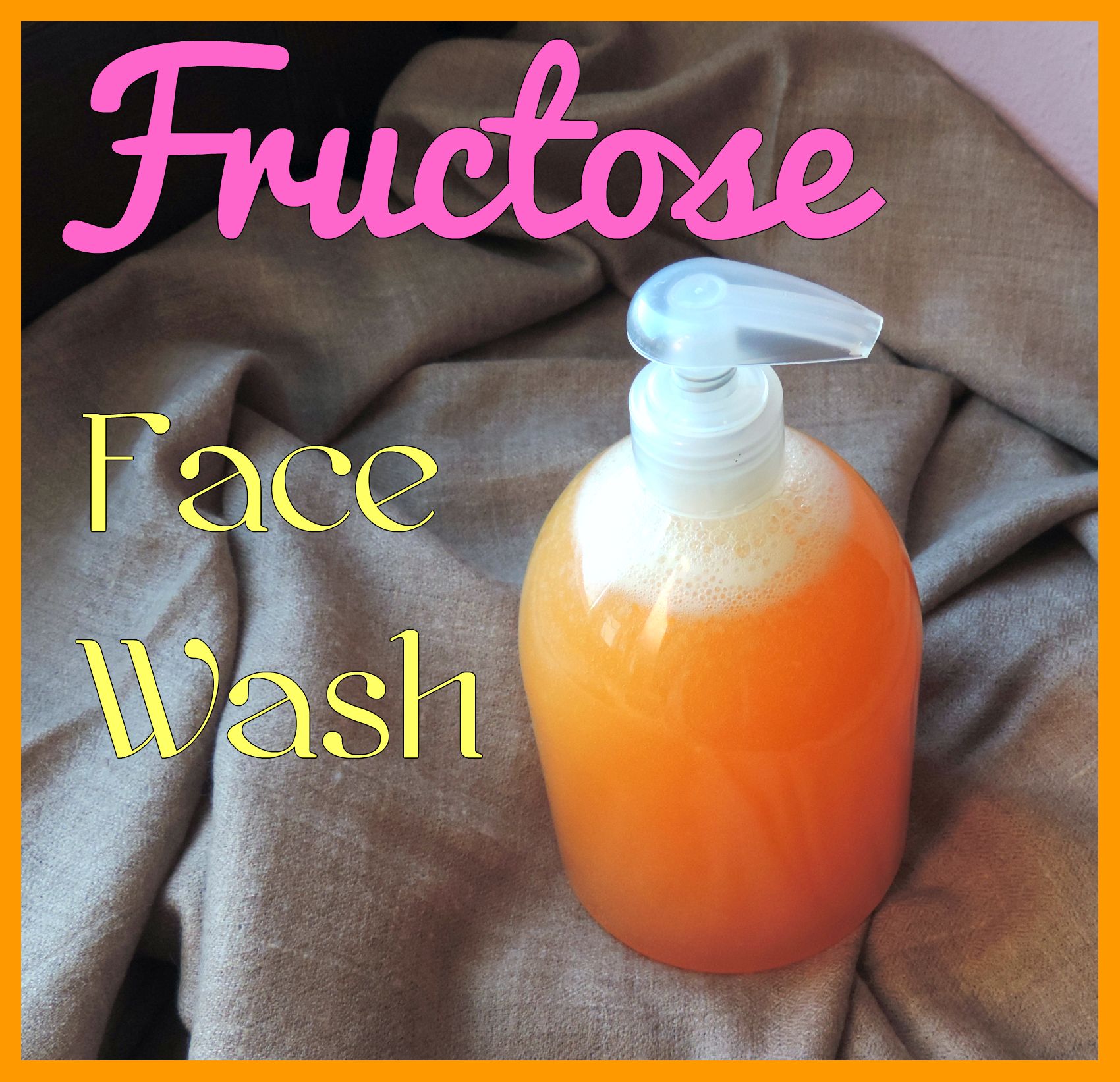
I decided to try an preserve this detergent with… SUGAR?!
Sugar at low concentration is very loved by bacteria, BUT at very high concentration (at minimum 35%) it actually “occupies” the water molecules and doesn’t let bacteria grow (IMPORTANT: this is not a suggestion to preserve your cosmetics with sugar, this is just my experiment for a theoretical idea).
I use FRUCTOSE in this recipe simply because it feels the best on the skin (it makes the detergent feel very silky and smooth), while other kinds of sugars don’t make the same effect.
Another good news about using sugar in the detergent is that it actually makes the detergent much milder and thicker! 😀
So, no drawbacks?
Yes and no 😀
The thing is that we cannot use this preserving system in every cosmetic (obviously). Just imagine how sticky a cream would be, or how it would glue the hair if we used this in a shampoo or an hair conditioner 😀 BUT at the same time I thought I could try it in a face wash.
Does it work 100% like a proper preserving system? I couldn’t say: I do not own a lab where I could test this detergent side by side with one preserved differently. This is just something I wanted to try.
Now… straight to the recipe! 😀
FORMULA:
Phase A:
Sodium Cocopolyglucoside Tartrate 5 (this is a very delicate surfactant. The bad side is that it might be a little bit smelly and it’s color is amber and therefore it doesn’t allow to make a very clear detergent. The good news is that, with just a concentration of 5% it doesn’t bring too much bad smell or color to the detergent).
Decyl Glucoside 4 (I am also using a combination of glucosides: they are also quite delicate surfactants, specially at this concentration 😉 )
Lauryl Glucoside 3
Coco Glucoside & Gliceryl Oleate 2
Essential Oil or Fragrance oil (enough) 😀
Phase B:
Water to 100
Glycerin 2.5
Fructose 45 (it should/could possibly be effective already at 35%, but I decided to use higher amount in this recipe for a couple of reasons: the first is that I want to have the best chance for it to be effective (since I CANNOT be really sure it will work), the second is that, being a face wash, it has very low amount of surfactants and they wouldn’t make my face wash thick enough… since the fructose helps thickening the detergent, I decided to avoid adding a gelling agent and I chose to increase the fructose percentage)
Phase C:
Cocamidopropyl Betaine 3 (this surfactant is to improve the foam)
Check the pH and (if needed) adjust to 5.5
Procedure is extremely simple!
HOW TO:
1) I measure the Phase A in a becher
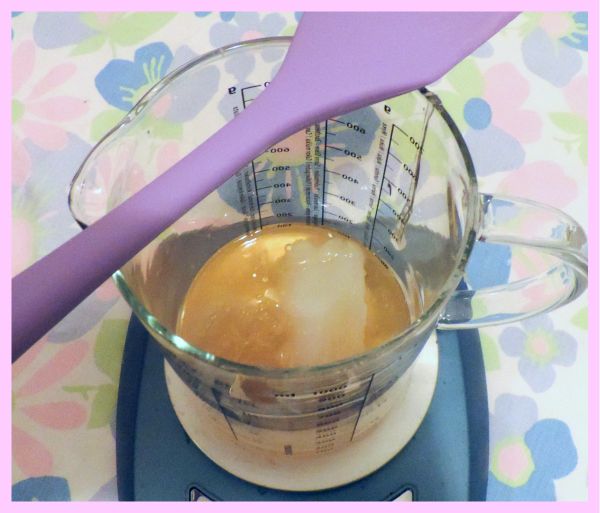
2) I mix it and put it aside
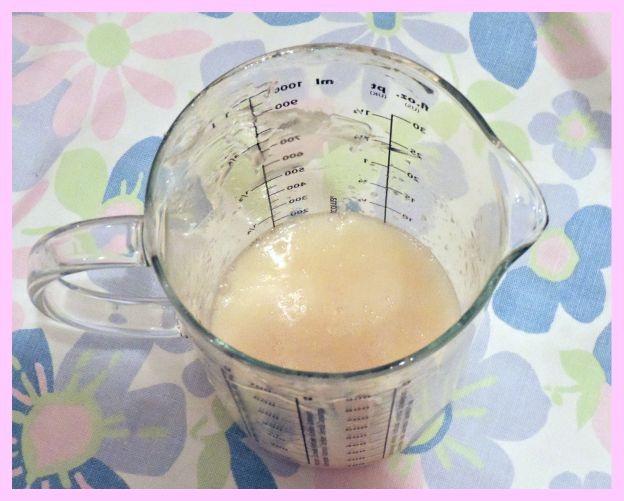
3) I measure the glycerin and the fructose
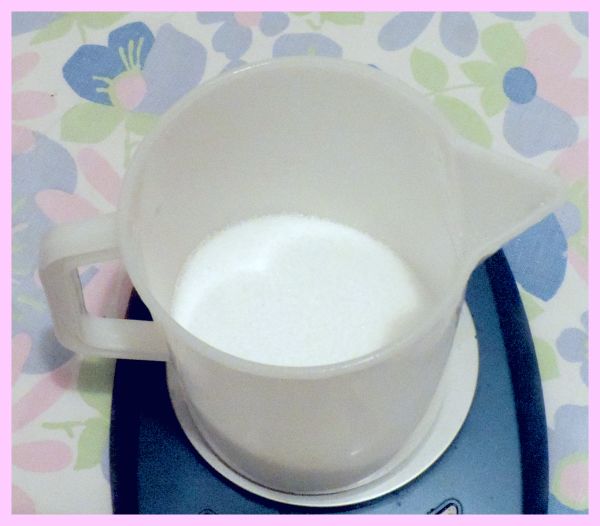
4) I add the water and mix
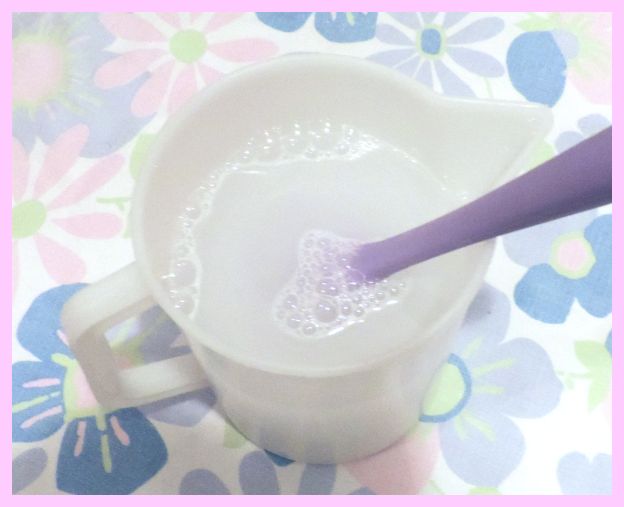
5) I mix the two phases together
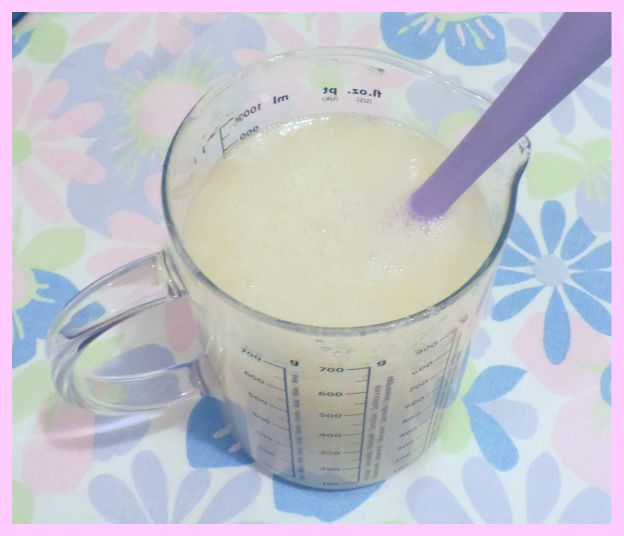
6) I add the last ingredient (Cocamidopropyl Betaine) and stir

7) I check the pH and adjust to 5.5 using a couple of drops of citric acid solution. [Yes, I also added a couple of drops of food grade colorant 😀 if you didn’t notice 😀 😀 😀 ]
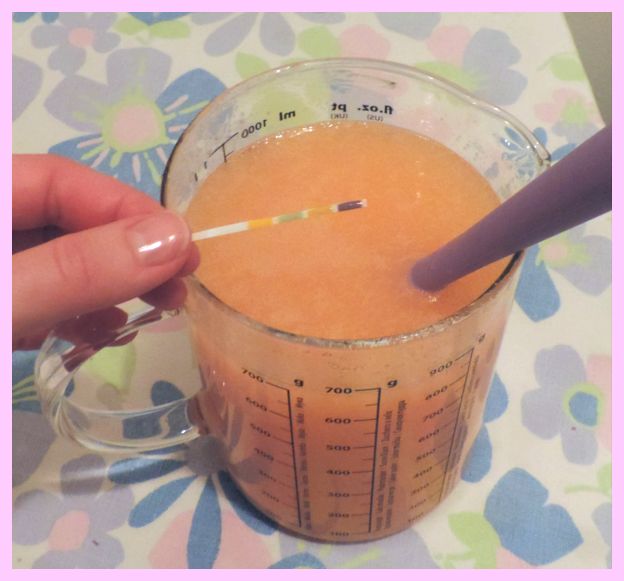
Hope you enjoyed this extremely simple formula for face wash! 😀
HAVE A GREAT DAY!! 😀

 IT'S ALL IN MY HANDS
Hi. Thanks for this great post. I have some questions:
1) Do 35% sugar level can preserve the product well? I did some research before and found that it needs at least 60% sugar to preserve a jam. (It is also included in FDA document I remember, but it may be wrong). What do you think about this?
2) I am trying to make a gentle facial wash with combination of Decyl Glucoside and CAPB (may include PEG-6 CAPRYLIC/CAPRIC GLYCERIDES if needed?), do you think this is a good combination?
I can find this blend: Water (and) Sodium Lauroyl Methyl Isethionate (and) Cocamidopropyl Betaine (and) Sodium Cocoyl Isethionate (and) Sodium Methyl Oleoyl Taurate (and) Trisodium Ethylenediamine Disuccinate if my blend above is not good.
P.S: I am loving your blog day by day, especially your writing style, a joy to read. Thank you again.
LikeLike
Hello!
About the 35% this is what I learnt in a course but I wouldn’t be able to tell if it needed more fructose. With this I mean that I don’t have any scientific argument to support this right now (I am on phone).
However the 60% sounds very high in a jam as well. Might be that it is a very high limit they have written since we are talking about a food item (jam), so maybe to be extra sure. However you could try adding a higher percentage of sugar in your detergent if you wish (I added 45%) .
I have never used CAPB, so it sounds fine but I have never even seen it (no idea about viscosity). Just by theory it could work!
Thank you for your kind words!!
Sorry I couldn’t be more helpful!
Have a great day!! 🙂
LikeLike
Oh, CAPB is Cocamidopropyl Betaine, I think there is a misunderstanding here, sorry he he.
You have a point about that high level of sugar in a fruit jam. With that amount of fruits, that level of sugar is required I think.
You did a great job in identifying how is a good shampoo, but how a about a good facial cleanser? 🙂 . I am dying to read your article about how to identify a good facial cleanser 😀 .
I still not understand why people include many surfactants in a facial cleanser, assuming that we dont need lots of bubbles for our face cleansing.
LikeLike
Oh I am sorry!! Decyl Gl and… CAPB might work fine. You might have to work on the viscosity, but you just have to experiment and of course it depends on how liquid or thick you want your face cleanser!
I think the subject would be huuuge to write a post 🙂 however consider just this:
1) yes, mixing many surfactants (specially in low %) makes the detergent usually more gentle, however…
2) formulators for commercial products cannot make a simple and easy formula with few ingredients because it would look unprofessional/ they are expected to create a new formula that others will find hard to duplicate/ it looks more cool (for people who don t know much about formulating detergents) to have a huge list of ingredients: many people think that everything is functional.
Well often this is not the case 🙂 there are very good products with simple formulas so just experiment and try to find what is best for you! 🙂
Good Luck!! 🙂
LikeLike
Thank you. You are absolutely right. But do you consider about cleaning property of the detergent? For ex my combination of Decyl Glucoside & CAPB might be very gentle, but will it clean enough? I am still learning about this 🙂
Hope you would write about making other types of facial cleanser in the future, as well as pros and cons 🙂 .
P.S: you seem to know EEting Ng, thus you might interested in Natural Skincare Formulation Group. 😉
LikeLike
I have read that people talk greatly about this combination in a shampoo! I never tried it myself 🙂 all you have to do is calculate the Active Surfactant matter between 10%-15% and make a small batch and try it! 🙂
You will find out only by experimenting! 🙂
Yes I know Eeting 🙂
LikeLike
Hi… I’ve been reading your blogs for awhile to get a better understanding about surfactants and all. I love your stuff!
I wanted to ask, sorry if you already made it clear but I couldn’t find the answer elsewhere in your site.
You have 3 different phases.
When you say water to 100 in phase B do I have to subtract from the other phases?
TQ
LikeLike
Hi, I made a post which explains “water to 100”.
It means that you add as much water as it is needed to reach 100 grams (or 100%, depends how you look at it) in the FULL formula.
So, if A contains a total of 20 grams, C contains 15 and B contains 5 grams + “water to 100” your water will be 100 – 20 – 15 – 5 = 60 grams of water.
Hope it’s clear 🙂
LikeLike