LAB NOTES & SAFETY NOTICE
For educational purposes only. Content reflects personal, non-professional formulation experiments and is not instructional.
No formula or information on this site is intended for commercial use, consumer application, or third-party use.
Accessing this content means you accept all risks and full responsibility for safety, testing, legal compliance, and outcomes.
[Full Legal Disclaimer & Safety Requirements]
Hello there!
This is a very simple recipe for a Two Phase Leave-in Hair Conditioner!
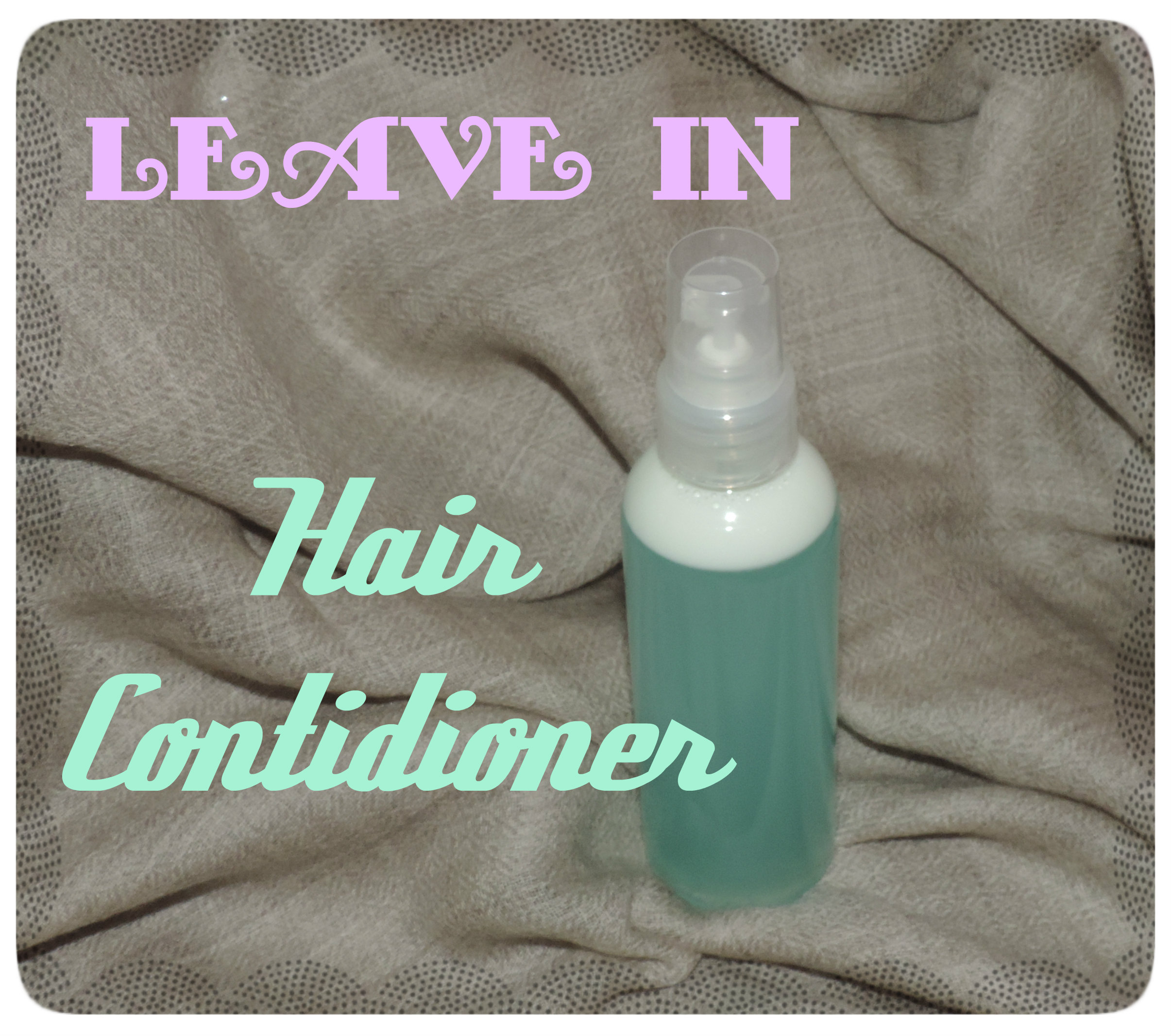
The prince ingredient here is Cetrimonium Chloride!
As you know this is a cationic surfactant with very high conditioning properties.
This Hair Conditioner is formulated for my hair-type: long and very thin, they tangle easily and they grease easily (so I added close to no grease to not make my hair get heavy).
FORMULA:
Phase A:
Water to 100 (explanation HERE)
Glycerin 2
Hydrolized Milk Protein 2 (proteins are a little gluey on the hair so 2% should be enough for my hair. They also help increase volume but they can become sticky at too high concentration).
Cetrimonium Chloride 3 (this is a very high amount but the thing is that this is a liquid hair conditioner and it needs to be sprayed on the hair).
D-Panthenol 1 (this is the Vitamin B5 which is very good for the hair 🙂 it is not essential for the conditioner)
Hydrophilic Preservative (I used Cosgard – 1%)
Phase B:
Coco Caprylate 2 (this is a synthetic oil with a very light feel. I don’t use natural oils on hair because they are more likely to get rancid and therefore make the hair smell bad. I could have also used jojoba oil because technically it is not an oil and it doesn’t get rancid!)
Phase C:
Polyquaternium 7 – 1 (this is a conditioning agent)
Quaternium 80 – 0.5 (another conditioning agent)
Fragrance Oil (enough 😀 )
Totally extra: I added a drop of food coloring
I also adjusted the pH using Citric Acid
If I had thick hair, I would have formulated like this:
I would have added 2% Inulin in the Phase A, warming up the phase briefly to help melt the inlulin. I would also omit the proteins because probably they would make my hair feel too stiff. I would have increased the oily phase but I wouldn’t go over 5% of fats in a hair conditioner. I could have complicated things adding 0.15% of Guar Hydroxypropyltrimonium Chloride to the Phase A (the water needs to be heated up to 70°C first… so I would have had to first gel the water, then let it cool down and continue with the rest of the formula as normal).
The original formula (without modifications) is made “cold” so there would be no need of heating anything at all and it doesn’t even take more than 5 minutes. The result is a very liquid, spay-able hair conditioner, which needs to be shaken before use (but if I can I will add a video of how cool it looks when you shake it 😀 ).
Yes: the Cetrimonium Chloride is a surfactant (cationic, precisely) and therefore it could “emulsify” a very small amount of oil… however we haven’t added in this recipe anything which could help stabilize the emulsion (I haven’t added any gelling agent nor a thickener… exactly because I want it to be liquid and I want to be able to spray it on my hair)… Therefore our emulsion won’t be stable and will separate after some time.
What is cool, though, is that the presence of this Cetrimonium C. will actually make it easy to mix water and oil once we shake the bottle!
Now to the HOW TO:
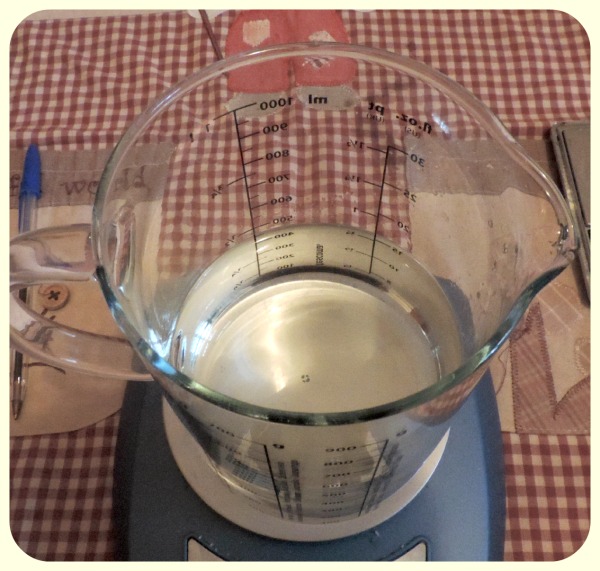
1) I mix all the Phase A in one becher:
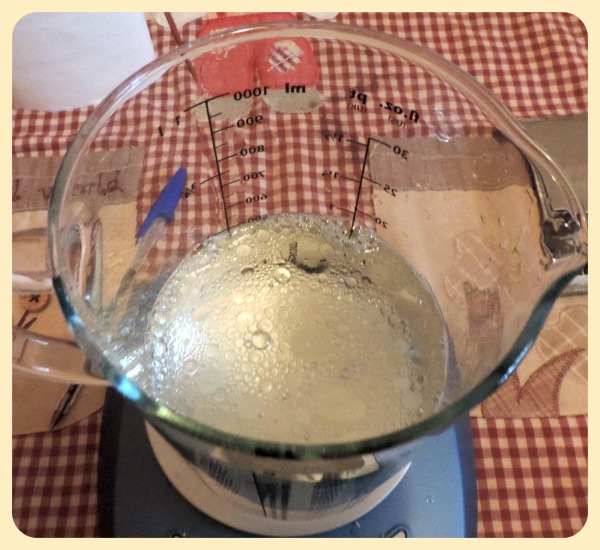
2) Then I add the Phase B (which in this case is very small: just one ingredient)
3) Eventually I mix with an immersion mixer and add the Phase C:
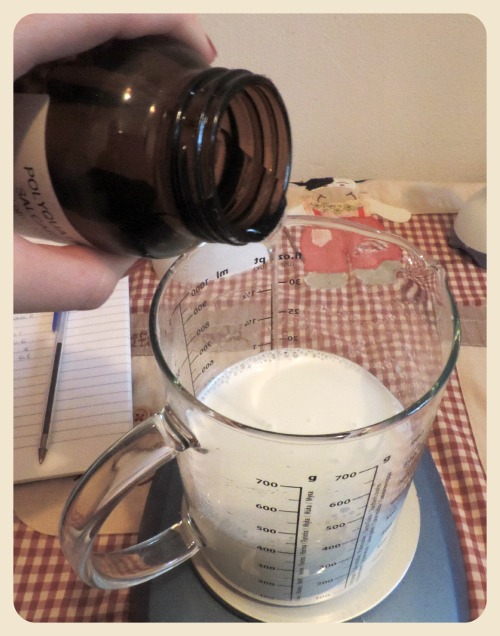
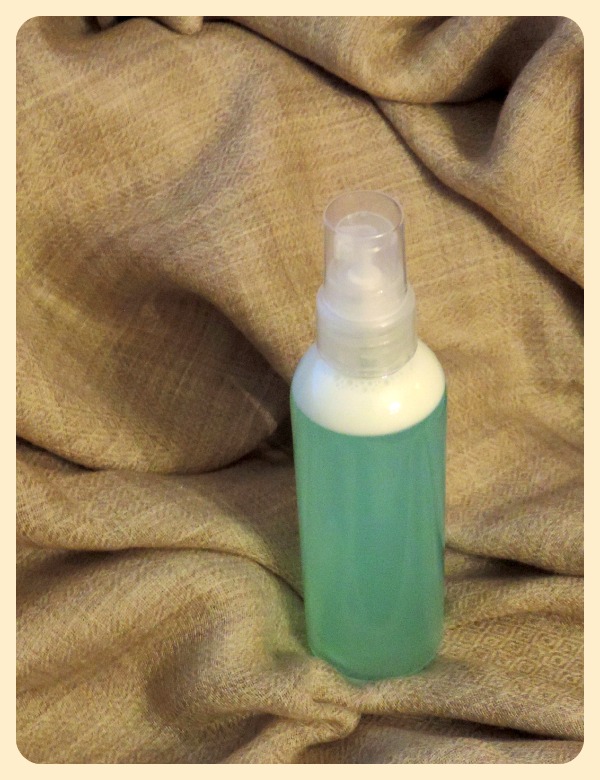
As you can see after mixing with an immersion mixer the solution is white, but once it will sit calmly for a while it will separate in two phases again.
I adjusted the pH to 4.5
I then added a drop of food coloring 😀
And Tadaaa 😀

 IT'S ALL IN MY HANDS
Nice Information, thanks for sharing. Hope we will read many other good things from you in future also. Regards
LikeLike
Thank you 🙂
LikeLike
oliwax (thickener & emulsifier)
olivEmuls (co emulsifier)
olive oil (emollient)
silcolive (olive derived silicone)
quinoa protein (color retention)
rice protein (volume)
baobab protein (nourish+recover)
silk amino acids (silkiness+glide)
keratin protein (protection)
phytenso(soy phospholipid complex)-a natural relaxer from lucas meyer cosmetics
all above 2% except EO 1% & preservative 0.5% & water to 100
is this my recipe for hair lotion i wanna use it as leave in conditioner i dont want to use btms
my budget is low and i cant afford experimenting so if could kindly let me know if this is correct or not ?
LikeLike
Alia, all those proteins are not really doin what you added in the brackets, all they do, at such a high total amount, is making your hair lotion impossible to preserve.
LikeLike
Ps. A leave in conditioner can condition only if you use a conditioning agent. A conditionin agent would be BTMS, but there are others as well. A leave in needs conditioning agents that can be left on the hair.
Any leave in will make your hair a little heavy (perfect if you want that).
What you have thought of making is simply a very sticky cream with no conditioning properties, so imagine applying a body cream on your hair and saying it is a leave in hair conditioner…. it won’t really make it a hair conditioner, right?
This said: I have written and explained how to make a REAL hair conditoner, you are free to not follow my guidelines but please don’t ask me to “correct” formulas that ignore what I have explained because I am just going to repeat myself.
LikeLike
thanks alot ! ❤
LikeLike
no no you got me wrong
or i said it wrong
this recipe i made is for a hair
cream / lotion
after cleaning my hair i dont use leave in conditioner
i use a hair cream/lotion as a leave in product to condition my hair ?
so what should i do to make the consistency correct?
and how many proteins can i add in a single protein
what if i am making a hair protein mask
how many proteins can i add in it?
LikeLike
A cream that conditions your hair needs to have an emulsifier which is a conditioning agent otherwise it is not going to condition your hair: any hair mask/conditioner is made with conditioning agents, not just any emulsifier.
If you use any emulsifier you will get a cream that is not conditioning. It will be like applying on your hair a normal body lotion.
You can add any kind of proteins but don’t go over 1.5-2% total
LikeLike
in a single product**
LikeLike
so a lotion with just an emulsifier be conditioning for skin and not hair
?
LikeLike
You are using “conditioning” in the wrong manner.
A simple lotion is moisturizing, a hair conditioner is conditionin because it contains a conditioning agent.
If a lotion contains a normal emulsifier, it is not “conditioning”
LikeLike
can i make this leave in conditioner with only rice quat as the conditioning agent? and how much should i use for fine limp hair?
LikeLike
I have never used it (it is not sold here) so I have no clue, experiment!
LikeLike
I have made a quick search for formulas made by others and found just one using it at 3% combined with 5% dipalmitolyethyl hydroxyethylmonium methosulfate, so I guess on its own it is not enough.
LikeLike
thanks alot
btw where r u frm
in which country u live
?
LikeLike
Europe
LikeLike
So is this like a conditioning hair spray? And if I didn’t want 2 phases would I have to add a solubiliser – like polysorbate 80? Back in the day when I braided my hair I had to use a hair and scalp spray to stop my scalp getting dry. The ingredients for that spray were: Water, Glycerin, Quat 75, Dimethicone, Methylparaben, PEG 75 Lanolin, Quat 75 (again), PEG 40 hydrogenated castor oil, Wheat Gluten, Urea and the list goes on for a while – but I think there is nothing good in it.
It would be nice to have a spray that hydrates / moisturises my scalp.
Was thinking to do something like. Water, Glycerin, centrimonium chloride, jojoba oil, olive oil hydrolysed protein, D Panthenol, coco caprylate And polysorbate 80? I’ve just made that mix up lol
LikeLike
You could try!
I have to say this leave in didn’t work great for me on the long run!
I used to have very long hair at the time and it wasn’t enough for me (I have thin brittle hair).
You can experiment (a solubilizer might do the trick) but I have found that to my hair and scalp the best was a good hair conditioner! I have posted the formula of my favourite a long time ago. It is the banana conditioner or something like that! 🙂
LikeLike
I noticed that you dont use BTMS in your reciepes for conditioners, any reason for that?
LikeLike
It just wasn’t available from the stores I used to purchase from. I have used it now but it is just not my fav 🙂
LikeLike
I noticed that you dont use BTMS in your reciepes for conditioners, any reason for that?
LikeLike
Thanks for this recipe. I am going to try your banana smoothie conditioner this weekend. I have a question about this leave in recipe. I have dry, curly processed hair and prefer to use a leave in that is thicker, in a pump bottle that I can scrunch into my hair. Would do you think about me adding 4% BTMS to this formula?
LikeLike
No I don’t think this leave in formula is good enough for curly processed hair.
Do the banana smoothie and use that as a leave in, not this two-phase.
Ps. It does get thick the banana smoothie one: it is not liquid 😉 no need to add BT S
LikeLike
Hi – love your site, thank you so much for taking the trouble!. you mentioned in your blog “The truth about silicone” that you use silicone in your conditioners (at around 1%) – can you tell me which of the compounds in your receipes are silicones ( I cannot spot them). Also – is there a powder form silicone I could use when formulating a conditioning bar- or is the amount so small the bar will still be solid without it. (Also is there a powder silicone that will ‘dissolve’ in hot water with stiring – and then act like a silicone on the hair). Thank you 🙂
LikeLike
Hello Jill,
Here the silicone is the Quaternium 80.
It doesn’t sound like the typical silicone names… But it is one nevertheless 🙂
I have never had powder silicone and I am not informed is they exist in powder form. I do have quite many and they are all in liquid form (more or less thick). Some look like extremely thick shiny gels (can’t be poured, very sticky), some look like very very thick opaque gels… Others are instead very thin and liquid (also easily volatile).
I think you could use a liquid form in a 1% bar, check that it is not the volatile kind and that it is ok with heating.
Silicones are not water soluble and to be able to solubilize them you need specific emulsifiers 🙂
LikeLike
Oh my gosh…THANK YOU!!!! I have been searching for DAYS on-line for a conditioner. I have found tons of lotion bars claiming to be conditioners (ugh). I have also found a bunch of actual conditioner formulations but every single one of them includes oil(s). I happen to have the exact hair type you do: long and fine (and now quite this due to breakage…I know). So, THANK YOU THANK YOU THANK YOU! Not only fir your formulation, but for your detailed explanation of WHY you formulated what you did. So incredibly helpful. Haha, I haven’t even made or used your formulation yet, but I am going to for sure and I know I will really like it.
LikeLiked by 1 person
Hi Amanda! Actually between this and my other banana conditioner I suggest you try doing that one: it was much much better than this one and I made it multiple times. I did add oils to that one but in so low percentage that you can choose to omit them! 🙂
LikeLike
hello sir,
I would like to make a two phase hair spray which has at least 30% of cyclopentasiloxane. so that above phase (oil phase) has a milky appearance. would you please guide me?
LikeLike
Hi Ehsan, I am not sure if that high concentration of cyclopentasiloxane is allowed in cosmetics. I might be wrong, but I think the allowed concentration is much lower due to the high volatility of it. But please double check this as I am not 100% sure
LikeLike