LAB NOTES & SAFETY NOTICE
For educational purposes only. Content reflects personal, non-professional formulation experiments and is not instructional.
No formula or information on this site is intended for commercial use, consumer application, or third-party use.
Accessing this content means you accept all risks and full responsibility for safety, testing, legal compliance, and outcomes.
[Full Legal Disclaimer & Safety Requirements]
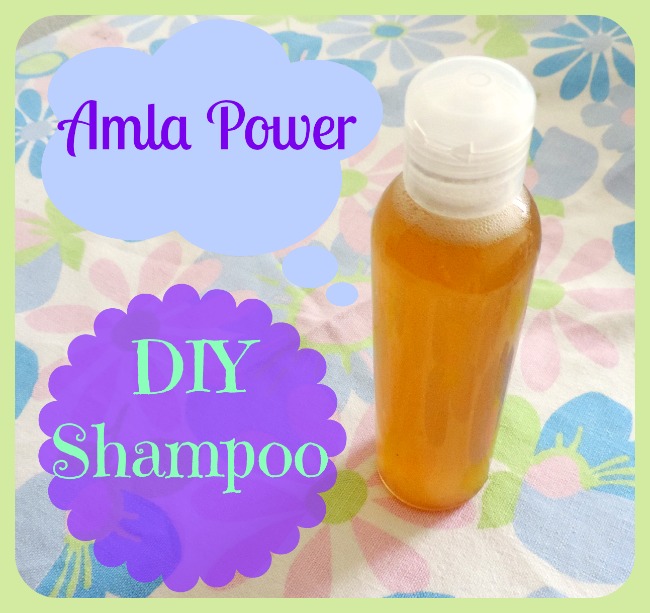
Lab Note: “Amla Power” Spicy Shampoo (The Poetic Effect!)
Hello Hello! 😀 Instead of trying to invent a “miracle anti-gravity” cream today, I decided to focus on something I really needed: a new shampoo!
I formulated this one for the “Autumn hair loss” season. I’m not saying I found a high-tech miracle cure—I’m not even sure those exist! Instead, I used a simple trick: Spicy Essential Oils to help stimulate blood circulation in the scalp. Plus, I added the “Prince” of Indian hair care: Amla Powder!
The Amla Legend
I bought this Amla in India. There, it’s believed to do everything: strengthen follicles, stop dandruff, prevent graying, and even straighten hair! Sips water. If you know me, you know I don’t blindly believe in miracles, but I love the history of Amla, so I added it for The Poetic Effect. 🙂
A Formulator’s Warning: Adding powders to shampoo is tricky! Unless your shampoo is super thick, the powder will eventually sink to the bottom. It can also mess with stability, so I used a higher level of preservative and made a small batch (100g) to be used quickly!
The Formula: Spicy Amla Power
Phase A:
-
Water: to 100
-
Amla Powder: 0.2 (For the poetry!)
-
Glycerin: 3.0
-
Inulin: 1.0 (For smoothing)
-
Hydrolyzed Silk Proteins: 2.5
-
Preservative (Cosgard): 1.0
Phase B (The Surfactant Base):
-
SLES: 25.0
-
Coco Glucoside / Glyceryl Oleate: 2.5
-
Decyl Glucoside: 2.5
Phase C (The “Spice” & Conditioning):
-
Polyquaternium 7: 2.0 (The conditioner)
-
EO of Cinnamon: 10 drops
-
EO of Cardamom: 5 drops
-
EO of Sweet Orange: 5 drops
Phase D (The Thickener):
-
Cocamidopropyl Betaine: 10.0 (The key to the texture!)
-
pH adjusted to 4.5 with Citric Acid
Notes from my Beaker:
-
Dispersing the Amla: At first, the Amla powder just floated there, so I hit it with the immersion mixer until Phase A was uniform.
-
Surfactant Magic: I mixed the Phase B surfactants first. It’s always satisfying to see that thick, pearly density start to form!
-
One by One: I added the Phase C ingredients (Polyquat and oils) to the surfactants one at a time. I’m not very patient about bubbles :D, so there were a few, but that’s okay!
-
The Big Mix: I poured the watery Phase A into the thick Phase B very slowly. It became very liquid at first—but don’t panic!
-
The “Betaine Flip”: As soon as I added the Cocamidopropyl Betaine (Phase D), the whole thing became dense and thick like a real shampoo. It’s my favorite part of the process!
Final Verdict: It smells incredible—like a spicy tea for your head! My hair felt strong and the scalp felt “awake.” Just remember to shake it if the Amla starts to settle!

 IT'S ALL IN MY HANDS
i love love all ur recipes
they r all effective
can u plz help me formulate a natural hair straightening or relaxing
cream or conditioner
thats the only thing i dint find on ur site and anywhere on net
LikeLike
You can add 2%-4% Inulin to the hair conditioner formula.
Inulin helps straightening hairs! However it tends to make them feel a little heavy so try 2% first: it might be enough!! 🙂
(Thanks for the kind words!!) 🙂
LikeLike
thanks alot
u r awesome
LikeLike
Ahah thanks 🙂
LikeLike
IS IT POSSIBLE TO EXTRACT AMLA PROPERTIES IN LIQUID FORM ? SORT OF IN FORM OF ESSENTIAL OIL… OR ALTERNATIVELY SOAK AMLA POWDER IN WATER TO EXTRACT IT’S PROPERTIES AS MUCH AS POSSIBLE & FILTER OUT TO REMOVE THE POWDER PARTICLES… I ASK THESE QUESTIONS BECAUSE OF POWDER DEPOSITING TO THE BOTTOM… WILL APPRECIATE YOUR COMMENTS…
LikeLike
Extracts can be made with a solvent. Depending of what you want to extract, the solvent could be water, an acid, a base or other solvents like alcohol, propylene glycol and so on.
However, you will have to consider stability issues of the compound, in particular if you use water.
LikeLike
I do not have Inulin, but all the rest. Can I add Panthenol , if so at what percentage …
LikeLike
What is the reason for adding panthenol?
Inulin gives a different effect on the hair, but panthenol will be just washed away.
You CAN add it, but I don’t suggest it 🙂 it would ne a waste of a good ingredient.
LikeLike
Makes sense. I checked with my vendors here , they dont seem to stock Inulin, any close substitute that you may want to suggest .. Or How To compensate Inulin’s %
LikeLike
Is Inulin the same which is consumed also ? I checked on Amazon and got a few Inulin powder jars, not sure if the same is talked about in your recipe.
Your input would be very helpful. Many thanks !
LikeLike
Makes sense ! Any close substitute to Inulin , that you may want to suggest..
I saw Inulin powder on Amazon , can that be used or there is a different Inulin for using in Hair care…
How do I compensate for its % in the recipe .. Many thanks in advance
LikeLike
I don’t know what’s in that inulin. It migght be ok or it might be a pill and therefore contain other ingredients as well.
If you don’t have inulin just use water 🙂
LikeLike
hy..the substitute for SLES (sodium laureth sulphate)? I wont to try this recipe. Thanks..thanks!! wonderful post!
LikeLike