LAB NOTES & SAFETY NOTICE
For educational purposes only. Content reflects personal, non-professional formulation experiments and is not instructional.
No formula or information on this site is intended for commercial use, consumer application, or third-party use.
Accessing this content means you accept all risks and full responsibility for safety, testing, legal compliance, and outcomes.
[Full Legal Disclaimer & Safety Requirements]
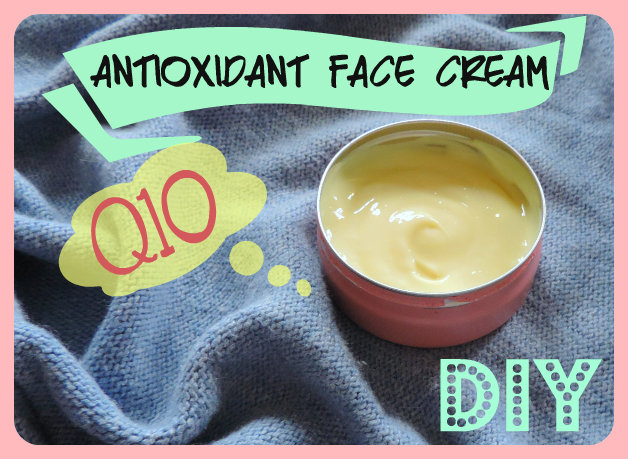
Lab Note: My “Antioxidant Network” Experiment!
Hello Hello! 😀 Today I am so excited to share an experiment that is a bit “brainy” but so cool! I call it the Antioxidant Network. Usually, we just pick one “hero” ingredient like Vitamin C, but I wanted to try something different. I wanted to build a team!
The idea is the Redox Theory—it’s like a relay race for your skin. When one antioxidant gets “tired” from fighting free radicals, the others step in to “recharge” it so the whole system keeps working. It’s synergy in a jar! yeheee! 😀
The Team Members:
-
Coenzyme Q10: The energy booster! It gives the cream a lovely yellow tint.
-
SAP (Vitamin C): I used Sodium Ascorbyl Phosphate because it’s way less “grumpy” and irritating than pure Vitamin C.
-
Alpha-Lipoic Acid (0.5%): The “Universal” antioxidant. Warning: This stuff has a “Hell-Smell” of its own—it’s very sulfuric! I only used 0.5% because I wanted the benefits without smelling like a matchstick factory. 😛
-
Vitamin E: To protect the oils and the skin’s lipids.
The Emulsifier “Fuss”: Hitecream 3000
I played with Hitecream 3000 for this one. It’s a vegetable, protein-based emulsifier that’s supposed to be super skin-compatible. I used it at 7% on its own. It gave a stable cream, but next time I might drop it to 5% and add a bit of Cetyl Alcohol to make the texture feel a bit more “posh.”
The Formula I Used:
Phase A:
-
Distilled Water: to 100
-
Glycerin: 2.0
-
Carbopol Ultrez 21 / Xanthan: 0.3 / 0.2 (My hybrid gelling system!)
Phase B:
-
Hitecream 3000: 7.0
-
Kokum & Murumuru Butters: 1.5 / 1.0 (Love my dry butters!)
-
Dicaprylyl Ether: 1.5
-
Tocopherol (Vitamin E): 1.0
Phase C (The Antioxidant Cold Phase):
-
Safflower & Ribes Nigrum Oils: 0.5 / 0.5
-
Q10 / Alpha-Lipoic Acid: 0.1 / 0.5
Phase D (The Finishing Touch):
-
SAP (Vitamin C): 1.0
-
Rose Water: 10.0 (To dissolve the SAP)
-
D-Panthenol / Preservative: 1.0 / q.s.
Notes from my Beaker:
-
The “No-Stir” Trick: For the Carbopol Ultrez 21, I just let it float on the water until it hydrated itself. No clumps, no stress! Then I added my Xanthan-Glycerin slurry.
-
Heat it Up: Hitecream needs to hit 70°C to wake up and start working.
-
The Cooling Phase: I was very careful here. I pre-dispersed the Q10 and that stinky Alpha-Lipoic acid in the cold oils (Phase C) and only added them when the cream was cool. I also dissolved the SAP in Rose Water before stirring it in.
-
The Look: The Q10 makes it a pale yellow, but I added one drop of food colorant just to make it look “fresh” and pretty on my vanity.
Final Verdict: The synergy between the SAP and the Q10 really made my skin look vibrant! Even with the slight “sulfur” hint from the Alpha-Lipoic acid, I really liked how this cream performed. It feels like a high-tech shield for the face! ENJOY! 🙂

 IT'S ALL IN MY HANDS