Amla Power – DIY Spicy Shampoo

LAB NOTES & SAFETY NOTICE
For educational purposes only. Content reflects personal, non-professional formulation experiments and is not instructional.
No formula or information on this site is intended for commercial use, consumer application, or third-party use.
Accessing this content means you accept all risks and full responsibility for safety, testing, legal compliance, and outcomes.
[Full Legal Disclaimer & Safety Requirements]
Amla Power DIY Shampoo

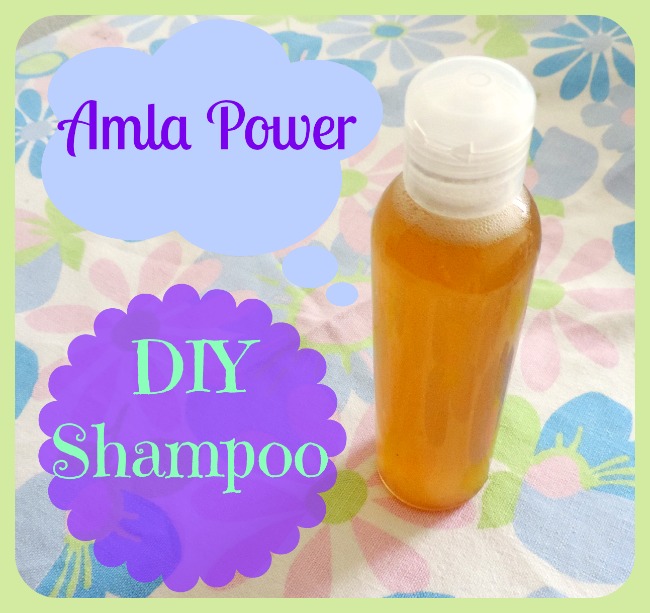
Lab Note: “Amla Power” Spicy Shampoo (The Poetic Effect!)

Hello Hello! 😀 Instead of trying to invent a “miracle anti-gravity” cream today, I decided to focus on something I really needed: a new shampoo!

I formulated this one for the “Autumn hair loss” season. I’m not saying I found a high-tech miracle cure—I’m not even sure those exist! Instead, I used a simple trick: Spicy Essential Oils to help stimulate blood circulation in the scalp. Plus, I added the “Prince” of Indian hair care: Amla Powder!

The Amla Legend

I bought this Amla in India. There, it’s believed to do everything: strengthen follicles, stop dandruff, prevent graying, and even straighten hair! Sips water. If you know me, you know I don’t blindly believe in miracles, but I love the history of Amla, so I added it for The Poetic Effect. 🙂

A Formulator’s Warning: Adding powders to shampoo is tricky! Unless your shampoo is super thick, the powder will eventually sink to the bottom. It can also mess with stability, so I used a higher level of preservative and made a small batch (100g) to be used quickly!


The Formula: Spicy Amla Power

Phase A:

  • Water: to 100

  • Amla Powder: 0.2 (For the poetry!)

  • Glycerin: 3.0

  • Inulin: 1.0 (For smoothing)

  • Hydrolyzed Silk Proteins: 2.5

  • Preservative (Cosgard): 1.0

Phase B (The Surfactant Base):

  • SLES: 25.0

  • Coco Glucoside / Glyceryl Oleate: 2.5

  • Decyl Glucoside: 2.5

Phase C (The “Spice” & Conditioning):

  • Polyquaternium 7: 2.0 (The conditioner)

  • EO of Cinnamon: 10 drops

  • EO of Cardamom: 5 drops

  • EO of Sweet Orange: 5 drops

Phase D (The Thickener):

  • Cocamidopropyl Betaine: 10.0 (The key to the texture!)

  • pH adjusted to 4.5 with Citric Acid


Notes from my Beaker:

  1. Dispersing the Amla: At first, the Amla powder just floated there, so I hit it with the immersion mixer until Phase A was uniform.

  2. Surfactant Magic: I mixed the Phase B surfactants first. It’s always satisfying to see that thick, pearly density start to form!

  3. One by One: I added the Phase C ingredients (Polyquat and oils) to the surfactants one at a time. I’m not very patient about bubbles :D, so there were a few, but that’s okay!

  4. The Big Mix: I poured the watery Phase A into the thick Phase B very slowly. It became very liquid at first—but don’t panic!

  5. The “Betaine Flip”: As soon as I added the Cocamidopropyl Betaine (Phase D), the whole thing became dense and thick like a real shampoo. It’s my favorite part of the process!

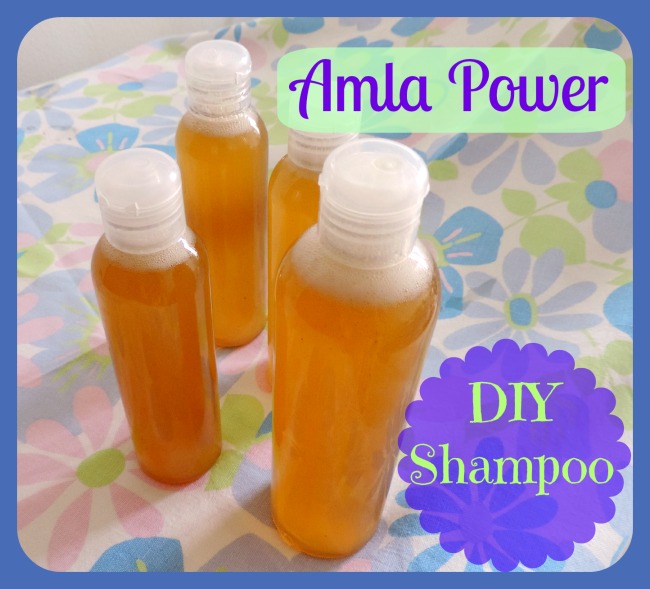
Final Verdict: It smells incredible—like a spicy tea for your head! My hair felt strong and the scalp felt “awake.” Just remember to shake it if the Amla starts to settle!
Amla Power Shampoo


How to formulate a detergent – THEORY pt.2

LAB NOTES & SAFETY NOTICE
These are personal experiments for educational use only— not instructions and not for commercial or consumer use. By proceeding, you assume all risks related to safety, testing, and regulatory compliance.
[Full Legal Disclaimer & Safety Requirements]

How to formulate a detergent

My Lab Notes: Surfactant Assembly & Phase Logic

Hello Hello! 😀

I’ve been recording my experiments with detergents, and I’ve realized it’s about so much more than just getting the skin clean. It’s about managing the “Micellar structure” so the product feels professional.

1. My “Trio-Strategy” for Softness

I’ve documented that a single-surfactant system is usually too harsh for my skin. I’ve started using a three-part team:

  • Primary: My “cleaning engine” (like SLES).

  • Secondary: A “buffer” like Cocamidopropyl Betaine to reduce irritation.

  • Aesthetics: A tiny bit of Glyceryl Oleate to make the lather feel like luxury.

2. My Thickening Observations

I’ve noticed that people associate thickness with quality, so I’ve been testing three reliable ways to build “body”:

  • The Salt-Curve: I’ve recorded that SLES becomes extremely dense when I add electrolytes (salt) because it forces the micelles to pack tighter.

  • The pH Trigger: In my experiments with Sarcosinate, the texture changes completely at pH 5.0. It goes from thin to thick almost instantly!

  • Polymeric Support: If the surfactants are being stubborn, I use Xanthan Gum (<1%) in Phase A to get the flow I want.

3. My Assembly Protocol (Avoiding the “Crash”)

I have to be very careful with the order of addition to avoid “crashing” the formula or making it cloudy.

  • Phase A (The Aqueous Foundation): I hydrate my gums and glycerin here.

  • Phase B (The Concentrate): This is where my main surfactants go. Sips water. I’ve learned to mix these very slowly with a spatula—no immersion mixers allowed, or I’ll end up with a beaker full of air bubbles!

  • Phase C (The Trigger): This is my favorite part. When I add the Betaine and the pH adjusters at the end, I often see the “thickening moment” happen right before my eyes.

Final Lab Thought

Formulating detergents is a game of patience. If I rush the mixing, I lose the clarity. A thin gel still cleans, but I’ve found that a thick, glossy gel is what makes the experience feel truly professional. It’s all in my hands! 😉

HAVE A GREAT DAY! 😄

How to formulate a detergent – THEORY pt. 1

How to formulate a detergent

LAB NOTES & SAFETY NOTICE
These are personal experiments for educational use only— not instructions and not for commercial or consumer use. By proceeding, you assume all risks related to safety, testing, and regulatory compliance.
[Full Legal Disclaimer & Safety Requirements]

My Lab Notes: Surfactant Theory & The Chemistry of Cleansing

Hello Hello! 😀

I’m recording my research into surfactants (Surface Active Agents). These are the amphiphilic molecules that make my cleansers work. Their “water-loving” head and “oil-loving” tail are what allow them to lift debris from the skin.

1. The Four Groups (My Personality Map)

Surfactants can be categorized by their electrical charge. It’s the easiest way to predict how they’ll interact with skin and hair:

  • Anionic (-): My “powerhouses” for foam and cleaning (SLES, Sarcosinate).

  • Cationic (+): I use these for conditioning because they “stick” to the negatively charged hair shaft.

  • Non-Ionic (0): Usually mild stabilizers (Glucosides).

  • Amphoteric (+/-): My “buffers.” I’ve found these are essential for reducing the irritancy of the Anionics (Betaine).

2. The ASM Calculation (Active Matter)

I’ve documented a common trap: raw surfactants are rarely 100% pure. They are usually solutions.

  • The ASM Coefficient: Always check my supplier’s sheet. For instance, if my SLES is 27% ASM, I have to calculate my formula based on that “pure” percentage, not the total weight of the liquid.

My Target ASM Hierarchy:

Based on my trials, I’ve set these “strength targets” for my formulas:

  • Intimate Wash: ~5% ASM

  • Face Wash: <10% ASM

  • Shampoo: 10% – 15% ASM

  • Shower Gel: 18% – 20% ASM

  • Bubble Bath: 20% – 25% ASM

3. The Synergy Discovery

One of the most important things I’ve recorded is that synergy reduces irritancy.
Using 12% ASM of a single surfactant is much harsher than a 12% blend of three different types. I now always use a “Trio” (Primary + Buffer + Aesthetic Booster) to keep the skin barrier happy.

Self note: It’s important that I keep checking the Technical Data Sheets. Sometimes the same ingredient can vary between 27% and 30% ASM depending on the batch!

It’s all about layering the charges correctly to get a product that cleans without being aggressive.