LAB NOTES & SAFETY NOTICE
For educational purposes only. Content reflects personal, non-professional formulation experiments and is not instructional.
No formula or information on this site is intended for commercial use, consumer application, or third-party use.
Accessing this content means you accept all risks and full responsibility for safety, testing, legal compliance, and outcomes.
[Full Legal Disclaimer & Safety Requirements]
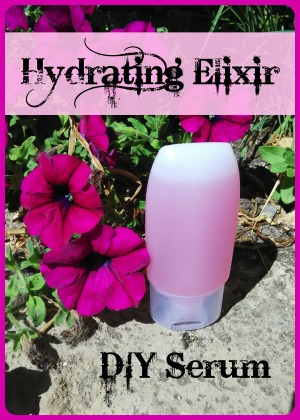
Hello Hello! 😀 Today I share one of my last experiments in the home “lsab”. Where I live, we had days over 40°C, and I just wanted something that felt icy and refreshing. I decided to formulate a serum that behaves perfectly when stored in the fridge—though I always remind myself: even if it’s cold, THERE IS NO ESCAPE FROM PRESERVATIVES! 😀
This is an “upgraded” version of my basic Hyaluronic Acid gel. I wanted to include two salts that I usually can’t put in my lotions because my favorite polymeric emulsifiers are such picky divas when it comes to salts! But in a simple water-based serum, they are absolute stars.
The Formula I Used:
-
Water: to 100%
-
Sodium Hyaluronate (high molecular weight): 1%
-
Sodium Hyaluronate (low molecular weight): 0.5%
-
Sodium Lactate: 2%
-
Sodium PCA: 1%
-
Niacinamide (Vitamin B3): 2.5%
-
D-Panthenol: 0.5%
-
Phenonip: 0.5%
-
Fragrance oil (Rock Candy): 0.2%
Notes from my Beaker:
-
The Hyaluronic “Fuss”: I measured out the water and poured the high molecular weight HA on top. Usually, I try to be patient and let it hydrate naturally, but I was in a rush! I used a stick blender which made it cloudy at first, but after a few days, it turned perfectly transparent. I did the same with the low molecular weight version right after.
-
The Humectant Boost: I added the Sodium Lactate and Sodium PCA next. Since these are naturally found in our skin (NMF), they make the serum feel so high-performing.
-
The Niacinamide Caution: I love using Vitamin B3 in the summer, but it’s so sensitive to pH. I measured mine and it was around 7.5, so I used a couple of drops of lactic acid to bring it down to pH 6.5. It’s essential to keep it in that neutral range!
-
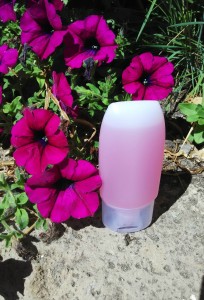
A Touch of Pink: I added one drop of pink food colorant just to pamper myself. It wasn’t a necessity, but it looks so pretty in the bottle!
-
The Scent: I used a “Rock Candy” fragrance (the Rock Star dupe) and I absolutely LOVE it.
Final Verdict: I was a bit worried that with so many hygroscopic ingredients, it would feel sticky in the 40°C heat, but it’s not at all! I think the Niacinamide really helps with that. I only apply one drop and my skin feels unbelievably smooth. It’s the perfect “fridge treat” for the face. ENJOY! 🙂
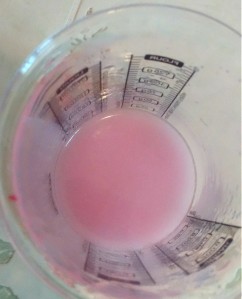
I have added one drop of pink food colorant cause I like to pamper myself with colors. Was it a necessity? Nope.
The Fragrance Oil used in this Serum was Rock Candy from Sensory Perfection (the L**h dupe for “Rock Star”) and I LOVE IT! 🙂
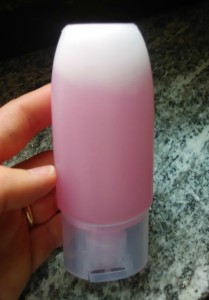

 IT'S ALL IN MY HANDS
Very nice DIY
LikeLiked by 1 person
Thank you! 🙂
LikeLike
Hello. Thanks for interesting post. I made this HA last week and i would want to add few more active ingredients.
Can i add propanediol, sesaflash and silk peptide, vitamin B3 to this HA serum? I domt know if it would be appropriate.
And i use preservative PE 9010. They dont sale phenonip here 😂 Have you used it before?
Thanks, Allie.
LikeLike
And coenzym q10, too. ^
LikeLike
Q10 is not soluble in water and this is an oil free formula without an emulsifier so you would need to make a lotion and not a cream, add some polar oils and an emulsifier as well.
LikeLike
What is the INCI of PE 9010? I don’t know that commercial name.
It would have been better to add the ingredients in the formula in the beginning because if you add anything now, the formula won’t be in % anymore (you will have added a % of preservative enough for 100% of formula but if you add 5 grams of something else now, you will have 105 grams of product and the preservative for 100 grams).
However! You could add something to that serum, but why would you add propanediol?
Vitamin B 3 is the one I have added here as well, you can add it but absolutely check the pH before and after you do (if the pH is not right, this ingredient becomes nasty for the skin).
Silk peptide, I guess that is hydrolozed, so it should be fine 😉 I have doubts about propanediol: I haven’t tried it now but I don’t know what effect it would have and I am not sure about its solubility?
LikeLike
I have lactic acid at 100%. Is it safe to add in order to adjust ph to 6-6.5?
Thanks
De
LikeLike
Hello,
Yes you can add lactic acid, just be sure to add ONE or two drops at a time, stir very well and measure the pH until you reach the desired pH. 🙂
LikeLike
Thank you for your quick response. I am very excited to try it on.
LikeLike
Let me know if you like it 🙂
LikeLike
Can I use lactic acid instead of sodium lactate?
LikeLike
They are not the same thing, but you can MAKE sodium lactate by mixing lactic acid with sodium hydroxide.
Pay attention though cause you would be mixing an acid with a strong base (melt it in water first, don’t add it to the acid in powder form) and it will be a very strong reaction.
Use all precautions (open air or room with a big window, goggles, thick gloves, etc)!!!
LikeLike
Hi, can these serum be add to base cream.
Thanks
LikeLike
If you do it in a very small quantity and just before use. Otherwise they bring instability.
LikeLike
Hi, first thank you so much for this DIY. Can you please tell the pH range for niacinamide to be non-irritant to the skin. If I replace sum % of water with aloe-vera juice will there be a problem with pH?
LikeLike
The pH should be around 7!
Aloe vera juice isn’t ideal cause it needs low pH to be better preserved. 🙂
LikeLike
Hi can we skip fregrant oil
LikeLike
Of course
LikeLike
Very interesting diy
LikeLike
Love your formulas. Everything have worked for me perfectly
LikeLiked by 1 person
Would love to add B5 to use this serum after micro needling. How much do I have to add and what the Ph needs to be at the end?
Thanks for your help.
LikeLike
Actually the niacinamide in this serum is already the vitamin B5.
I wouldn’t suggest using it right after microneedling as it can cause a bit of irritation, so given that microneedling does already irritate the skin a little I would go for a very basic hyaluronic acid instead. You could use this maybe the day after microneedling if your skin doesn’t burn 🙂
LikeLike