LAB NOTES & SAFETY NOTICE
These are personal experiments for educational use only— not instructions and not for commercial or consumer use. By proceeding, you assume all risks related to safety, testing, and regulatory compliance.
[Full Legal Disclaimer & Safety Requirements]
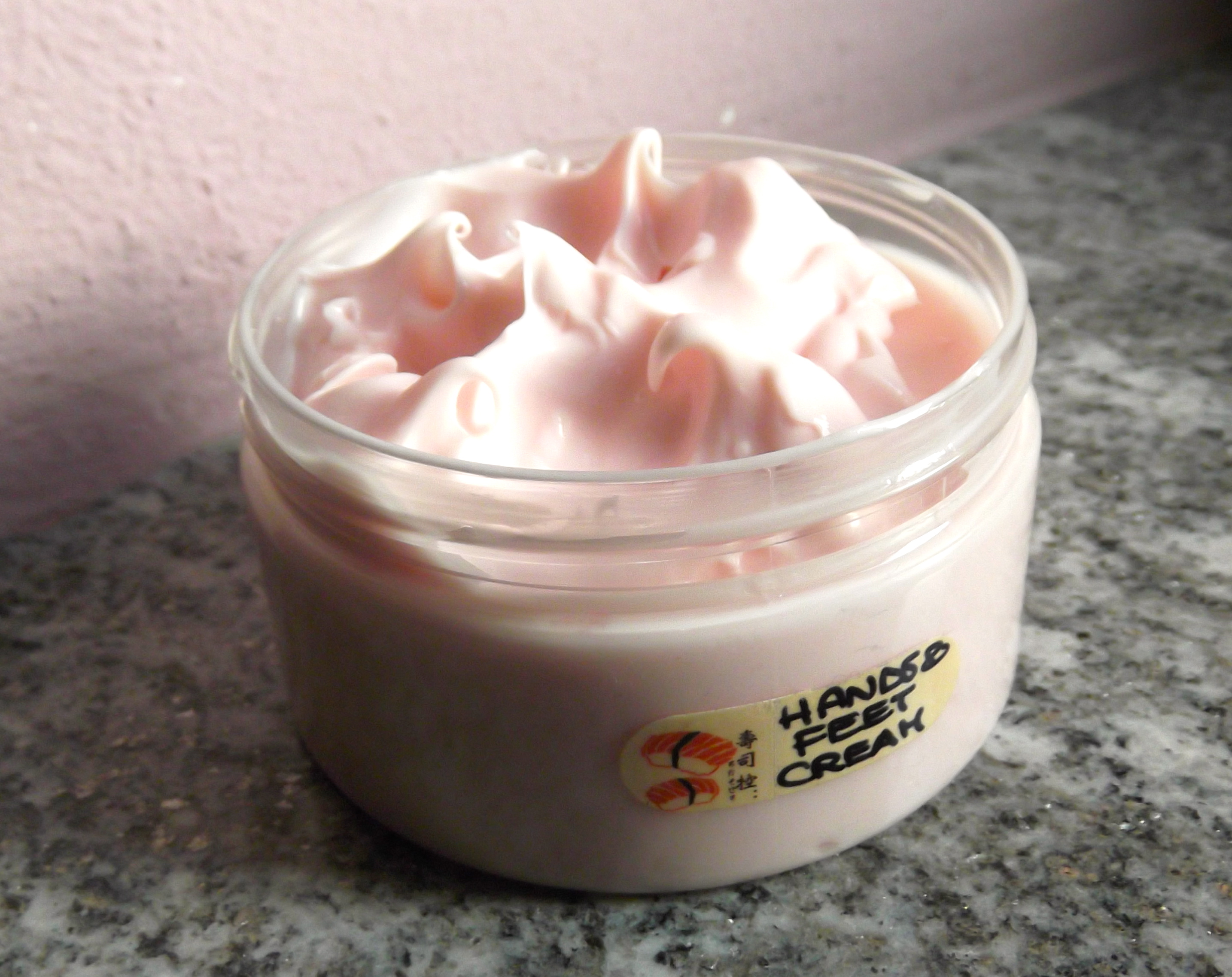
Formulating a Protective Barrier Cream (Hands & Feet)
In this experimental batch, I am documenting the creation of a high-lipid barrier cream designed for hands and feet. These areas require a specific “Heavy Emollient” profile—thick, protective, and highly hydrating. My goal was to achieve a 25% lipid load while maintaining a stable, professional texture.
Phase A: Rheology and Electrolyte Stability
In my lab notes, the choice of gelling agent for this formula was dictated by the active ingredients in Phase C.
-
Distilled Water: to 100
-
Glycerin: 4.0% (Increased humectant levels for extreme dryness).
-
Xanthan Gum: 0.5% Technical Observation: I opted for a relatively high percentage of Xanthan Gum as the sole stabilizer. I purposely avoided Carbomer polymers because the high concentration of Urea (an electrolyte) in Phase C would compromise the carbomer’s lattice, leading to viscosity loss.
Phase B: The Heavy “Grease-Fall” and Protective Waxes
For a hand/foot treatment, the lipid profile shifts toward the “heavy” end of the Gaussian distribution.
-
The Lipid Cascade: I prioritized hard butters (Cocoa and Shea) to provide structure and occlusion.
-
The Role of Waxes: I’ve introduced Jojoba Wax at 2%. Waxes are not strictly part of the “Grease-Fall” fluidity; instead, they function as film-formers, providing a protective “glove” effect against environmental stressors.
Experimental Oil Phase (25% total fats):
-
Jojoba Wax: 2.0%
-
Cocoa Butter: 5.0%
-
Shea Butter: 10.0%
-
Argan Oil: 5.0%
-
Grape Seed Oil: 5.0%
Phase C: Managing Urea and pH Stability
Phase C contains the “Hero” ingredients, but they require careful chemical management.
-
Urea (10%): A potent humectant known for its water-binding and keratolytic (exfoliating) properties.
-
Gluconolactone (2%): In my research, Urea is known to cause a pH drift (becoming more alkaline over time). To counter this, I’ve included Gluconolactone as a buffering/sequestering agent to maintain pH stability.
-
Texture Modifier: I added Aluminum Starch Octenylsuccinate (1%) to mitigate the greasiness of the 25% fat load, resulting in a matte, “velvet” after-feel.
My Batch Processing Workflow
-
Hydration: I dispersed the Xanthan Gum in Glycerin before adding the water (setting aside 15g for the urea solution).
-
Thermal Phase: Both Phase A and Phase B were heated to 70°C.
-
Emulsification: Phase B was incorporated into Phase A in three stages using an immersion mixer.
-
Urea Integration: Once the emulsion cooled to room temperature, I dissolved the Urea and Gluconolactone in the reserved 15g of water and integrated this into the base.
-
Final Finish: I added the preservative, essential oils (Grapefruit and Mint), and a touch of food-grade coloring for aesthetic appeal.
Final QC Check: The pH was measured and found to be stable between 5.5 and 6.0.

 IT'S ALL IN MY HANDS
I like the idea of making my own hand and foot cream with nice scented oils such as argan oil. I think urea is both a preservative and a way to smooth and lightly slough skin so it is a good addition to the homemade cream.
LikeLike
It is indeed 🙂
LikeLike
My son is a physiologist and I’ve visited him in several labs. I love your efforts here but can’t understand ANYTHING!
For example, a Web & Amazon search to buy “gloconolactone” comes up with ZERO!
And how the heck do I check the pH??? With those diabetic strips from the drugstore?
I want to make a strong urea cream for heavily calloused feet.
I’d LOVE a simple recipe! You obviously know what you’re doing and your cream looks beautiful!
Thanks much.
CJ Hinke
Bangkok
unblocktheplanet@gmail.com
LikeLike
Simple recipe doesn’t mean effective.
To formulate with Urea there must be gluconolactone (or something that works similarly) to not let the pH rise so it is a must.
pH stripes you can buy online together with gluconolactone.
On my blog you find all the theory of making creams and also links to serious online stores.
Just check the All recipes site index and you will find all the links there.
It sounds difficult and overwhelming but it is not.
Yes it takes some time to learn but it is worth ig.
All the best 🙂
LikeLike
hello i made cream by your recipe it was good but after one month it look like thin oily water i could not understand what is the problem with
LikeLike
Hello.
I believe the cream was not well emulsified, therefore after a month the oils separated again.
I am thinking of making a video to show how to properly emulsify creams 🙂
I am now on holiday but in September I will try to make this video 🙂
LikeLike
Thank you for this introduction to making creams! I found it refreshingly technical with lots of helpful insights. I will be giving it a try after delving deeper into your website. Fun!
LikeLike
ahahah good!
Let me know how it goes 🙂
And thank you! 🙂
LikeLike
Great article.
Always love experts who know how to explain to laymen. Thanks for that!
I want to add Urea to my cream. Can I use lactic acid( which I have at hand) to reduce the ph instead of gluconolactone? If so wat must be the ratio? Thank you.
LikeLike
Hello Priya!
Hmmm no it doesn’t work like this:
Lactic Acid lowers the pH, yes, but that’s a temporary thing: we use it to lower the pH of our creams but in the moment we make them. We make a cream, we check the pH, if it needs to be lowered then we add few drops of lactic acid… wait 5 minutes and check the pH again until we are satisfied.
The problem is that Urea tends to rise the pH in time, which means that if we made a cream pH 5 and waited few weeks, if we were to check the pH again it could be 6 (or higher). Urea changes at higher pH so we need to keep the pH of our cream stable… so this is the reason why we add Gluconolactone!
In fact it works in a way that it actually stops the pH from rising in the cream (thing which lactic acid cannot do). You see, Gluconolactone creates a system which stabilizes the pH (to make it very very simple: Gluconolactone “tends to stop” the pH from rising”); in fact if you, for example, added too much gluconolactone and got a very low pH and wanted to rise it… it would take you a LOT of alkaline substance to make the pH rise again.
So this is why it cannot be substituted with Lactic acid.
Hope it was clear 🙂
LikeLike
Thank you. That was very informative.
I dont have access to gluconotlactone since the few sites that offer this dont ship to India where I live.I googled for other sequestrating agents like you mentioned. Citric acid came up.I have some at hand Can I use this instead?
Actually I wanted to make a DIY Amlactin with the ammonium lactate.will it work If I I add 12% lactic acid and about 10% Urea and a sequestrating agent additionally to adjust the ph. Or will this change the compound itself?
LikeLike
No citric acid is again like lactic acid.
Sodium lactate is a good hydrating agent.
But what kind of cream do you want to achieve?
If it is for feet or hands (as it should be) you could adjust the pH and keep it adjusted (every week you check it).
You can make a very small amount (200 gr) and use it quickly so the Urea won’t go bad.
I think this would solve the gluconolactone problem! 🙂
Where are you in India? 😀
I have been there few months 🙂
I love India, but sometimes it is difficult to live there for me 🙂
LikeLike
Thank you so much for the quick response.
I want to make a body cream/lotion that would take care of hyperpigmentation left from psoriasis that I used to have. I cant use strong AHAs as it may irritate my skin and trigger a flare up. Amlactin is a safe mild exfoliant and moisturiser that works well in my case. But again its not available where I live.
I put together this recipe with the ingredients I have at hand using your hand cream as a model. Can you please troubleshoot this for me?
Phase A
Water to 100
Glycerin 4
Xantham gum 0.5
Niacinamide 5
N acetyl Glucosamine 3
Licorice extract 8
Phase B
Coconut oil 20
Castor oil 5
Emulsifying wax 3
Phase c
water
Urea 8
Lactic acid 8
Preservative 0.5
Make it the way you described above. Ph at 6.
Im not really worried about the consistency of the lotion/cream as Im only going to wear it at night. And Im okay with making a fresh batch every week. It would be great if the actives compliment each other and work to reduce the spots and keeps skin well hydrated.Will this work?
I live in Tamilnadu. Its the southern most state. Its rather hot and humid down here. And sometimes it is difficult to live here for me too 🙂
LikeLike
hmmm is it for body or face? 🙂
Lactic acid you shouldn’t put it at 8, you should just check the pH BEFORE you add it (at the very very end) and add few drops of it ONLY IF you need to lower the pH 🙂
(then you check the pH again, add few more drops if it is not low enough, mix and check the pH again 😀 until you are happy with the pH of the cream!)
In phase C put water 10, so you will keep the total grams of the formula to 100 🙂
About this:
N acetyl Glucosamine 3 – I never used this ingredient so I don’t know it and I don’t know if the concentration or the pH is ok.
Licorice extract 8 – if it is a powder (what kind of extract is it?) 8 might be too high (the cream might separate because when a cream is too full of powders it tends to not emulsify very well).
Hope this was helpful 🙂
Never been to south of India, but I heard coconut is good there (I love Thai coconut, the coconut I drank in north India was not tasty at all instead!)
I also like dosa and uttapam!! 😀
LikeLike
i love your blog
just an idea
you know everyone love spa treatments
but they cost alot
so many are trying diy at home
and are trying to stay very natural
so a kind request
if you post formulations on pedicure and manicure and facials and hair treatments
for example cuticle remover callus remover foot soak hand soak srubs for hands feet and face and hair mists and steams for different skin types and hair protein treatment and heat protecting stuff for styling with flat irons and blow drying face masks for different skin types hair detangler hair styling stuff
not to forget staying 100% natural
i have found this to be very challenging
am working on it too
your formulations will be way better than mine for sure
because am a newbie
but i think that these things are major stuff which every girl should know how to make
i mean we crave for spa treatments so much but they are expensive not all can afford it and many use harsh stuff too
so if you kindly consider this big request 🙇
LikeLike
I will think about it but most things you have mentioned are only hyped in Spas but they are nothing special.
I mean: cuticle removing balm 🙂 it is a simple thick cream or thick fats combination with a good smell. The same goes for hand feet and all the other treatments.
They just ask if you would like the pampering vitamin E treatment or the new Hyaluronic Acid treatment and they charge you a lot… but both those creams have probably less good ingredients than you put at home.
EVERY cream you make at home is way better than any you buy. No HA cream you buy contains 1% HA. And the same goes for every other product you may try to make. 🙂
Then if you use a cream as a body cream or as a foot mask, that’s your decision 😉 you are free to do both 😉
LikeLike
ahan
i get wat u say
and wat bout feet callus?
LikeLike
Urea is a good ingredient but needs a little knowledge to be able to formulate with it because it might cause problems. 🙂
LikeLike
Please where can I find more information about the type of urea used for skin and hair products…as there are some urea types used as preservatives and others for farming.
What is it soluabke in and what other ingredients I may add to it or not add to it
Many thanks
LikeLike
The one used for preserving is Hymidazyl urea and it is a preservative.
The one used for cosmetics is just UREA and it is of cosmetic or pharmaceutical grade.
LikeLike
I love your very easy to follow formulation. The cream came out thick and smooth. Is it possible to add (phase c)urea, gluconolactone and a preservative to a ready made hand cream purchased at the store?
LikeLike
Hello Lindsey
It is not advisable because they would unstabilize the cream! 🙂
LikeLike
Hi , thank you very much for your kind sharing. I have a question on emulsifier.
May I know how would we identify what and how much emulsifier to be used in a cream?
Thank you!
LikeLike
You should follow the guidelines of the website where you purchase but, even better, the MSDS. At the end of the day, however, it takes mostly trial and error cause mucj depends on which oils you use 😉
LikeLike
can you suggest me the substitue for urea in hand creams?
LikeLike
Hello Varsha.
Hmmm urea is extremely cheap and works so well that I don’t know what could be a good substitute.
Exactly what do you want your hand cream to do?
Because urea does a bunch of things, so I can think of something more specific.
LikeLike
Hello, I have found gluconolactone but it come with sodium benzoate and calcium gluconate . Can I still use it?
LikeLike
I believe what you have purchased is a blend which is used to preserve cosmetics. It cannot be used in the same way as you would use gluconolactone if you had it on its own. You can still use it as a preservative 0.75% to 2%
LikeLike
Hello!! Loved your recipe and your website. I’m from Brazil and I’m having trouble finding the gluconolacctone in here. I will try to do as you suggested above, a small batch and then checking the pH weekly. Thanks!!
LikeLiked by 1 person
Why do you not use carbomer? May I know what “active” ingredient that destroys carbomer? How does that particular ingredient destroys carbomer?
LikeLike
Electrolytes melt carbomer. There are quite many ingredients that are electrolyeltes so it is difficult to make a list. 🙂
LikeLike
Hi! Yes, I know. But there is no electrolyte in this formula! XD
I am referring to this post, this particular cream of yours here.
I looked and looked, I checked and checked, I still do not see what contains electrolyte,
Am I missing something?
LikeLike
Ok I thought it was a general question.
Here urea melt my carbomer (I had tried making the formula with the carbomer first and when I added urea it liquified, that’s why I changed it).
LikeLike
Strange, I can’t reply to your last comment!
Thanks for your prompt response!
OMG! Nooooooo! What!
You and I know that carbomer creates the best gel and the best suspending agent. And certainly the best light-non-tacky-feel (compared to Xanthan Gum and most other “natural” thickeners). But yes, sadly most synthetic thickeners are ultra sensitive to electrolytes. Salt-tolerant synthetic thickeners are not easily accessible to regular DIYers like us here.
I think this project for me is a failure because my skin, in general, dislikes lipids of any kinds. Argh!
LikeLike
Yes I too like carbomer gel, however for this being a foot/hand cream it was good enough in the end.
I have been using lately some new gelling compounds that combine xanthan, sclerotium and other gelling agents (I can’t remember right now and I am not home) and they give a much better end result than xanthan alone and quite resistent to electrolytes! But ok, they are not as good as carbomer alone…
LikeLike
Well very interesting indeed,but for a beginner is a little bit confusing and i’m sure it’s not because you don’t explain well 😀 ..And your website has quite a sweet name ..
LikeLiked by 1 person
Hi Iuli, there are posts about the basics of formulating 🙂 start there 😉
LikeLike
is there is any substitutes for gloconlactone?
LikeLike
If i add salicylic acid what will be the ph ?
LikeLike
Salycilic acid isn’t going to be so easy to add due to the poor solubility, however – being an acid, it will lower the pH. There is no way to know HOW MUCH without trying: depends on many factors like the starting pH, the % you add and so on… You will have to check it
LikeLike
Hi, I am new to making creams. I am wanting to make my own lidocaine cream, and was thinking to use urea with it for use on feet, as well as back. Can this be done with urea, and do you have a simple formula I could follow?
LikeLike
Hello Shelene,
Sorry but lidocaine cream is a medicine and I only formulate cosmetics. I have no information regardine the use and the possible issues related to mixing the pharmacy ingredient with urea so I cannot help. Urea can be tricky to add in a cream as it tends to change the pH over time, so I wouldn’t suggest adding it.
LikeLike
This is a greeat post thanks
LikeLiked by 1 person
Shall I add magnesium flakes in the water to increase the goodness of foot cream. Pls suggest
LikeLike
Hi, generally speaking the magnesium might interfere with gelling agents and emulsification. It depends a lot on the concentration, but I don’t think adding magnesium will make the formula better necessarily.
LikeLike
LikeLike
LikeLike